Arabi Facts Hub
is a nonprofit organization dedicated to research mis/disinformation in the Arabic content on the Internet and provide innovative solutions to detect and identify it.
Incitement and Ongoing Campaigns Against Refugees in Egypt: "The Deportation of Syrians is a Security Demand"
Feb. 26, 2026 | AFH
Sherif Mourad
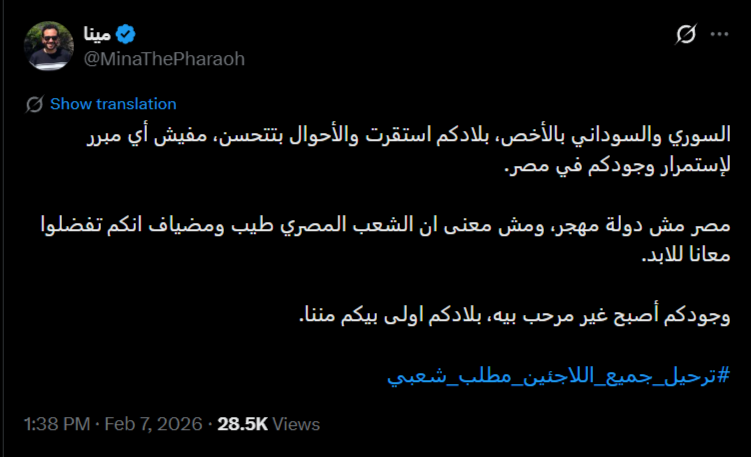
From January 18 to February 23, 2026, a significant digital campaign advocating for the expulsion of refugees from Egypt gained traction. This mobilization was intensely focused around two hashtags: #ترحيل_السوريين_مطلب_امني (The Deportation of Syrians is a Security Demand) and #ترحيل_السوريين_من_مصر (Deportation of Syrians from Egypt).
Monitoring data analysis indicates that the anti-Syrian sentiment was not an isolated incident. Instead, it was part of a wider mobilization campaign and discourse targeting refugees generally, evidenced by a significant overlap with hashtags and rhetoric directed against Sudanese and other African populations.
The combined content for both hashtags amounted to 1,141 items, achieving an estimated reach of 12 million users and generating over 137,000 interactions. An analysis of the data revealed a predominantly negative tone, with 85% of the content being classified as such. Furthermore, "anger" was the overwhelming sentiment, present in more than 75% of the materials categorized by emotion.
The campaign analysis also showed a distribution of roles among platforms; X served as the main pumping ground, while YouTube channels played a pivotal role in generating interaction, and specific Facebook pages emerged as pumps for recurring hashtag templates.
Campaign Indicators
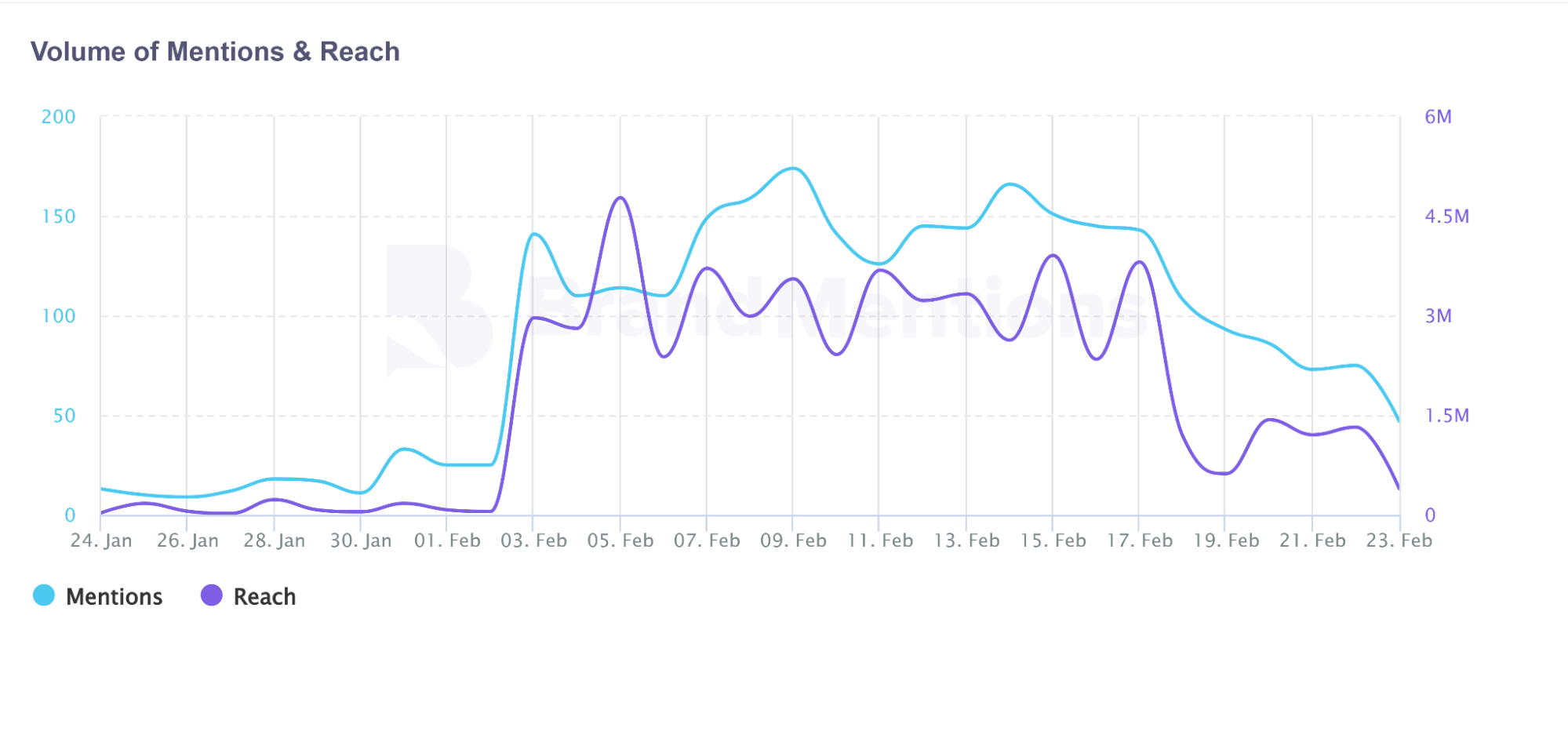
The first monitored signals of the two hashtags began on January 18, 2026, before the pace of publication gradually accelerated, reaching a numerical peak on February 9, when the highest number of published materials was recorded. The highest digital reach, however, was on February 5, while the highest engagement was recorded on February 3.
The difference between the peak of publication and the peak of reach indicates that specific content achieved widespread dissemination, compared to other days characterized by a greater volume of pumping without similar reach, reflecting a non-uniform pattern in the campaign's dynamic.
The total materials within the two combined tracks reached 1141 items; 839 of which were on X, 229 on Facebook, and 65 on YouTube, while the rest of the materials were distributed across other platforms in limited numbers.
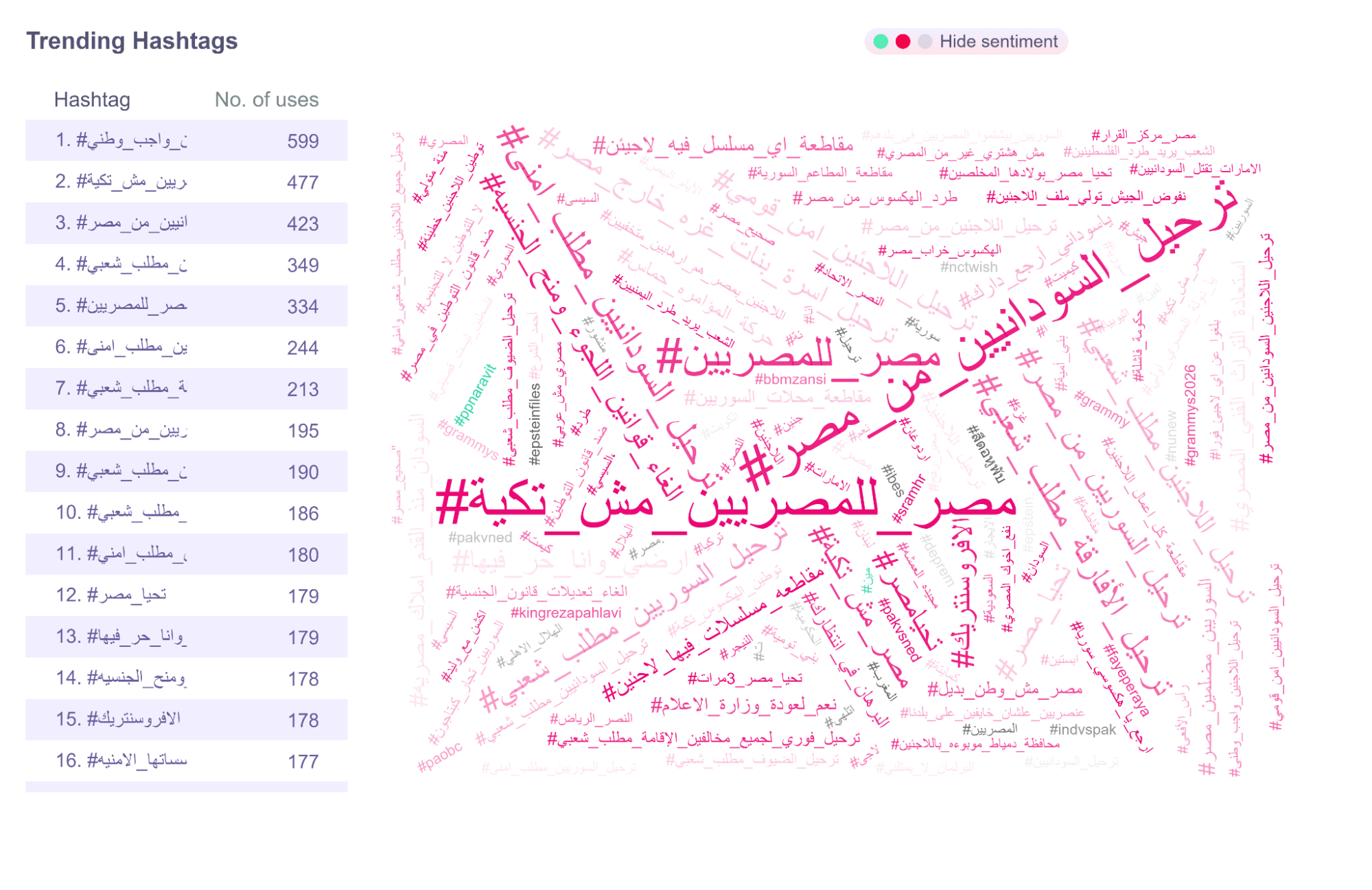
Analysis of the accompanying hashtags reveals that the targeting of Syrians was not separate from a broader discourse against refugees; the hashtag #ترحيل_جميع_اللاجئين_مطلب_شعبي (The deportation of all refugees is a popular demand) appeared in over 86% of the materials that included #ترحيل_السوريين_من_مصر (The deportation of Syrians from Egypt), and the hashtag #ترحيل_السودانيين_من_مصر (The deportation of Sudanese from Egypt) appeared in over 60% of them.
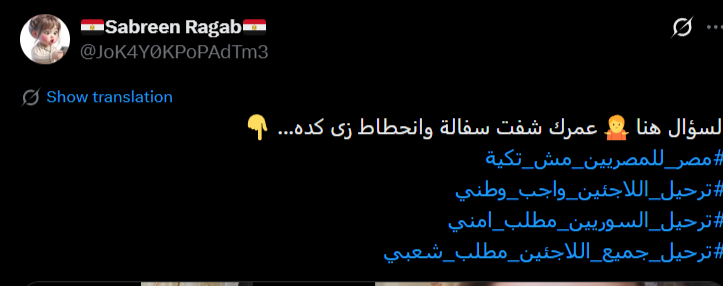
These hashtags were accompanied by nationalist slogans such as "Egypt for the Egyptians" and "Egypt is not an alternative homeland," in addition to explicit calls to boycott businesses owned by Syrians.
This entanglement of hashtags suggests that the campaign operated within a larger mobilization strategy. This framework consistently repurposed the "refugee deportation" rhetoric across various contexts, demonstrating the flexibility to shift the target group while retaining the core rhetorical template.
Posting and Interaction Patterns
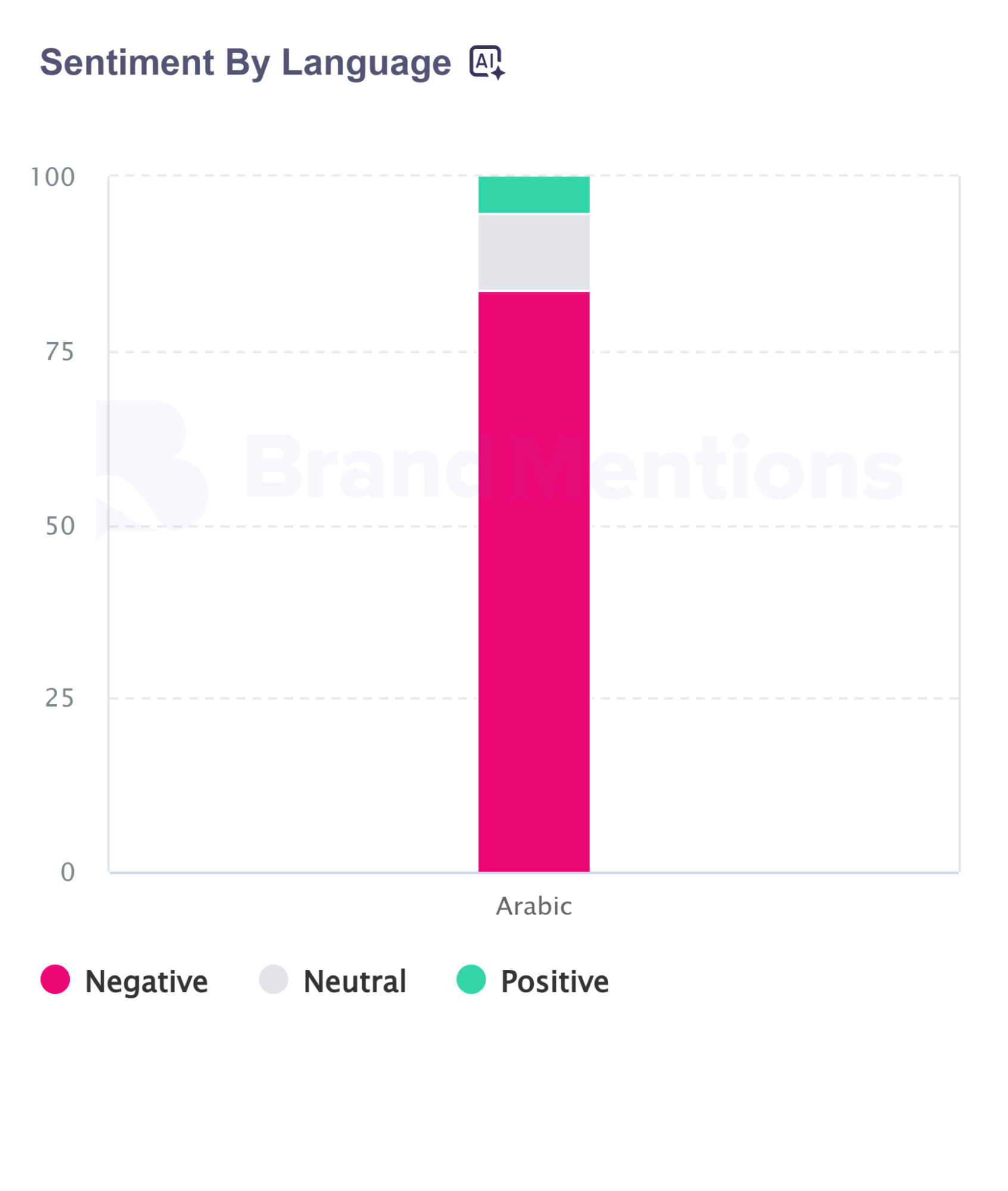
The impression analysis revealed a predominantly negative tone in 85% of the materials. Furthermore, "anger" was identified as the dominant sentiment, accounting for 77% of all materials and approximately 90% of the materials classified with emotional content.
This pattern is classified as an "Attack Campaign" according to the Arabi Facts Hub's criteria for digital influence campaigns. It relies on simultaneously deploying negative and inflammatory security, nationalist, and economic narratives.
The data also showed that 61% of posts on X were in the form of direct replies to other accounts, which indicates a "thread flooding" pattern more than publishing independent original content.
In contrast, Facebook showed a pattern of repeating identical hashtag templates across specific accounts, while YouTube recorded the highest average interaction per published material within the second track.
Whistleblowers
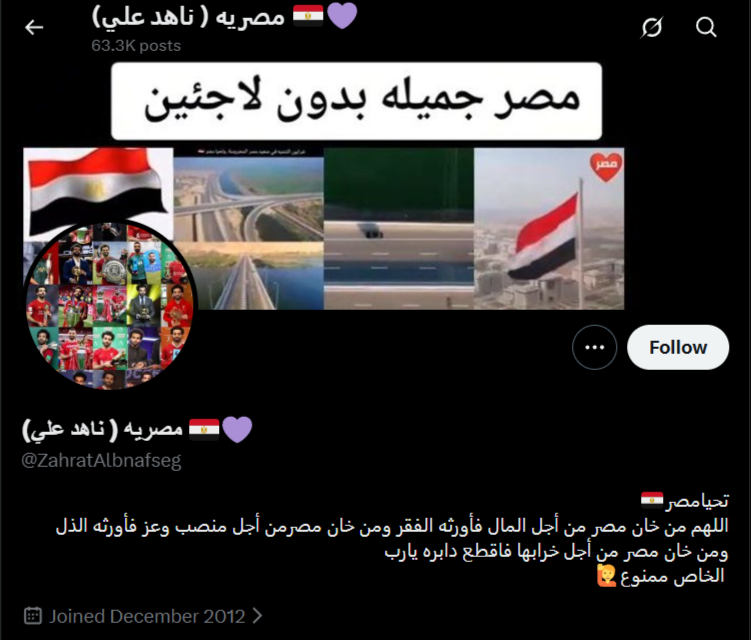
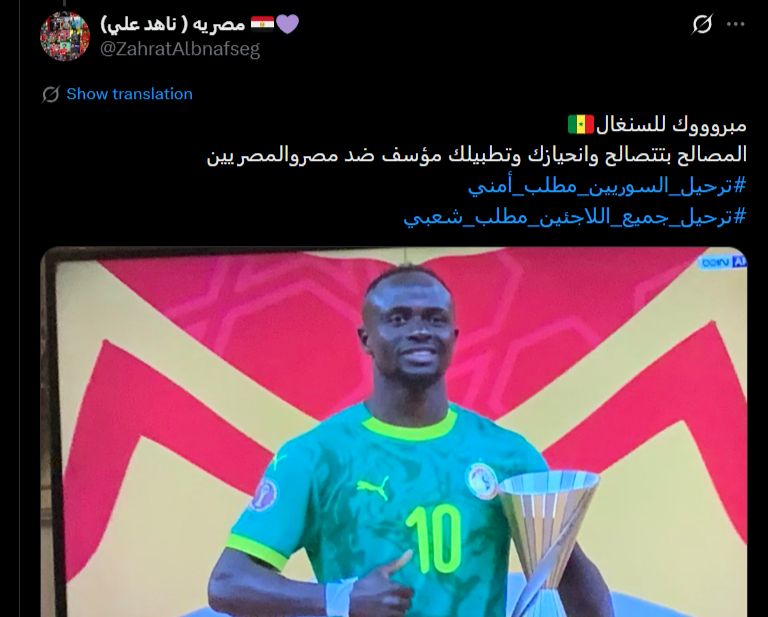
The earliest observed appearance of the hashtag #ترحيل_السوريين_مطلب_امني (The Deportation of Syrians is a Security Demand) dates back to January 18, 2026, on X, via an account with the username Zahrat El Banafseg, where the hashtag was used in the context of a reply within an ongoing discussion, suggesting its early inclusion in public discussions.
The hashtag "The deportation of Syrians from Egypt" first gained traction on January 20th, initially appearing on a Facebook page with the digital identifier (135177396344976). This was accompanied by inflammatory nationalistic rhetoric and calls for a boycott. Subsequently, the hashtag spread to YouTube on the same day via various channels.
This timeline indicates that the hashtag did not originate from a single platform, but moved between Facebook, YouTube, and X during its first days.
Coordinated Behavior Across Platforms
The Facebook page "Egyptian Styles" was the most influential contributor to the hashtag "The Deportation of Syrians is a Security Demand," publishing 194 of the 210 posts—approximately 92% of all content within that trajectory on the platform.
The page's posts were characterized by the use of a long package of identical hashtags that were repeated dozens of times in a quasi-fixed formula, which indicates the adoption of a standardized publishing mechanism that goes beyond spontaneous phrasing. Among those hashtags:
ترحيل_جميع_اللاجئين_مطلب_شعبي (The deportation of all refugees is a popular demand)
ترحيل_السودانيين_من_مصر (Deportation of Sudanese from Egypt)
الافروسنتريك (Afrocentrism)
مقاطعة_مطعم_عروس_دمشق_اوقفوا_بلطجه_ملاكه (Boycott Damascus Bride Restaurant Stop the thuggery of its owners)
This "hashtag template" was repeated dozens of times in a near-identical form, indicating the adoption of a standardized publishing mechanism rather than a spontaneous, renewed formulation each time.
On YouTube, the number of active channels within the two-track alliance did not exceed five channels, but they played a pivotal role in generating engagement, with some channels achieving a high average engagement per video despite the limited number of materials published.
The channel mahmoud 777 stood out in terms of the number of videos (43 videos), with a total engagement exceeding 51 thousand. In contrast, the channel mohamed elmasry 1981 achieved a very high average engagement per video, exceeding 7 thousand engagements, despite publishing a smaller number of videos. The channel papa elmasry also recorded a high average engagement compared to the volume of publishing.
Some videos included the hashtag “Deportation of Syrians from Egypt” within content dealing with issues related to Sudanese people or refugees in general, which reinforces the conclusion that the hashtag was used within a broader mobilization package, and not as a separate issue.
As for the X, two main patterns emerged:
The first pattern: is represented by accounts with a high publishing density in the form of direct replies to other accounts. The most prominent of these accounts:
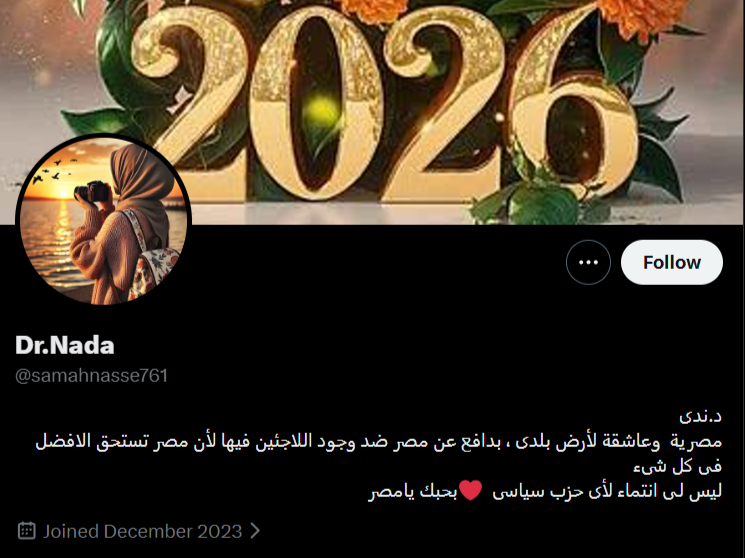
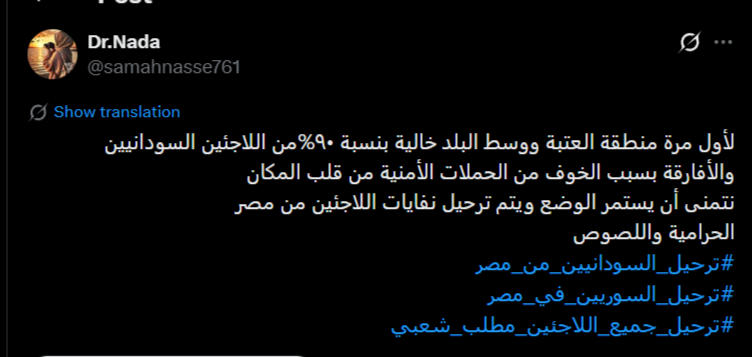
- samahnasse761
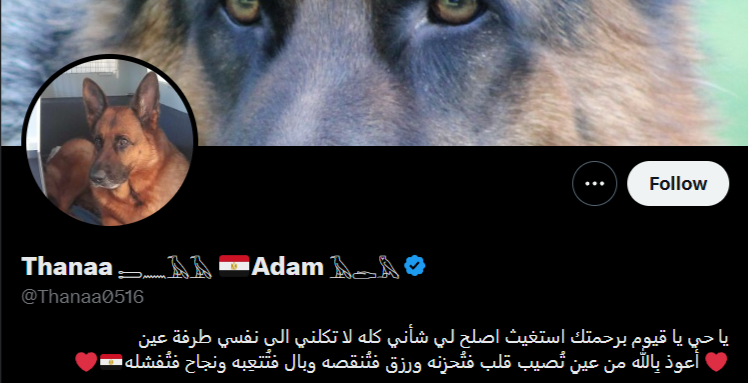
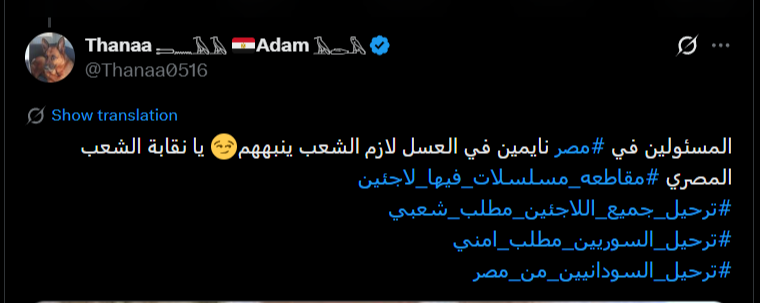
- Thanaa0516
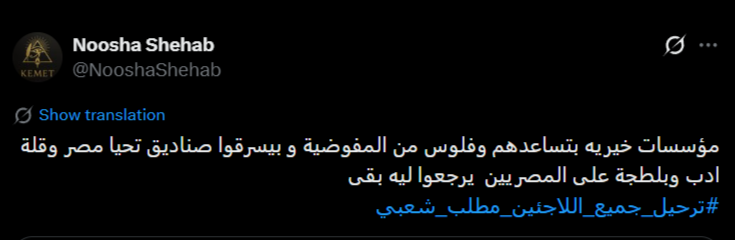
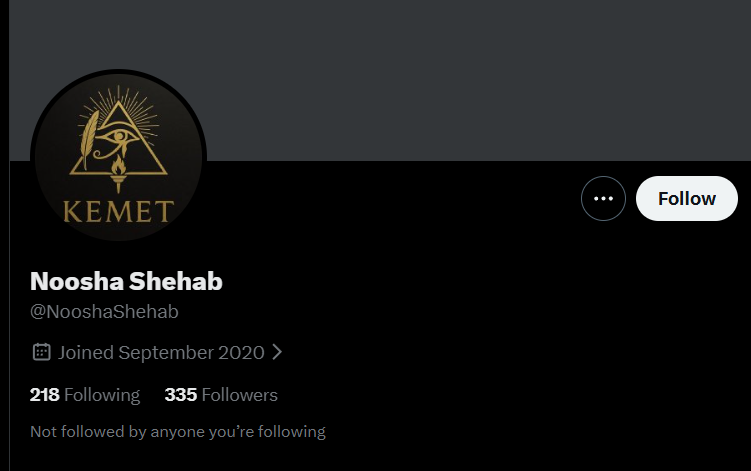
The percentage of posts that came in the form of replies on some of these accounts exceeded 90% of their total activity within the two hashtags, which indicates the adoption of the "thread flooding" tactic to push the hashtag into existing discussions.
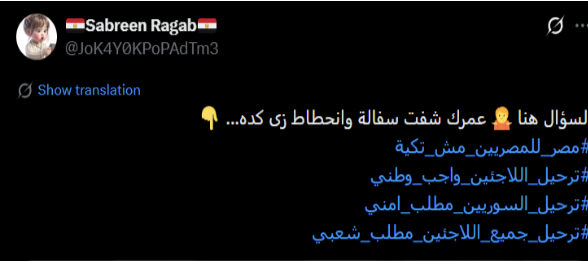
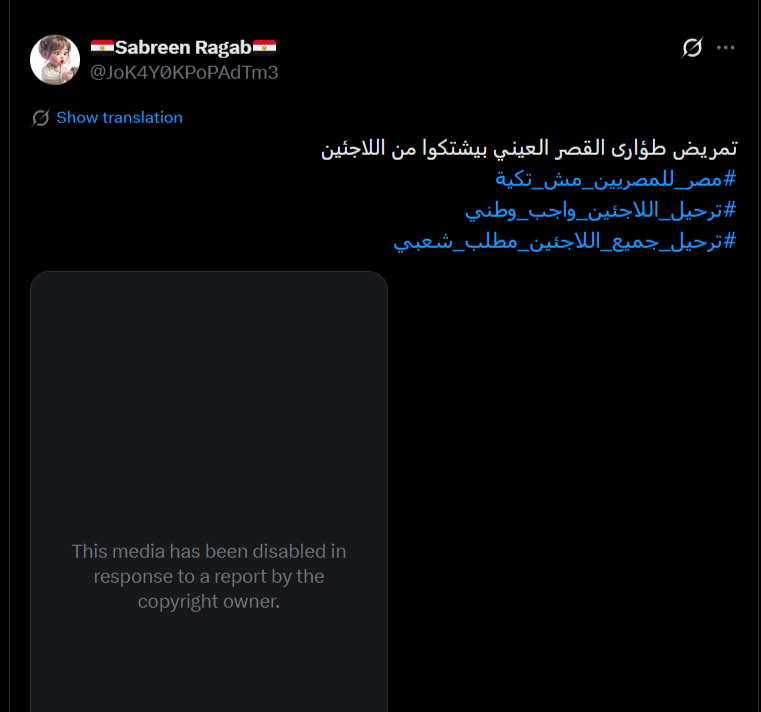
The second pattern: This is represented by accounts with high reach per post, most notably the account JoK4Y0KPoPAdTm3, which recorded the highest overall reach within the two-track coalition, although its number of posts was less than other accounts. This reflects the existence of accounts that play the role of a "wide-spread amplifier," in contrast to other accounts that undertake the task of intensive pumping.
Sherine Hilal: A Highly Intermediary Account Played a Linking Role Between Different Clusters
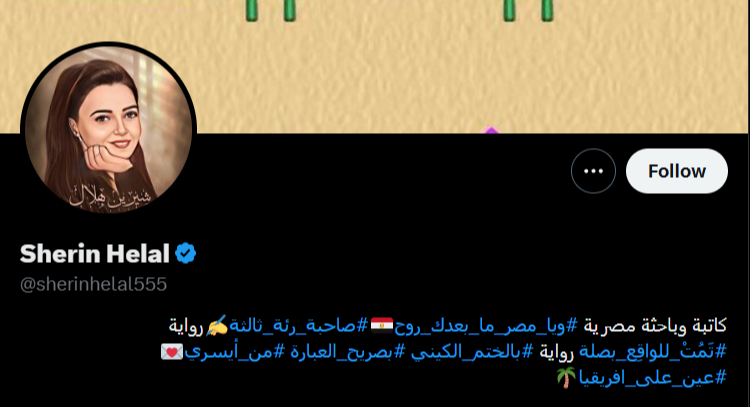
Upon analyzing the network of mentions (@mentions) between participating accounts, several interconnected clusters emerged, with a number of accounts standing out as bridges between different groups.
Among the most prominent accounts that played a linking role between the clusters is:
Account sherine helal 555
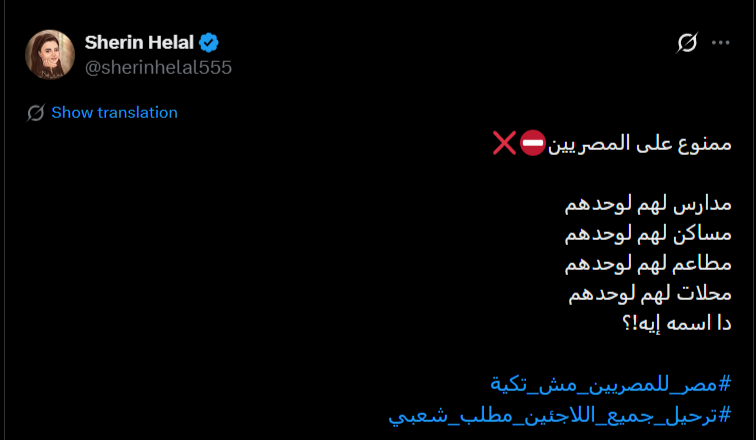
This account demonstrated a relatively high betweenness centrality value within the network, meaning it contributes to the transfer of content between different user groups, enhancing its spread across diverse circles.
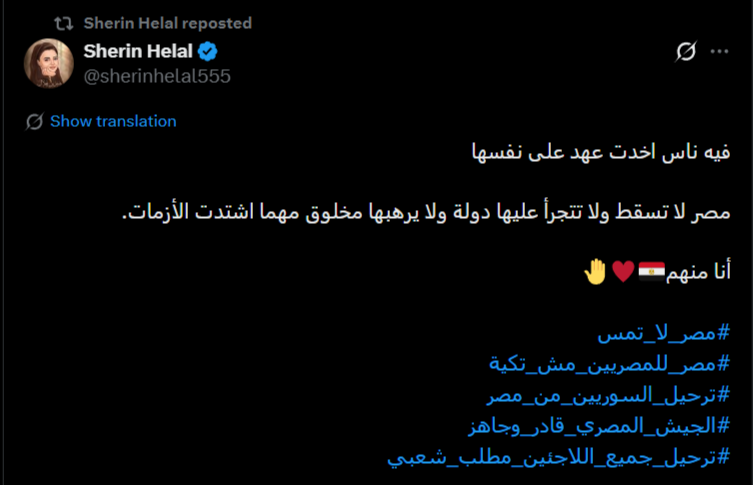
A network analysis of the accounts interacting with the two hashtags showed the appearance of a number of accounts with media or public presence, including the account @sherinhelal555.
Although the account is not among the most frequent posters of the hashtag, indicators of betweenness centrality show that it played a linking role between different clusters within the network, which contributed to the transfer of the discourse between multiple circles of users.
This appearance comes in a broader context, as the “Arab Verification Community” previously monitored in earlier materials digital campaigns targeting refugees in Egypt, where similar accounts and slogans intersected, especially in paths related to: “Deportation of Sudanese from Egypt” “Deportation of All Refugees is a Popular Demand,” and hashtags associated with a nationalist or security discourse against the presence of refugees.
Examples of those materials include:
A hate campaign against Fadwa Mawaheb extends to refugees in Egypt
Egypt: Asylum bill sparks coordinated digital hostility against refugees
“The Shawarma Battle and “Guests”: A New Campaign Against Refugees in Egypt
A campaign against “naturalizing refugees” in Egypt… What’s the story?
“Enough refugees”... Coordinated Egyptian campaigns to refuse entry to Sudanese fleeing the war
“Enough refugees in Egypt”... What is the story behind the hashtag's exaggeration and context?
This similarity in network and hashtag structure reinforces the hypothesis that the current campaign against Syrians is not an isolated incident, but rather part of a recurring pattern of digital campaigns targeting refugees in Egypt.
Indicators of Inauthentic Behavior
The data showed several indicators consistent with criteria for detecting inauthentic behavior, including:
- Repetition of identical hashtag bundles across the same accounts.
- Use of a high number of hashtags in a single post.
- High ratio of replies compared to original content on X (formerly Twitter).
- Repetition of similar linguistic formulas in a noticeable number of posts.
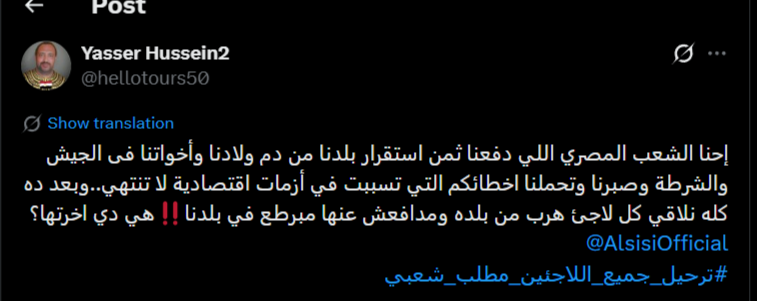
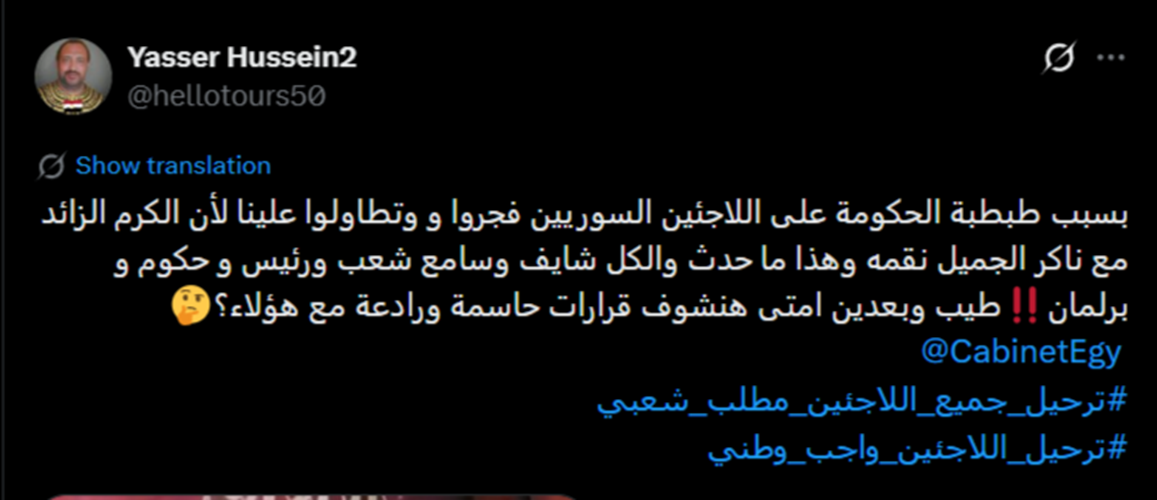
Official accounts also stood out in the list of most frequently mentioned accounts (i.e., those referred to within posts), including: (Cabinet Egy), (AlsisiOfficial), and (moiegy), which reflects an attempt to direct the hashtag towards state institutions and present it as “a demand directed at the authorities.”
Although these indicators do not prove the existence of a fully automated network, they do reveal coordinated and typical posting patterns that go beyond spontaneous individual interaction.
Overlap with Previous Campaigns
The two hashtags overlap with a set of hashtags previously used in campaigns targeting refugees in Egypt, such as:
- #ترحيل_السودانيين_من_مصر (Deportation of Sudanese from Egypt)
- #الافروسنتريك (Afrocentrism)
- #ترحيل_جميع_اللاجئين_مطلب_شعبي (Deportation of all refugees is a popular demand)
The analysis also revealed a shared digital core: 41 accounts participated in both trajectories' hashtags, indicating a group that consistently moves between different related hashtags within the same overall discussion.
This hashtag and human entanglement reinforces the hypothesis that the targeting of Syrians was not an isolated event, but rather part of a broader wave that recycles the "refugee deportation" rhetoric in multiple forms.
Analysis of the digital campaign data on the two hashtags #ترحيل_السوريين_مطلب_امني (Deportation of Syrians is a security demand) and #ترحيل_السوريين_من_مصر (Deportation of Syrians from Egypt) leads to the conclusion that the posting patterns indicate that Syrians were not the sole target, but were targeted within a broader campaign against refugees in Egypt, in which hashtags and rhetoric directed against Sudanese, Africans, and others overlap.
The results contained in this report rely on behavioral and network indicators consistent with coordinated posting patterns, and do not represent conclusive evidence of central management of the campaign.
The data indicates a pattern of role distribution between platforms, concentration of activity in a limited number of accounts, pages, and channels, repetition of hashtag templates and identical linguistic formulas, in addition to an attempt to direct pressure toward state institutions by invoking official accounts on X.
The data does not reveal a declared entity behind the campaign, but the patterns of posting, bundling, and concentration point to coordinated behavior that goes beyond spontaneous interaction, and recycles inflammatory rhetoric against refugees in Egypt, with the allocation of Syrians in one of its stages as a main target within this broader framework.

Other Articles