Prepared by: Sherif Mourad
Arabi Facts Hub
is a nonprofit organization dedicated to research mis/disinformation in the Arabic content on the Internet and provide innovative solutions to detect and identify it.
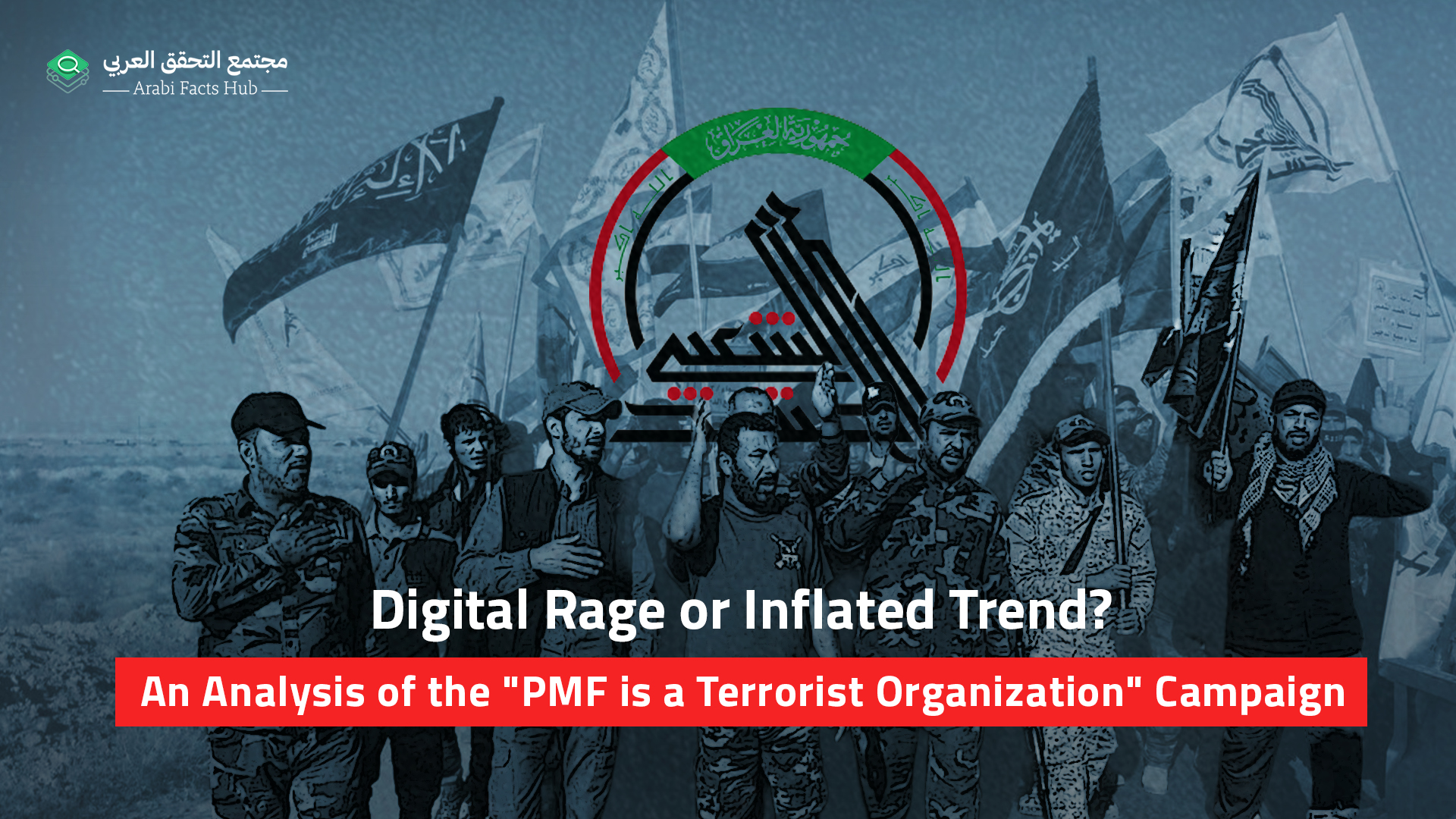
Within a few days in mid-March 2026, the hashtag “PMF is a Terrorist Organization” became one of the most prevalent narratives on X in the Arab sphere, coinciding with a military escalation and strikes targeting sites linked to the Popular Mobilization Forces (PMF) inside Iraq. The scene, at first glance, looked like a widespread wave of anger or a sudden shift in public mood.
But the data reveals a different picture.
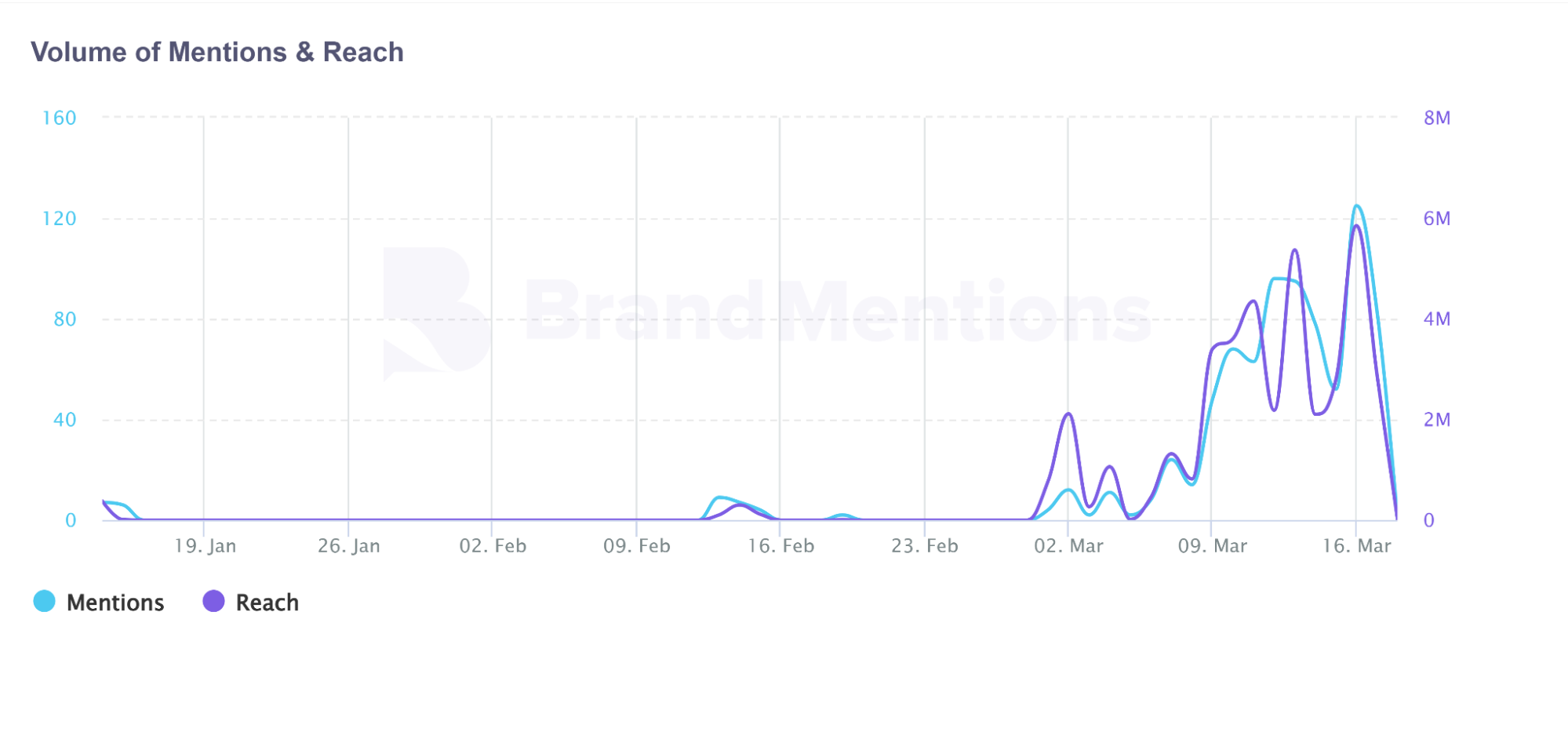
Rather than evolving from a measured public discourse, the digital activity manifested as a brief, intense, and highly centralized campaign. It was propelled by a restricted set of accounts that disseminated markedly similar, repetitive texts. This campaign merged political discussion with aggressive mobilization language, shifting the focus from mere criticism to outright delegitimization, occasionally even celebrating military actions against the target.
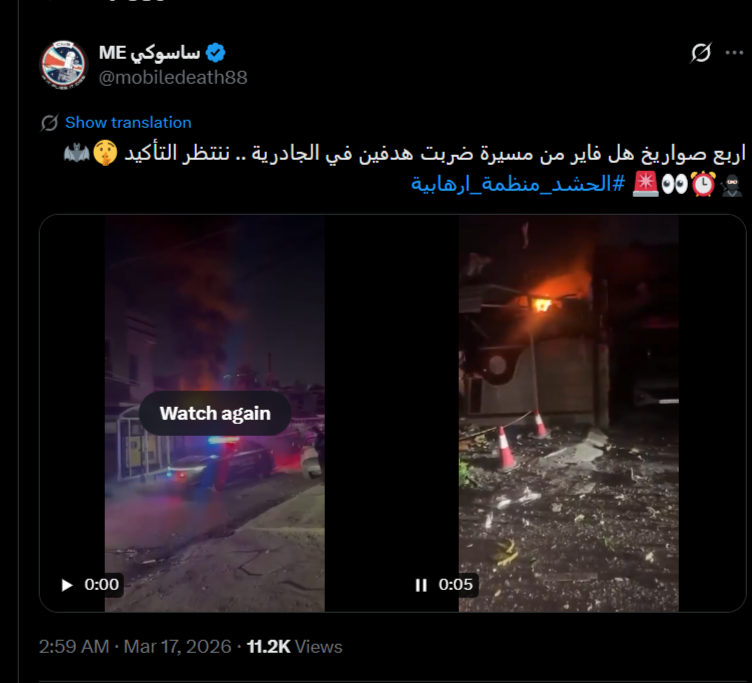
This contradiction—between what appears to be "public opinion" and what the numbers reveal—represents the starting point for this investigation.
To find out whether this massive presence truly reflects public opinion, or a more complex phenomenon, two data samples were analyzed:
The first spans over six months, from mid-September 2025 until March 14, 2026, and includes hundreds of posts on X.
The second covers the period from mid-February until March 17, 2026, and includes mentions across several platforms, with most being concentrated on X.
The goal was not limited to measuring "volume," but to dissecting how the discourse moves: time of launch, who drives it, how it is repeated, and where it is amplified.
When comparing the two timelines, the first paradox emerges:
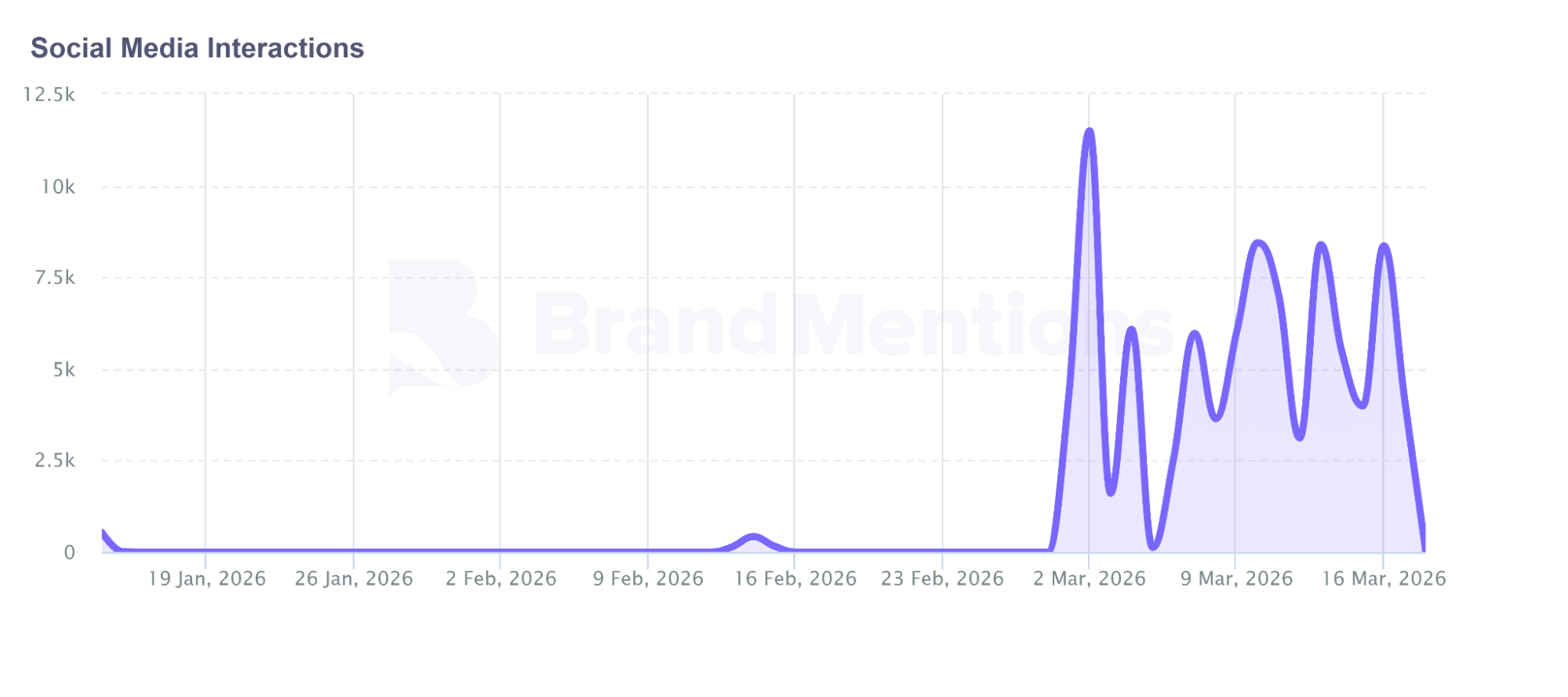
Instead of a gradual upward trajectory, the activity reveals an almost complete void for weeks, before suddenly exploding over a few days in March. In the longer sample, the overwhelming majority of posts are concentrated within a time window of no more than six days. This intensity becomes even more pronounced in the more recent sample, where most mentions are clustered within just one week.
Between March 9 and 16, the picture changes entirely.
The number of posts rises sharply, day after day, until it peaks in the middle of the week, and then declines just as quickly. This pattern—a rapid ascent, a sharp peak, then a decline—is closer to the behavior of campaigns or mobilization moments than to a normal social discussion that develops gradually.
More critical than the timing of the explosion is its location.
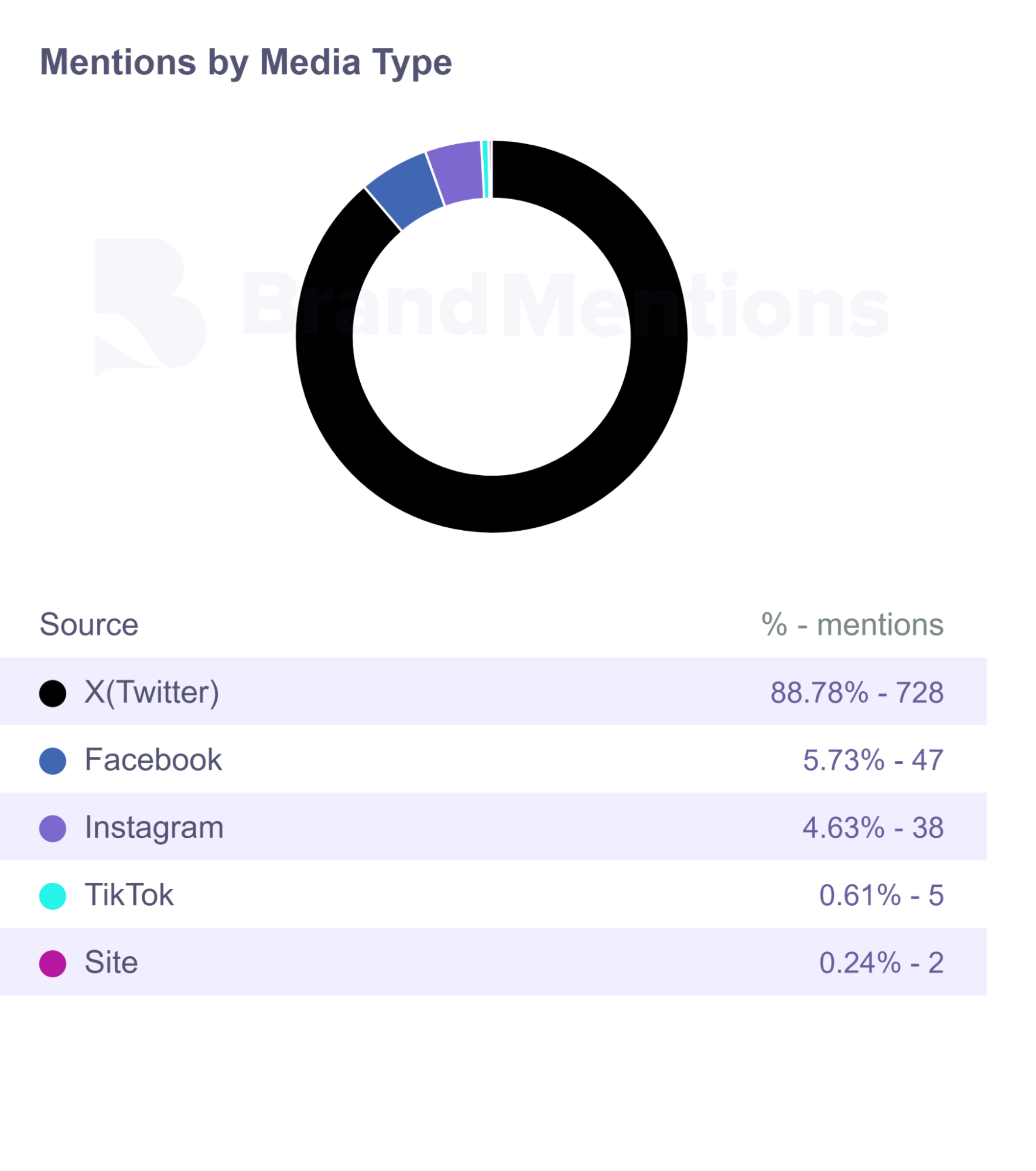
Before these days, the discourse was relatively distributed across several platforms: X, Facebook, Instagram, and TikTok to a limited extent. With the onset of the peak, this distribution almost disappears, and the activity shifts to an almost complete concentration on X, which suddenly becomes the primary—in fact, almost the sole—arena for the hashtag's spread.
This shift is not a mere technical detail. X is more susceptible to hashtag amplification, faster in message reproduction, and more sensitive to real-time mobilization. When an entire wave shifts at the moment of the peak, the nature of the phenomenon changes: from a distributed discussion to concentrated mobilization.
Why does the PMF Turn into a Target?
To understand the rapid spread of a hashtag like "PMF is a Terrorist Organization," it is not enough to look at the platform alone.
The Popular Mobilization Forces present a complex political dilemma in Iraq, transcending their function as a mere security formation. They exist simultaneously as a formal state institution and, contradictorily, as a symbol of a "parallel state weapon." This duality fuels a more fundamental conflict concerning the legitimate monopoly on force, the very definition of the state's authority, and the boundaries of military autonomy.
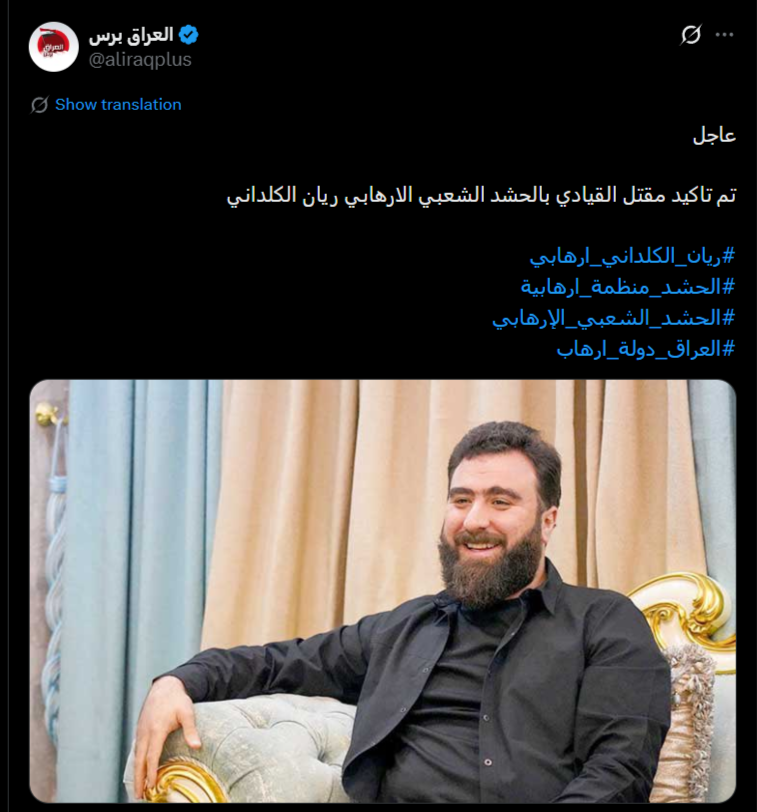
This tension is not new, but in March 2026, it became convertible into material for daily mobilization.
Since 2025, an official path has emerged – albeit in diplomatic terms – calling for the containment of armed factions or their integration within the framework of the state. Such statements do not create a campaign in themselves, but they produce a "ready-made language" that can be mobilized later: "rogue weapons," "restricting weapons," and "monopolizing force."
In parallel, the regional factor comes into play.
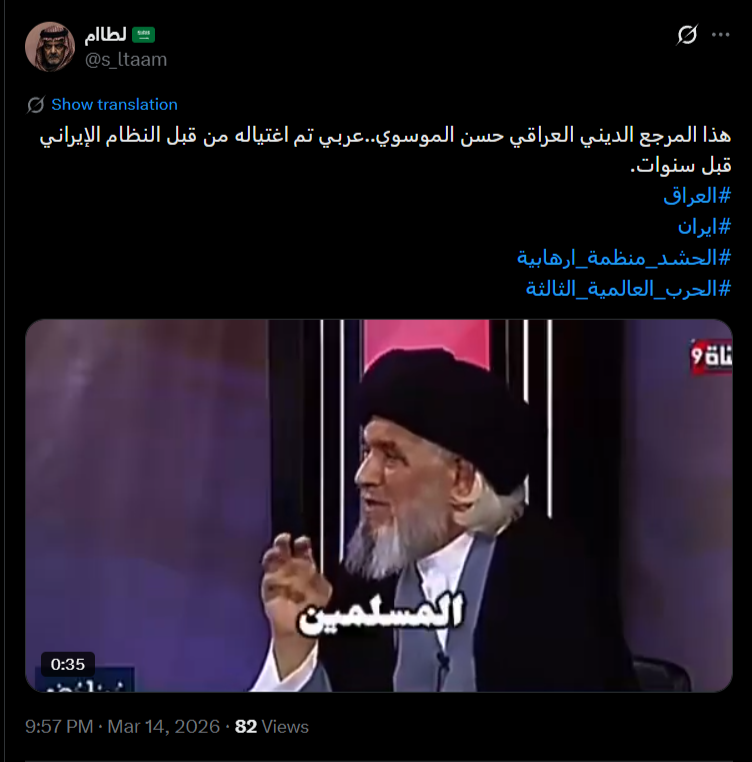
In moments of escalation between the US/Israel and Iran, Iraq transforms into a contact zone. With some PMF factions presented as an extension of Iranian influence, the discourse slips from internal criticism to regional alignment: the conversation is no longer about a "governance problem," but rather about an "axis" and a struggle for influence.
Here lies the difference between criticism and mobilization.
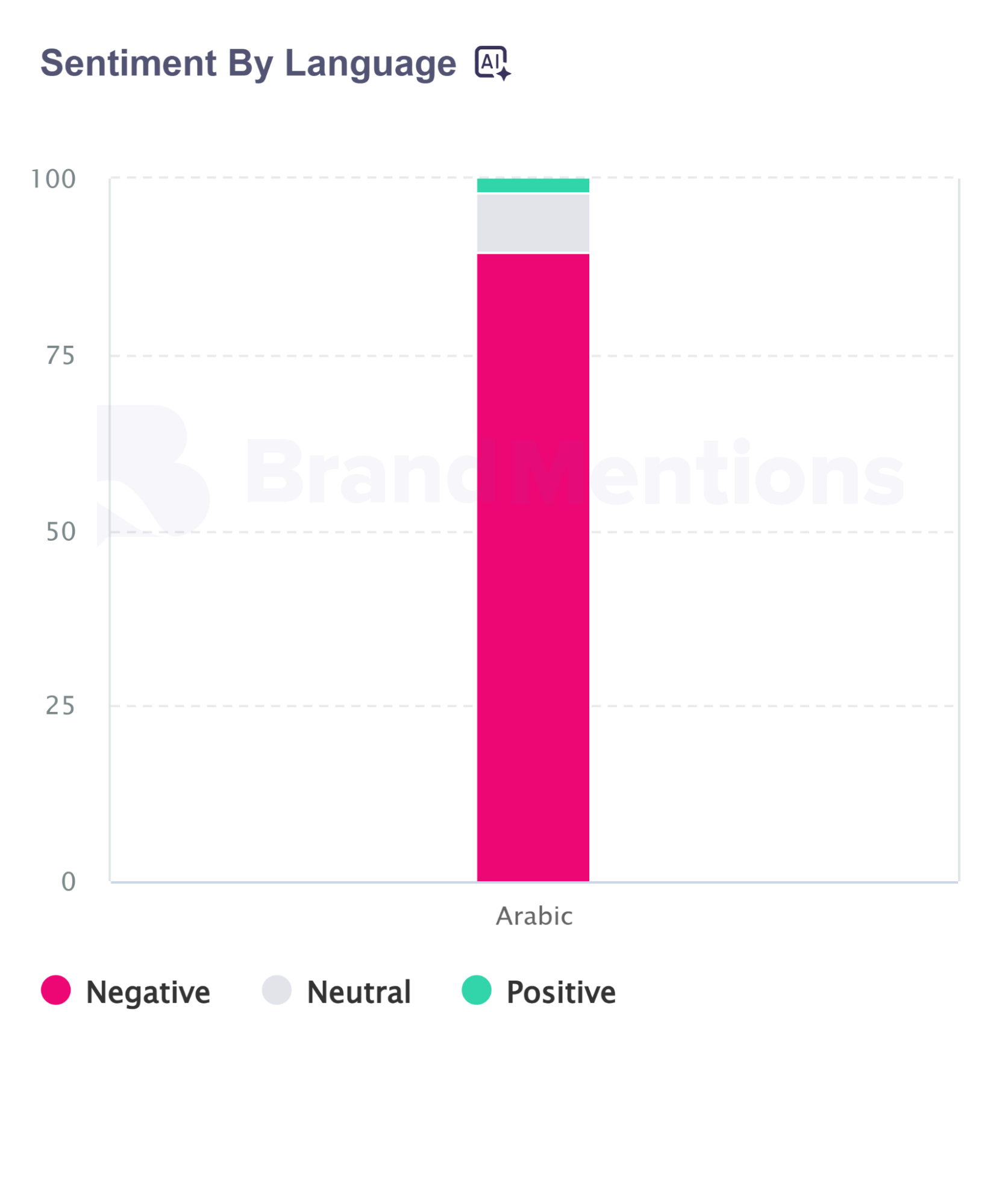
Ordinary criticism targets performance or a decision. Mobilization requires a moral justification that shifts the opponent from the category of a politician to an enemy.
The description of the PMF as a “terrorist organization” fulfills this role; it removes it from the realm of debate to absolute condemnation, and makes the discourse susceptible to emotional escalation: anger, schadenfreude, or even celebration.
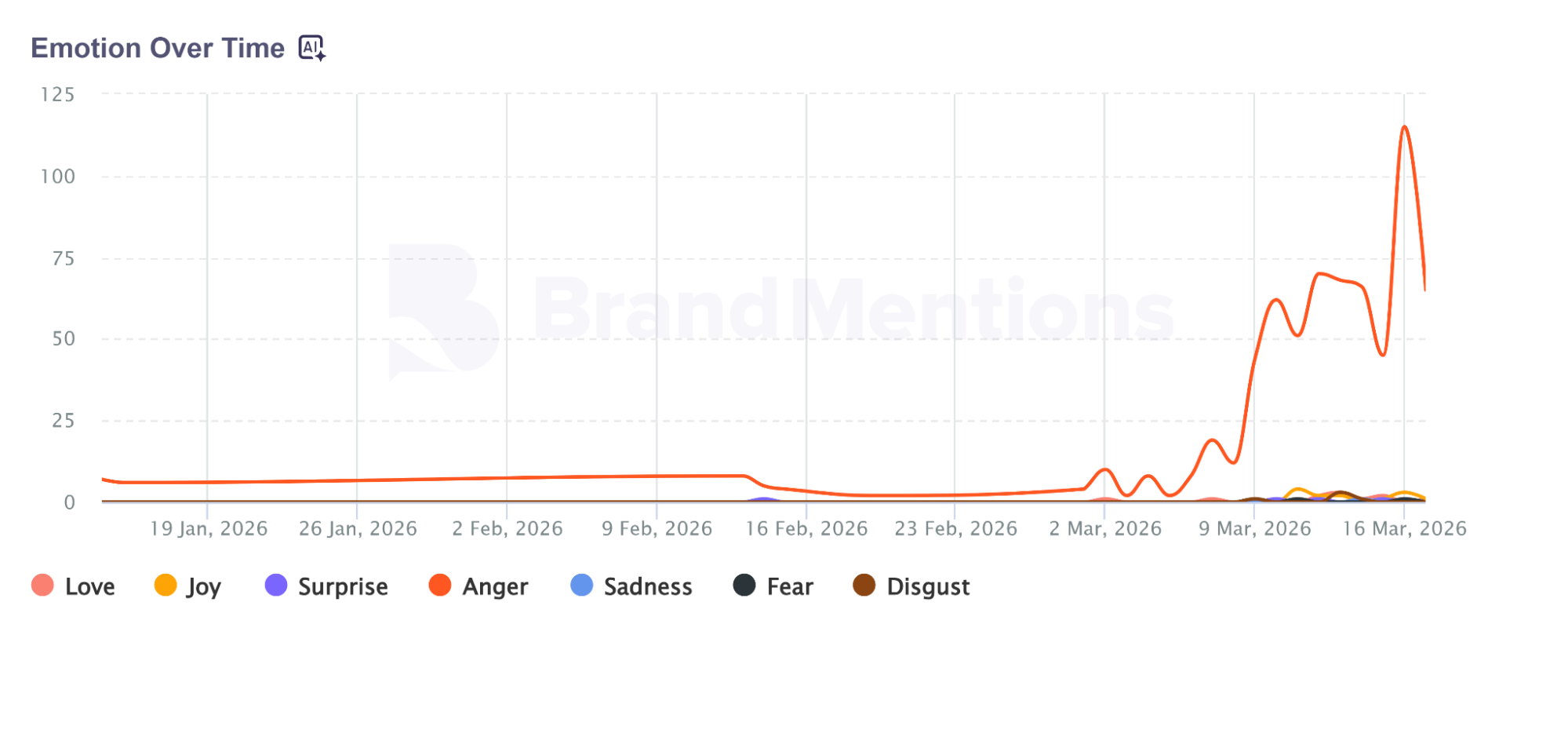
The data clearly shows this shift:
Not only does the number of posts increase, but it expands, and when there is military escalation, strikes, leaks, or attacks, the description becomes ready for use as a daily headline, and the public becomes susceptible to emotional recruitment: anger, gloating, celebration, or fear.
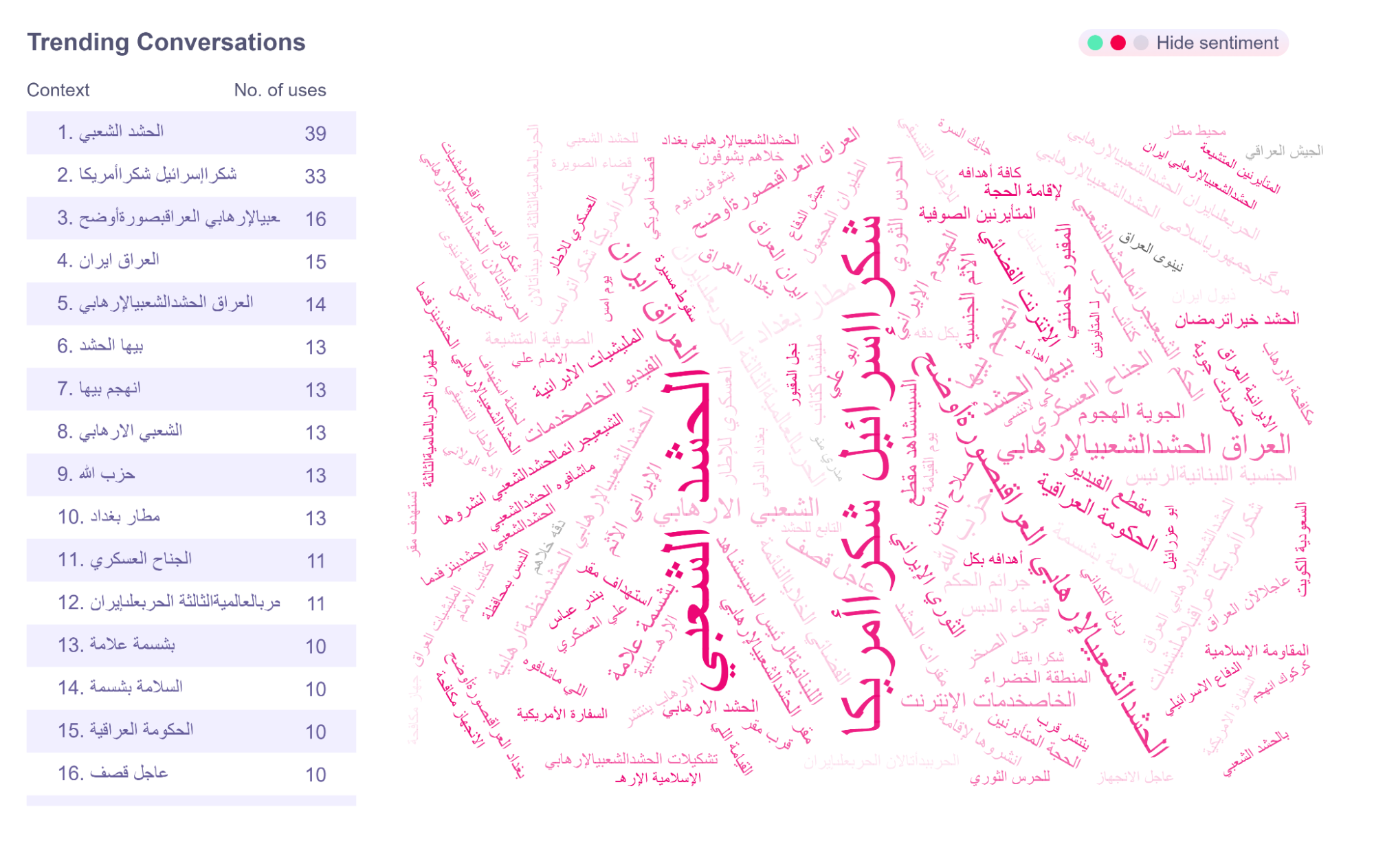
Our data clearly shows a pivotal moment, marked by more than just an increase in post volume; the discourse itself underwent a fundamental shift. The accompanying hashtags extend beyond "PMF is a terrorist organization" to encompass the language of the "war on Iran," "Khamenei," and "World War," sometimes including direct expressions of thanks to foreign entities. This linguistic expansion is a crucial indicator, signifying that the campaign is not merely a condemnation of the PMF. Instead, it seeks to reframe the PMF within a broader narrative: "PMF equals Iran equals War."
The March wave, therefore, represents more than a mere reaction to a single event. It is a response to a complex political juncture where Iraq's volatile domestic situation meets the region's heightened tensions and an online platform prone to sudden, significant amplification.
Within a window of just a few days, between March 9 and 16, 2026, this tense political-regional context transformed into direct digital fuel. Suddenly, the curve of posts linked to describing the PMF as "terrorist" surged from intermittent activity to an intense daily rush, then quickly peaked and receded just as fast—as if we were facing a mobilization wave, not a prolonged, deep discussion.
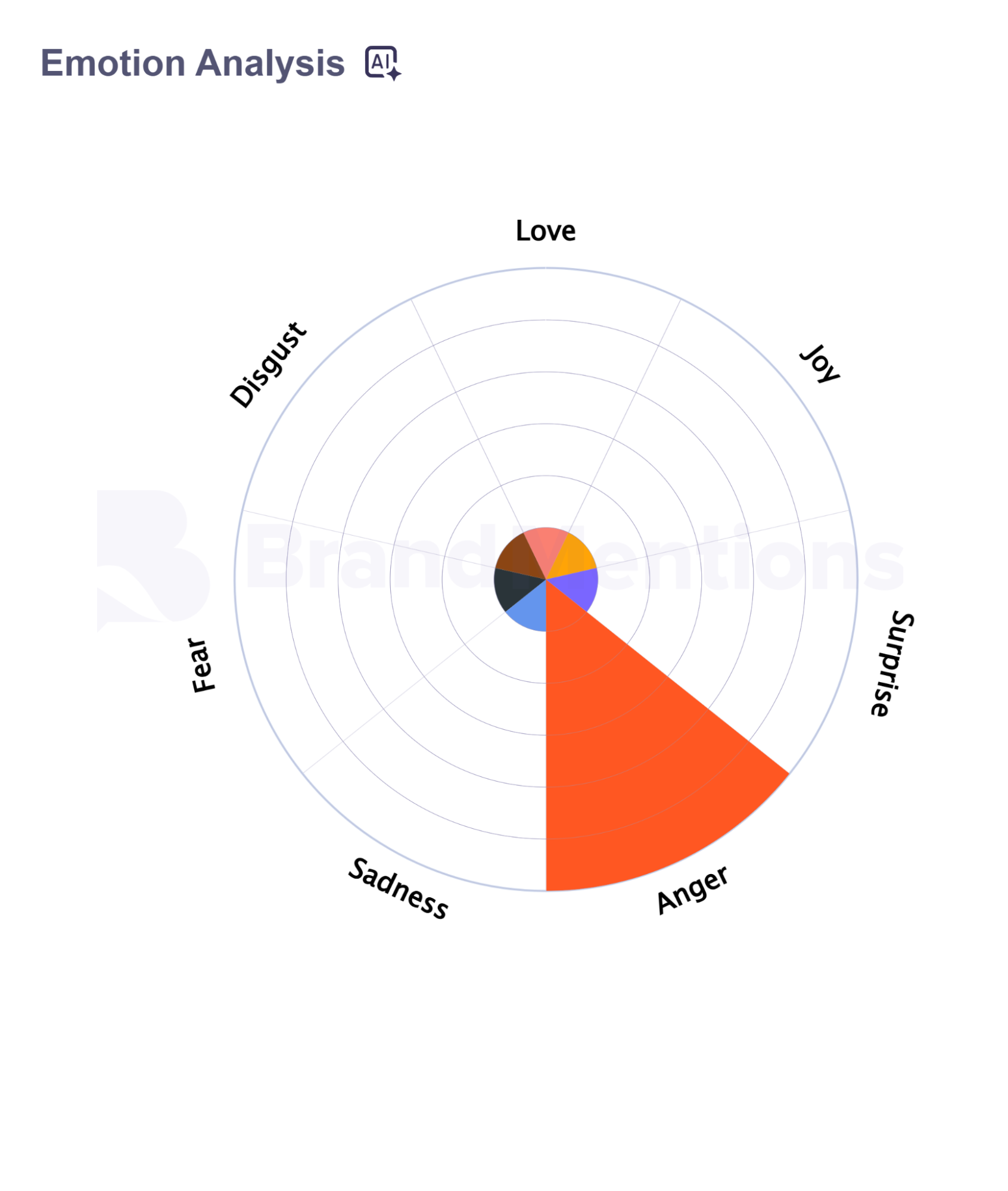
The key observation is that the sudden escalation of the debate is not fragmented across various social channels, as is typical. Instead, it is heavily concentrated on X, as if the current circumstances require a specific space to convert the hashtag into a full-fledged confrontation. Within this rush, the discourse does not stop at condemning the PMF as an internal force, but linguistically extends toward the vocabulary of regional war and alignment: Iran, Khamenei, "War on Iran," "World War"etc. In instances the language even celebrates strikes or directly thanks external powers - which means that the narrative does not function merely as an internal objection to an Iraqi institution, but as a redefinition of the PMF within an "axis" framework that calls for and justifies targeting.
At this point, the questions posed by the data become logical and urgent: If this was merely public opinion, why did it come in this short, explosive form? And why did it focus on X to this extent? And why did some accounts seem to lead it at a much higher pace than the rest of the users?
When deconstructing the wave at the account level, the picture changes dramatically. Instead of broad participation, it appears that the majority of the activity is led by a specific group of accounts, with a notably higher than average posting frequency.
Some of these accounts operate as a "broadcasting machine": intense and continuous posting, following military developments moment by moment and transforming them into mobilization content.
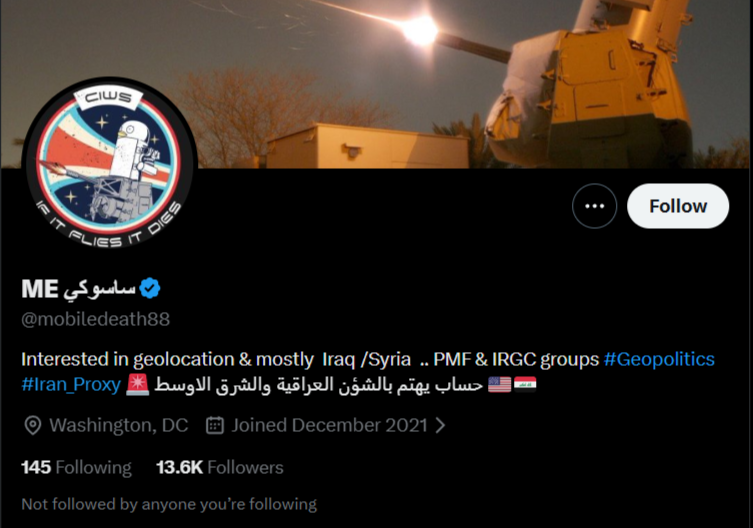
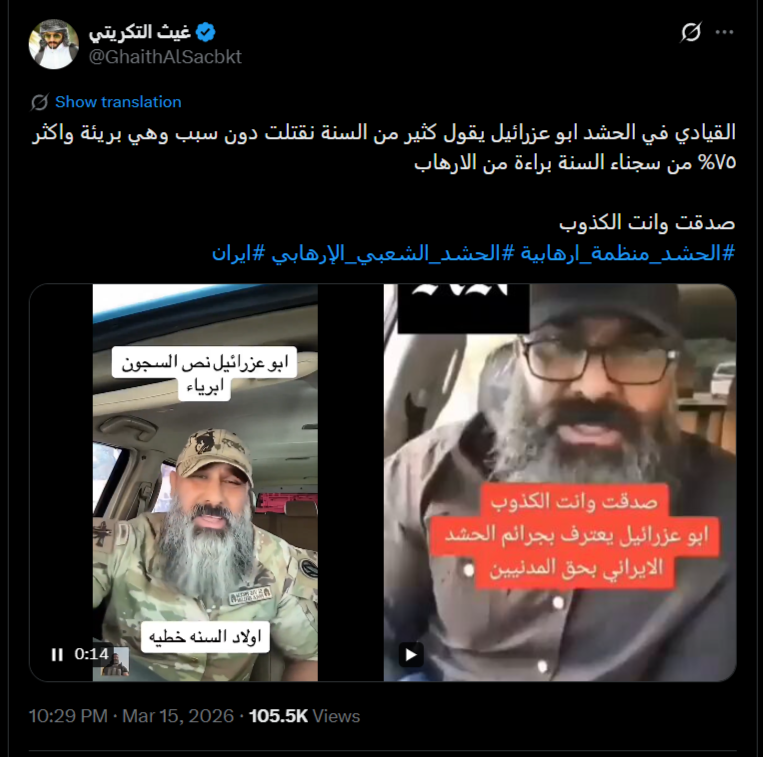
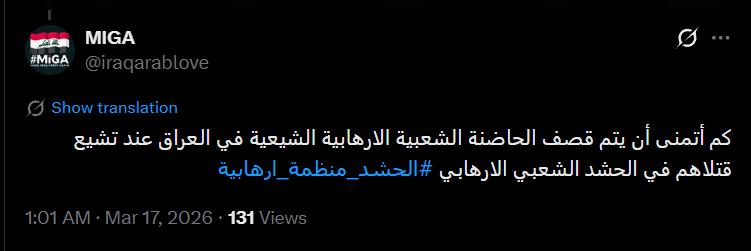
For example, the account mobile death 88 posted more than a hundred times within a few days, at a high daily rate, using alarming language and continuous updates about "targets," "strikes," and "field developments." This behavior does not resemble a traditional discussion; rather, it resembles a mechanism that maintains the wave's momentum.
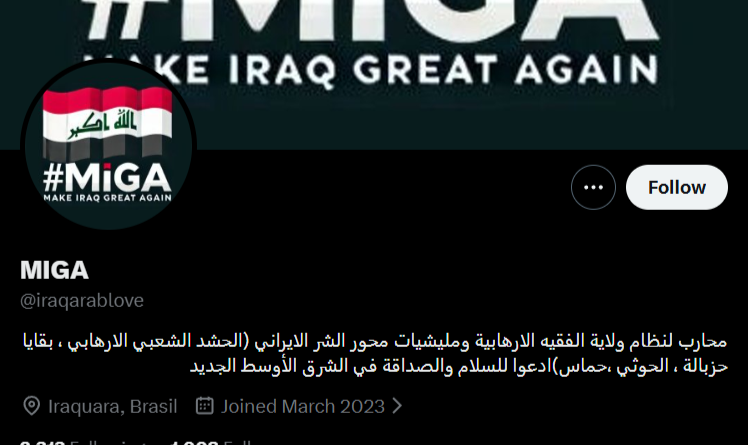
Conversely, other accounts push the discourse to higher levels of severity, by celebrating the bombing, or using inflammatory language that goes beyond political criticism. An account like iraq arab love appears as a model for this pattern.
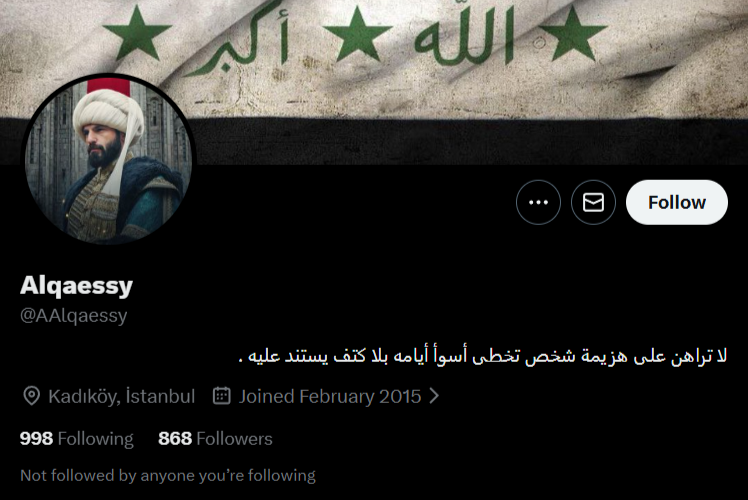
The most important thing is that these patterns do not work in isolation: the "Broadcasting" accounts maintain the rhythm, while the "Emotional Escalation" accounts raise the intensity of the discourse—which creates an integrated dynamic that reinforces the spread of the narrative.
Digital Mobilization: Rise and Fall within Hours
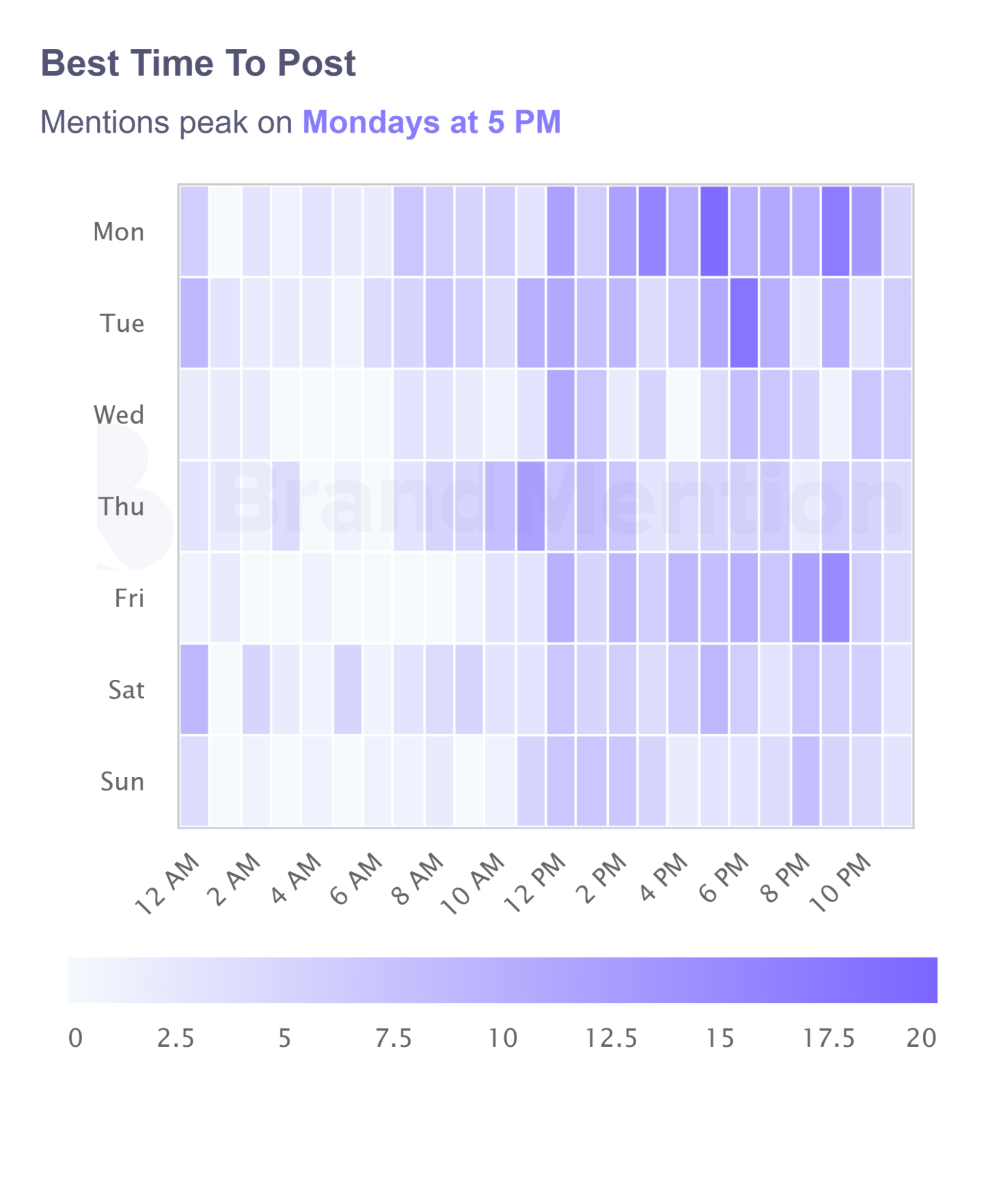
The escalation is evident not just over days, but also hour-by-hour. When analyzing the data precisely over time, sharp peaks appear in short periods, forming and then disappearing quickly. In some cases, a single hour records dozens of posts - as happened on March 13th - with a repetition of similar peaks on consecutive days.
This pattern differs from natural discussion, which is usually distributed throughout the day and witnesses a diversity in rhythm and opinions. Here, the discourse seems closer to "catching a signal": a piece of news or a sudden development, followed by a rapid rush of posting, and then a move to another event.
Each of these elements - on its own - might seem interpretable:
The concentration of accounts could be attributed to the activity of influencers.
Repetition might be explained by enthusiasm.
Synchronization might be related to the speed of news circulation.
But what the data reveals is the convergence of these factors at the same moment and in the same direction.
In a short time window, a limited number of accounts move at a high pace, using repetitive linguistic templates, within a wave that rises and falls quickly, concentrates on one platform, and revolves around a semi-singular narrative.
This overlap between time, structure, and language indicates not just intense activity, but an efficiently operating pattern: a discourse that is produced quickly, easily recycled, and pushed at specific moments.
In Conclusion
What happened does not seem to be merely a natural inflation of an existing public opinion, but rather closer to an amplification of a specific narrative through digital mechanisms that make it appear broader than it is. Not necessarily through a clear central network, but through a repetitive behavioral pattern that makes the discourse move as a single block, not as a group of independent voices.
Prepared by: Sherif Mourad