Arabi Facts Hub
is a nonprofit organization dedicated to research mis/disinformation in the Arabic content on the Internet and provide innovative solutions to detect and identify it.
How a Debate on the Legality of Arms in Lebanon Led to a Surge of Polarization and Hate Speech on X
Mar. 18, 2026 | AFH
Sherif Murad
From March 1 to 7, 2026, a widespread online discussion took place on X (formerly Twitter) regarding the legitimacy of weapons in Lebanon. This debate coincided with a period of political and military escalation in the country. Monitoring data analysis reveals that the conversation quickly moved beyond a standard political debate, transforming into a wave of intense polarization. This surge was characterized by the convergence of three primary discourse clusters:
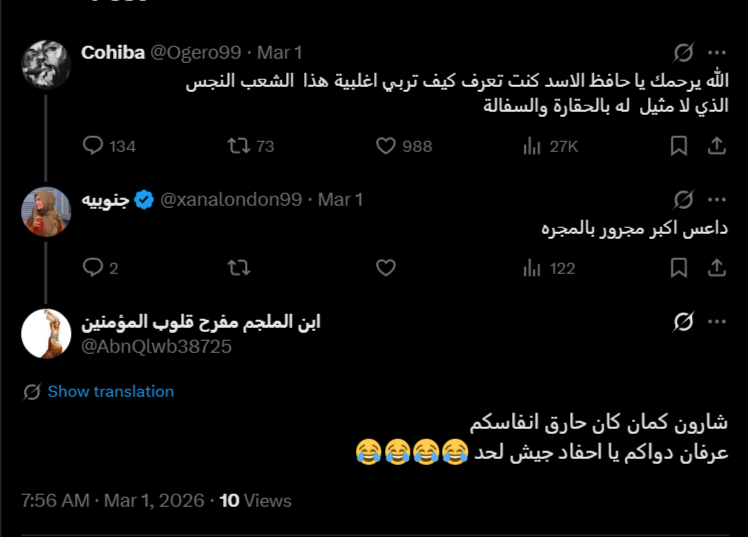
A broad discussion about the bombing in the southern suburb of Beirut, an offensive cluster attacking Hezbollah, and a smaller but more intense cluster attacking the Lebanese Army by describing it as the “Lahad Army.”
The data indicates that the most intense hate speech was concentrated within the cluster attacking Hezbollah, while the strongest indicators of abnormal online amplification appeared in the discussion related to the southern suburb, particularly through hashtag stuffing and concentrated posting by a limited number of accounts.
This report is based on Arabi Facts Hub’s methodology for monitoring digital campaigns and Coordinated Inauthentic Behavior (CIB), using data analysis from the Brand Mentions platform. It offers both quantitative and qualitative insights on the scale, intensity, keywords, discourse patterns, and emotional aspects of the online activity. Furthermore, it identifies indicators of abnormal digital amplification, clearly differentiating between conclusions supported by the data and those requiring more detailed verification.
The Main Wave
The data shows that what happened was not a single campaign, but a complex digital wave that split into three main clusters, distinct in narrative but thematically interconnected:
The largest cluster was the Dahieh (Southern Beirut) Bombing Cluster, which accounted for 5,221 posts on X between March 1 and 7, published by 1,925 accounts. This was followed by the Attack on Hezbollah Cluster with 1,154 posts from 503 accounts. As for the Lahd Army Cluster, it was the smallest, with 202 posts published by 158 accounts.
In terms of impact, the sample on X achieved approximately 136.2 million estimated reach, and more than 154 thousand interactions, in addition to over 15.3 million views according to the available data fields.
The Dahieh cluster alone captured about 108.98 million reach and 116,310 interactions, while the cluster criminalizing Hezbollah achieved about 25.58 million reach and 36,369 interactions.
The Lahd Army cluster, however, had a relatively limited impact, with its reach at about 1.62 million with 1,341 interactions.
The data shows a key analytical insight: while the largest group in terms of reach may not be the most extreme in its hate speech, its sheer size makes it the central platform for broadcasting the discourse to a broader public.
Peaks and Pivotal Moments
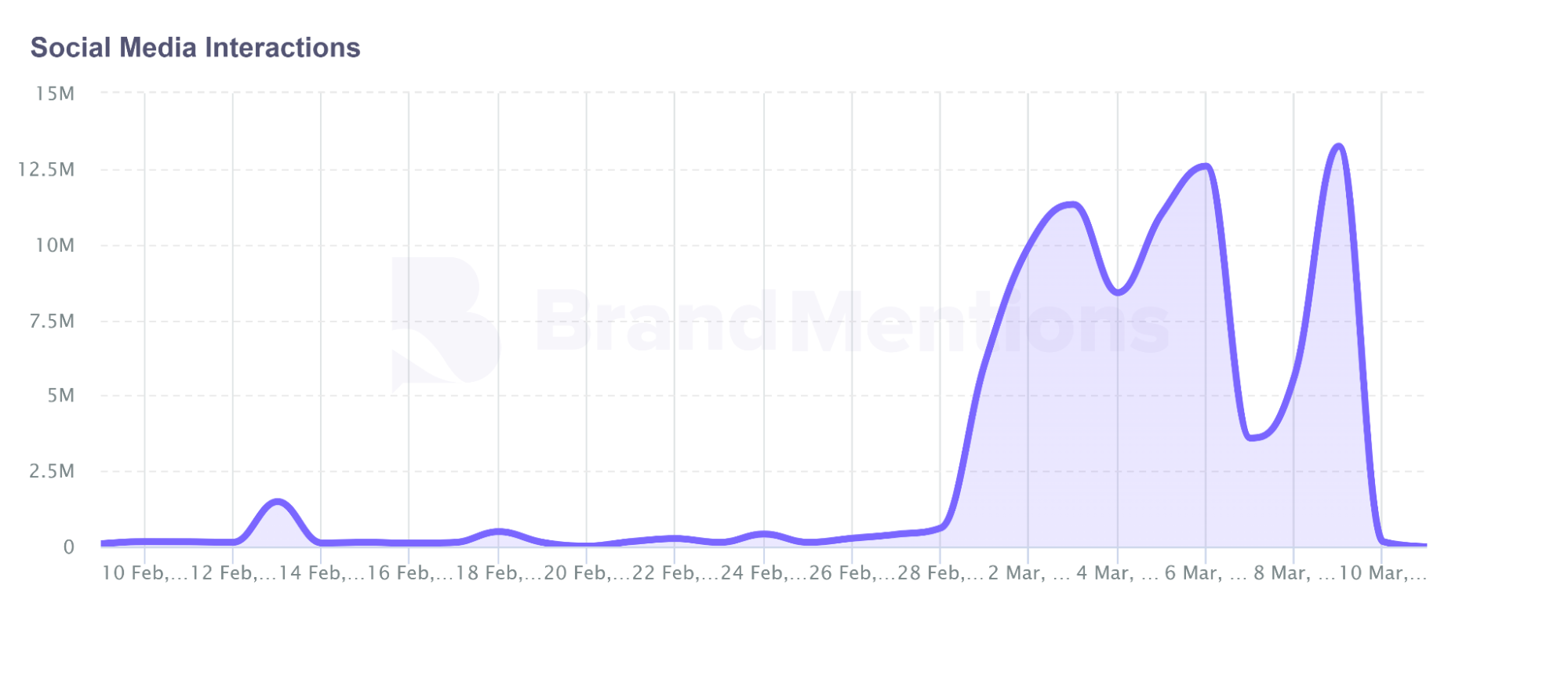
Data shows that digital activity escalated in two main waves.
The first wave began on March 2nd with 883 posts recorded on X, and the high activity continued on March 3rd (850 posts) and March 4th (813 posts).
Then came the larger second wave, as the volume of posts reached 1,748 posts on March 5th, before the sample hit its peak on March 6th with 1,909 posts. On March 7th, activity dropped to 95 posts due to the near-complete cessation of export that day.
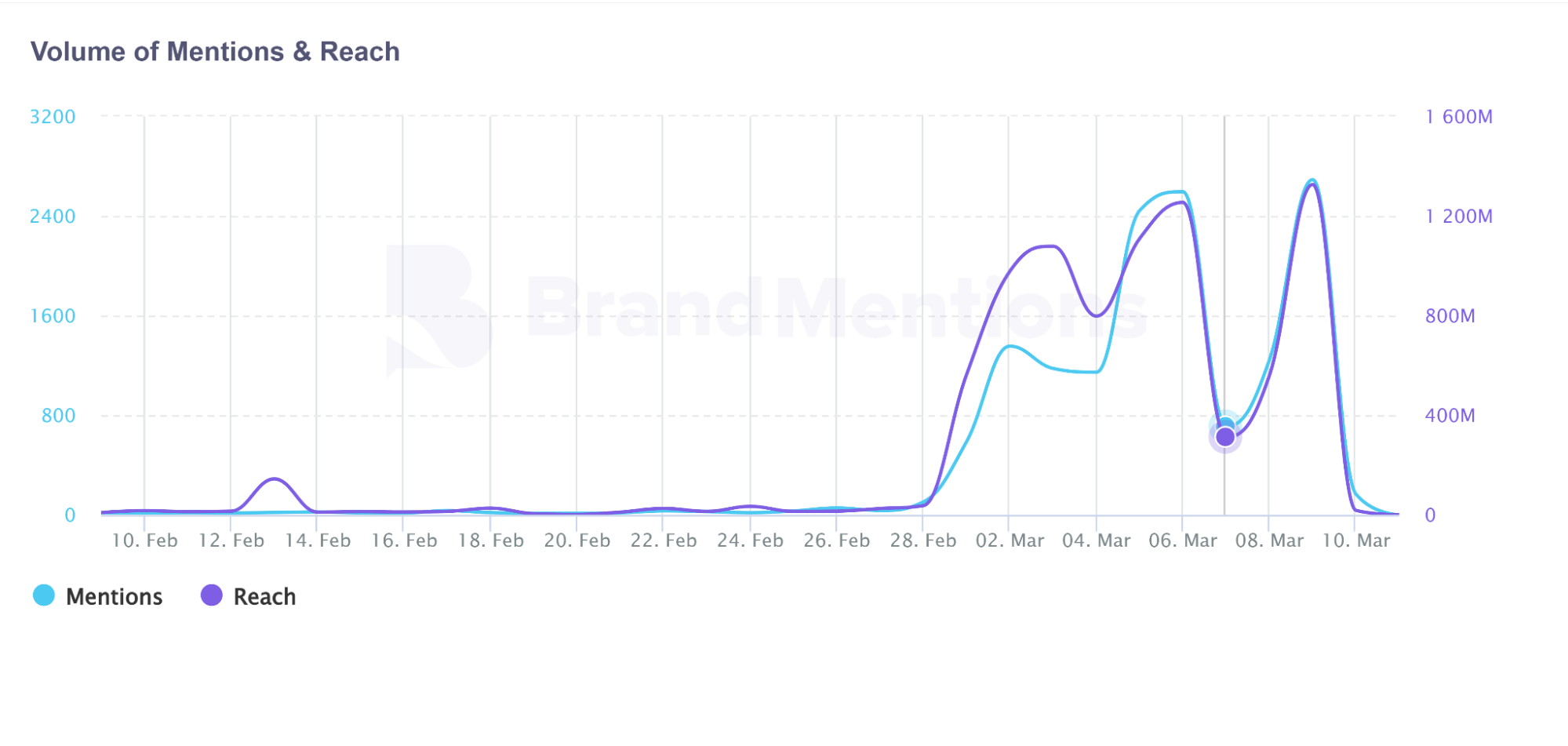
Upon deconstructing the peak by cluster, a clear relationship with the political and military context emerges.
The attack on Hezbollah cluster peaked early on March 2 with 432 posts, before declining later.
Meanwhile, the "Lahad Army" cluster peaked on March 3 (81 posts) then March 4 (53 posts). In contrast, the Dahieh/Bombing block peaked on March 5 (1,533 posts) then March 6 (1,789 posts), which coincides with the expansion of the bombing and the escalation of displacement operations.
This temporal progression is consistent with documented political and military developments; Reuters reported on March 2 that the Lebanese government announced a ban on Hezbollah's military activities, and that Prime Minister Nawaf Salam affirmed that the decision of war and peace rests solely with the state.
On March 6, Reuters reported an escalation in Israeli bombing of the Southern Suburb (Dahieh) and the issuance of widespread evacuation orders, which explains the inflation of the digital discussion related to the Dahieh to its peak.
Keywords and Hashtags
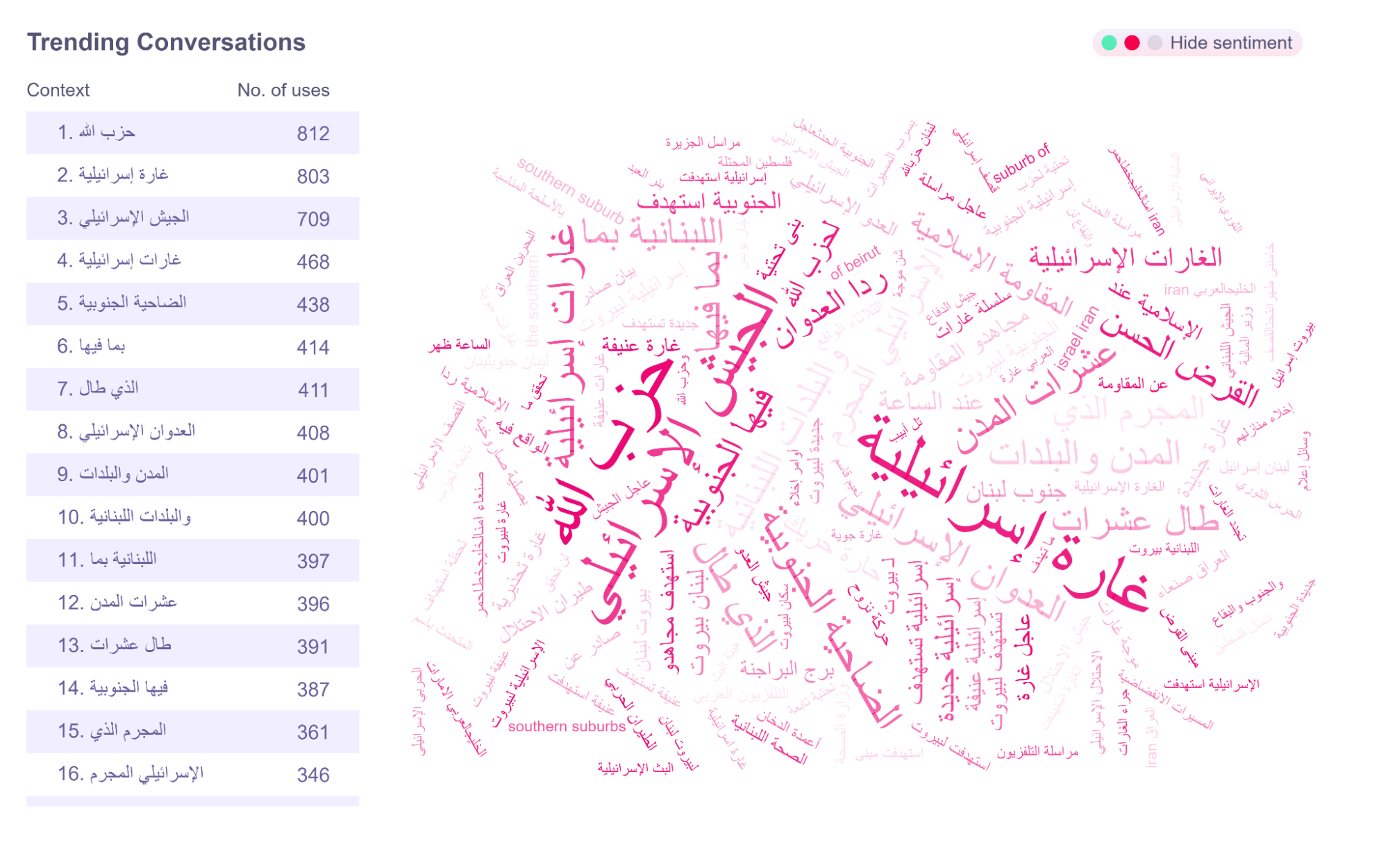
Within the Dahieh bloc, the most prevalent hashtag was #الضاحية_الجنوبية (Southern Suburb), appearing 2,983 times in the analysis window, followed by #لبنان (Lebanon) (1,470 times) and #بيروت (Beirut) (526 times).
Interrelated regional hashtags also appeared, such as: #العراق (Iraq), #ايران (Iran), #خامنئي (Khamenei), and #الحرب_العالمية_الثالثة (World War III), which indicates a link between the Dahieh discussion and a broader regional narrative that transcends the immediate Lebanese event.
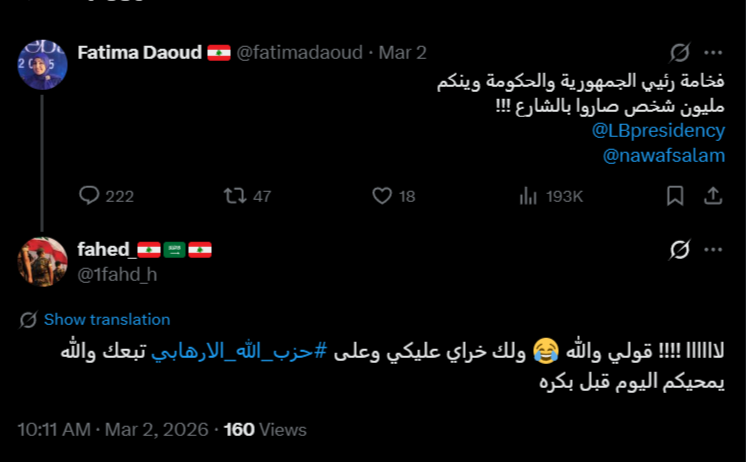
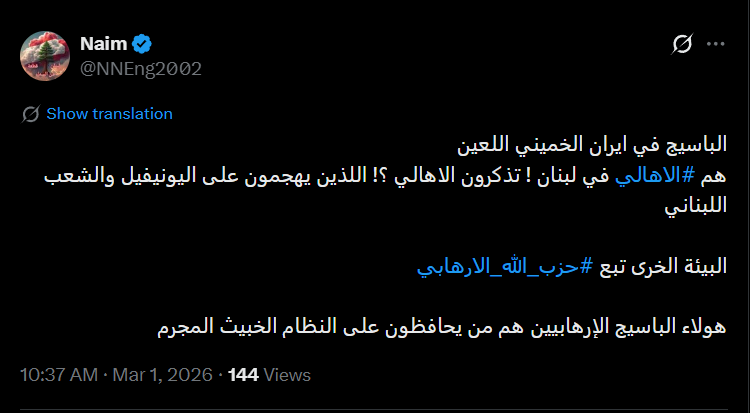
The most circulated hashtag in the cluster of attacks on Hezbollah was #حزب_الله_الإرهابي (Hezbollah are Terrorists), which appeared 817 times during the analysis period, along with others such as: #حزب_الله_خارج_عن_القانون (Hezbollah is Outlawed) and #لبنان_لا_يريد_الحرب (Lebanon Does Not Want War).
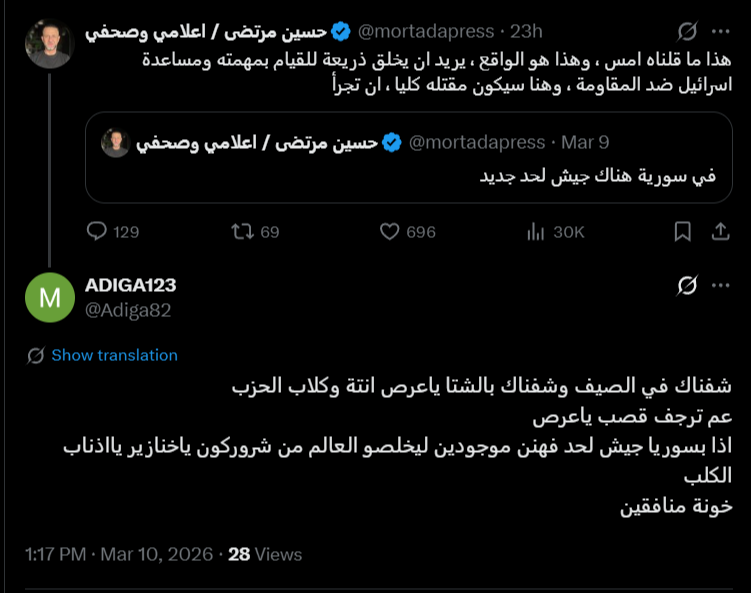
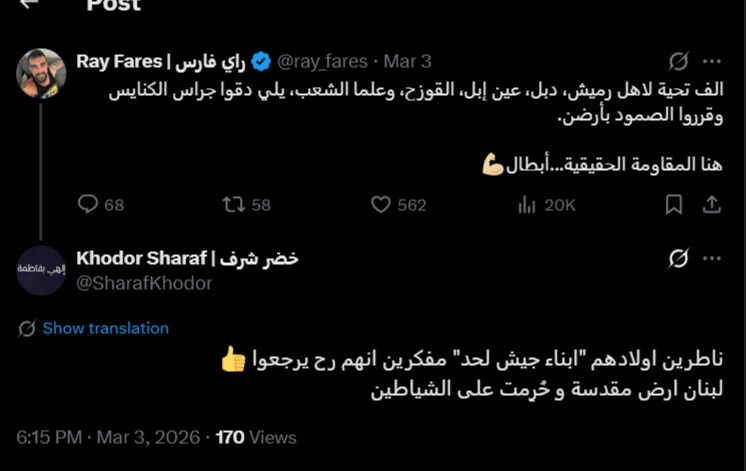
tAs for the phrase "Lahad's Army," it did not primarily emerge as a widely used hashtag, but was often used in posts and replies in contentious contexts.
The hashtag #جيش_لحد “Lahad’s Army” appeared only 7 times, while the phrase was repeated in a larger number of posts.
The term was primarily utilized as an offensive tactic within the debate, rather than serving as a conventional hashtag campaign for mobilization.
Analysis of Discourse and Emotions
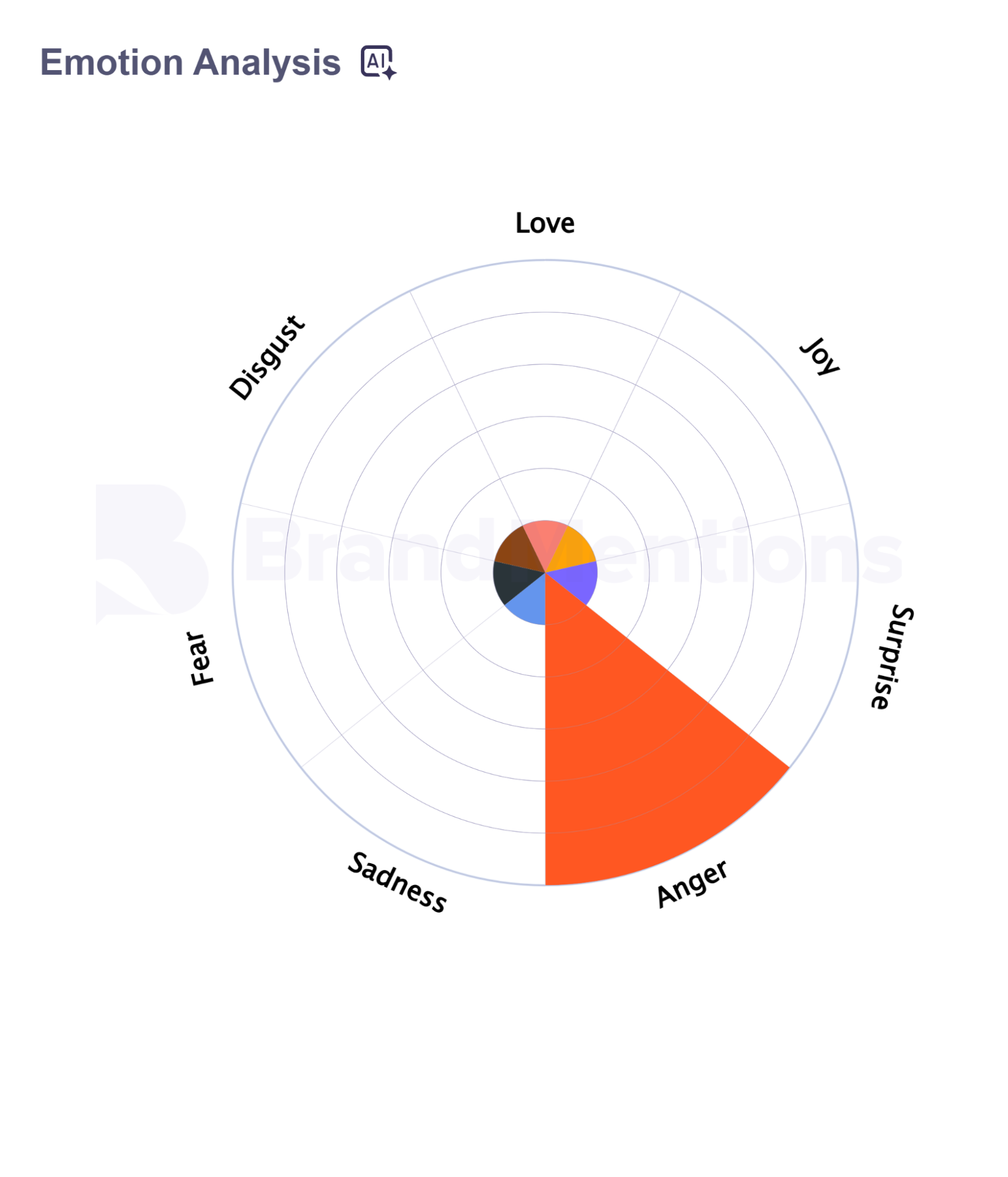
A cluster analysis reveals a clear difference in the nature of the discourse. The Dahiyeh cluster was a mixed container comprising news, coverage, political commentary, and propaganda, alongside some expressions of gloating and incitement.
The cluster attacking Hezbollah was closer to an explicit offensive campaign based on delegitimizing the political party.
Conversely, the "Lahad Army" cluster represents a counter-argument which utilizes a historical figure linked to collaboration with Israel to challenge the patriotism and legitimacy of the Lebanese Army.
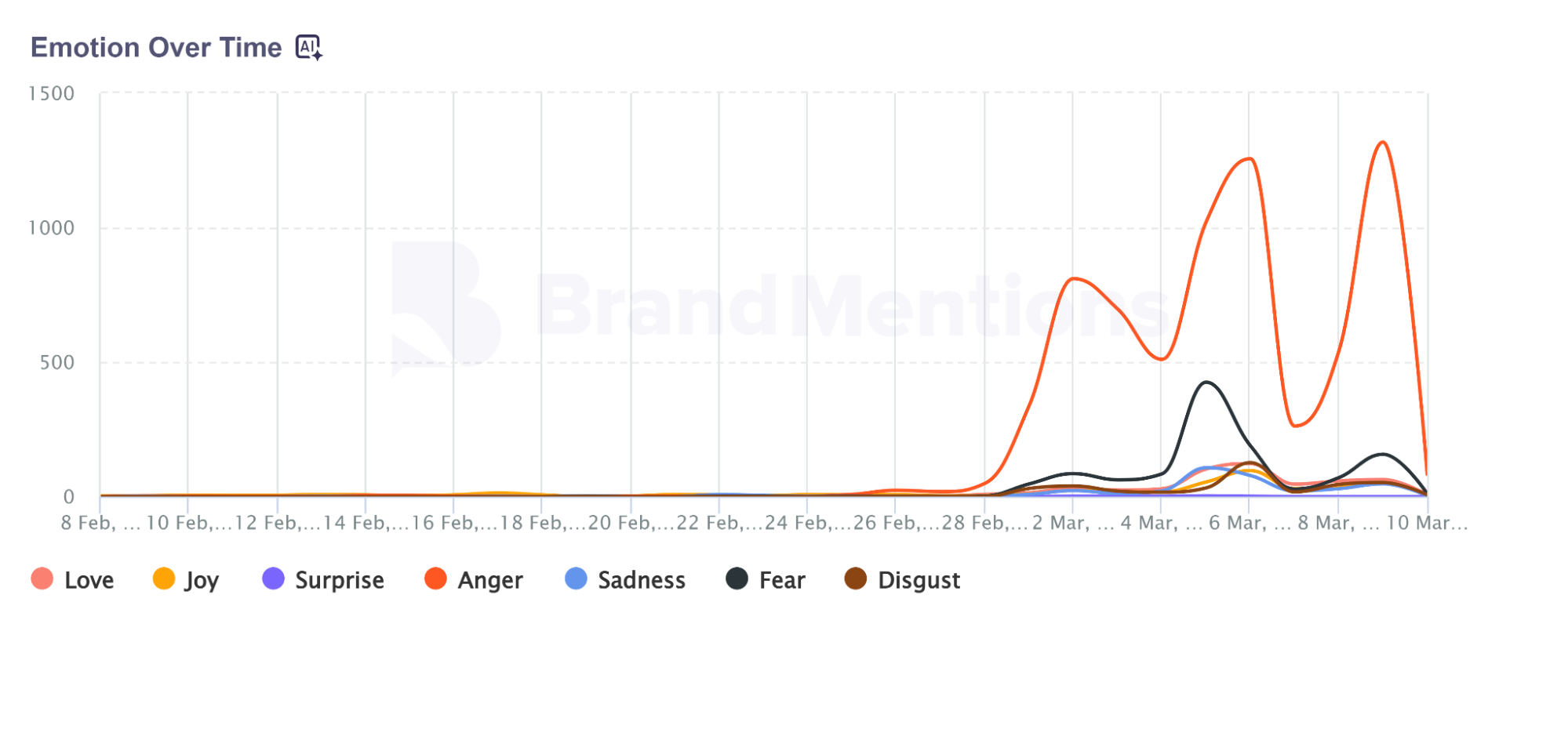
This reading aligns with the sentiment analysis using the BrandMentions tool (with reservations about the limitations of automated analysis for Arabic data):
In the cluster attacking Hezbollah, the negativity rate reached 95.8%, and anger reached 88.7%, which are the highest values among the three clusters.
As for the Dahieh bloc, it recorded a negativity of 75.1% and anger of 46.6%.
Meanwhile, the "Lahad Army" cluster recorded a negativity of 72.3% and anger of 64.4%.
Practically, this means that the most hate-intensive bloc is the criminalization of Hezbollah, while the Dahieh bloc remains the most widespread and extensive, but it is not a pure hate bloc.
Hate Speech Indicators
The analysis relied on distinguishing between two levels of discourse:
First: Explicit hate speech, which includes gloating over violence, insults and dehumanization, sectarian slurs, or direct or implicit calls for harm.
At this level, 266 tweets were monitored during the analysis period, which is 4.04% of the total X posts in the sample.
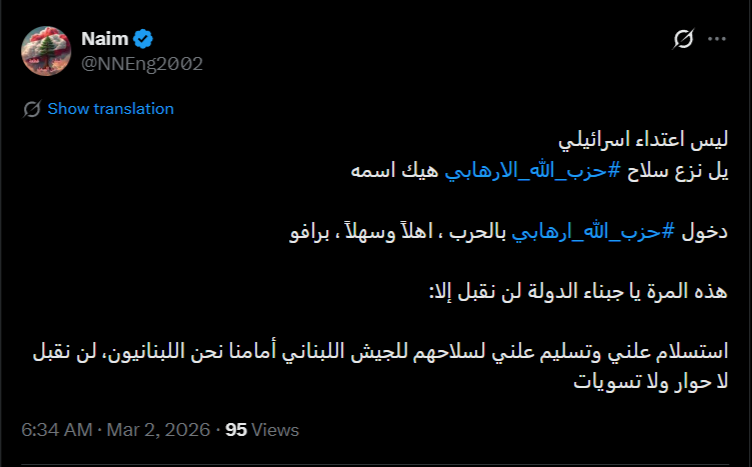
However, this percentage is not distributed equally among the clusters. The density of explicit hate speech reached:
7.19% within the Hezbollah criminalization cluster (the highest).
5.45% within the "Lahad Army" cluster.
3.29% within the Dahieh bloc.
Nevertheless, due to its large size, the Dahieh bloc contained the largest number of explicit hate speech posts (172 posts).
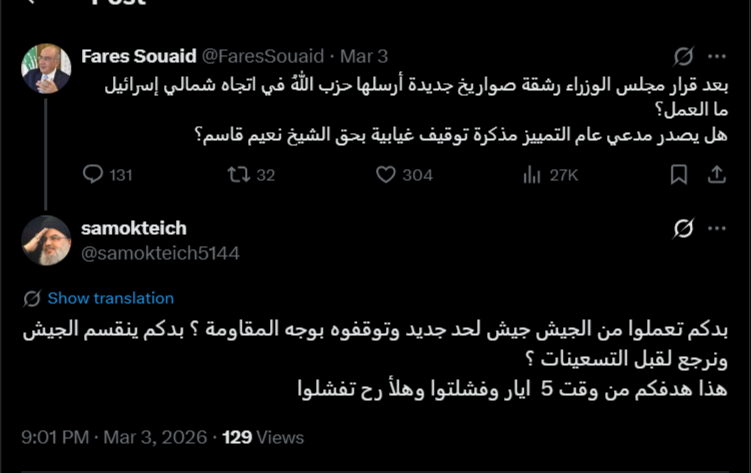
The second level is the broader aggressive or treasonous discourse that does not always fall under the legal definition of hate speech, but builds an identity-based hostility through vocabulary such as: "agent," "Zionist," "terrorist," "militia," and "Lahad Army."
This pervasive language suggests that the core of the controversy wasn't merely direct insults, but a deliberate political and identity-based redefinition of the opposition within the broader public debate.
Nature of Interaction
Given the lack of official breakdown between replies, quotes, and reposts, tweets starting with a direct mention were used as a rough indicator of engaging in debates.
During the analysis period, these tweets constituted 11.6% of the total X posts.
However, the percentage clearly rises within some clusters:
67.8% in the "Lahad Army" cluster
29.8% in the anti-Hezbollah attack cluster
5.3% only in the Dahiyeh bloc
This supports an important conclusion:
The "Lahad Army" cluster was a reactive, contentious pattern more than a mass broadcasting campaign, while the Dahiyeh bloc was closer to content directed at the general public.
The repetition of text appeared in the sample, but it is not sufficient evidence alone of inauthentic coordination, as part of it is due to similar news formulations reposted by different accounts. Therefore, the strongest indicator of amplification at this stage was the pattern of posting and hashtag stuffing, not textual similarity alone.
Inauthentic behavior is a violation of "X" policies, which requires the platform to strengthen monitoring mechanisms and uncover networks running coordinated campaigns, if they include hate speech, incitement, or misinformation.
Whistleblower Accounts
The available data does not allow for certainty that the earliest appearance in the export represents the true "whistleblower," as the hashtag's date may precede the sample window, and the personal and network verification of the accounts has not yet been completed. Nevertheless, the earliest observed appearance in the data within the March 1–7 window can be identified.
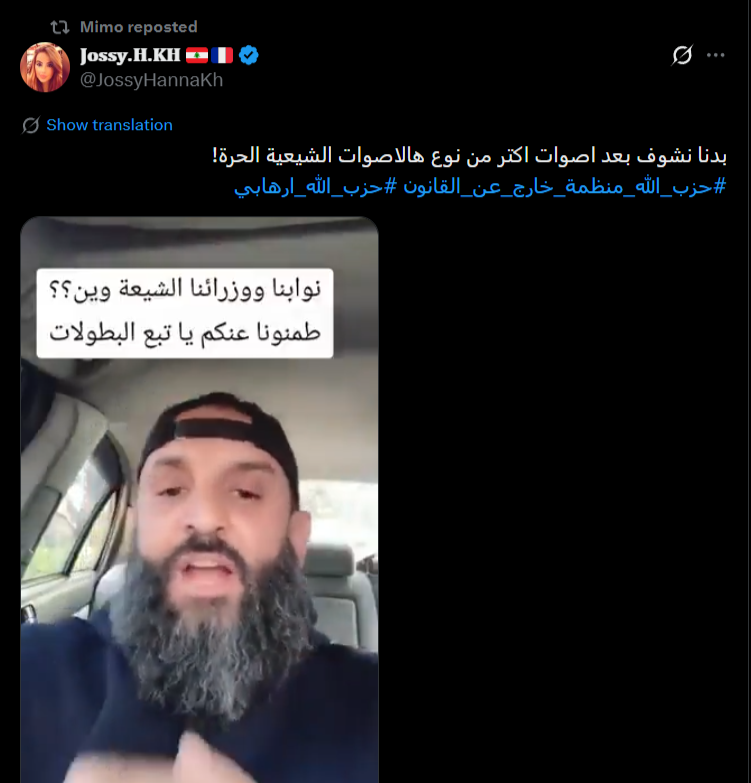
The earliest appearance of the hashtag #حزب_الله_الارهابي (Hezbollah are Terrorists) was recorded on March 1 at 00:41 by the account @motamard_B. The expression Lahad Army” also appeared on March 1 at 00:56 by the account @AbnQlwb38725, while the hashtag #جيش_لحد (South Lebanon Army) appeared on March 3 at 06:07 by the account @Ahmadabed1812.
As for the hashtag #الضاحية_الجنوبية (Southern Suburb), it appeared within the analysis window on March 1 at 19:53 by the account @nicfrakesjourno, while the phrase "Beirut's suburb" (ضاحية بيروت) appeared on the same day via the account of "An-Nahar" newspaper.
When looking at the entire export, indicators show that the verbal hostility towards Hezbollah preceded the main wave, as it appeared since February 26. The phrase “Lahad Army” and its hashtag also appeared before March 1. This suggests that what happened after this date did not begin in a vacuum; rather, it was based on linguistic and rhetorical templates that were already existing, before they intensified with the escalation of events.
Interaction Amplification Accounts
When shifting from the question of "who started" to the question of "who amplified the interaction?" the picture changes.
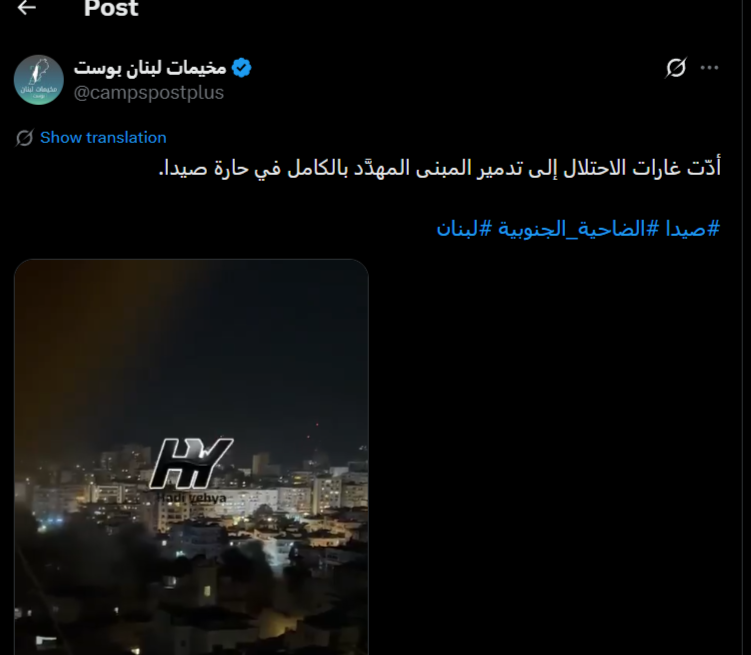
In the Dahieh cluster, several accounts topped the list in terms of publishing volume, most notably the account @mmdly179747 with 139 posts within the cluster, followed by @campspostplus with 111 posts, then @LebTalks with 96 posts, @basheeriraqi20 with 82 posts, @Alhadath_Brk with 74 posts, and @Yousifcoxp with 65 posts. This list shows a mix of news or media accounts and heavily posting personal accounts.
As for reach within the Dahiyeh cluster, accounts with high dissemination and reach capability stood out, such as @Omar_Madaniah, @RaymondFHakim, @alrougui, @ahmadslmanx, @N0_hizbollah, and @mortadapress.
This indicates that the accounts driving the volume of posts are not necessarily the same ones achieving the highest reach, and that the path of influence is often formed through two layers: a layer that drives posting density and content volume, and another layer that contributes to expanding dissemination and reach.
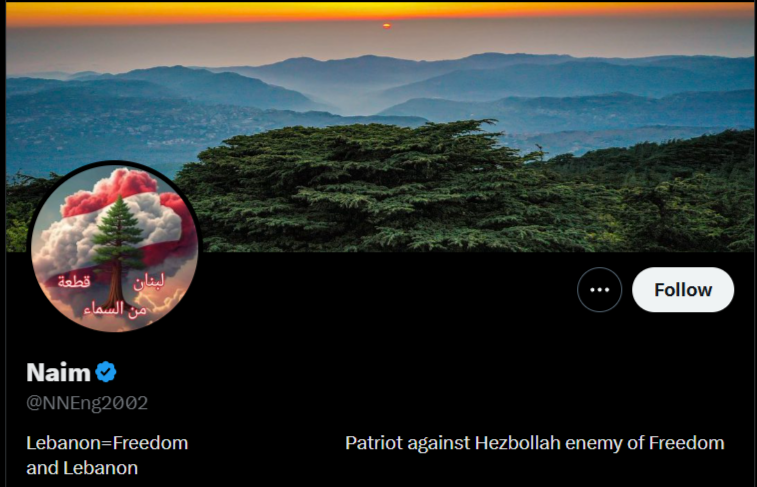
In the cluster criminalizing Hezbollah, the largest account was @NNEng2002 with 42 posts, followed by @1fahd_h and @enzo_tarek with 34 posts each, then @farass014 with 30 posts, and @DarineSuccar7 with 26 posts.
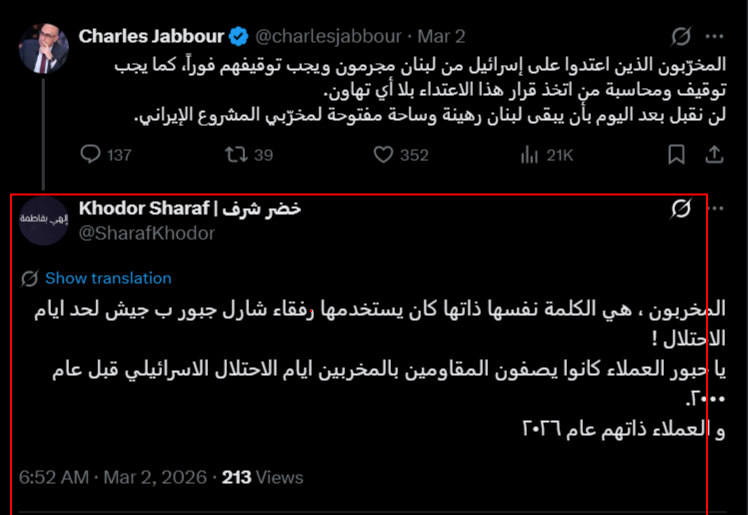
In the "Lahad Army" cluster, the most active accounts were @SharafKhodor, @taleb123000, and @samokteich5144, but with relatively limited volumes compared to the other clusters. This supports the conclusion that this cluster was influential in terms of narrative and discourse, rather than being numerically widespread.
From the perspective of concentration in publishing, the top ten accounts were responsible for 11.6% of the total posts in the sample on the X platform. However, this concentration increases within some clusters; the top ten accounts contribute 21.2% of the content in the cluster criminalizing Hezbollah, compared to 14.5% in the Dahiyeh cluster and 18.3% in the "Lahad Army" cluster.
This indicates that the cluster criminalizing Hezbollah is more concentrated and less dispersed compared to the other clusters.
The data indicates that what happened on the "X" platform between March 1 and 7, 2026, was not a "single hashtag campaign," but rather an interconnected digital wave regarding the legitimacy of arms in Lebanon.
Within this wave, explicit hate speech was present in limited numbers, but it increased during the peaks and was more concentrated within the cluster criminalizing Hezbollah. Conversely, the strongest indicators of unnatural amplification appeared within the discussion related to the Dahiyeh, through hashtag stuffing, trend hijacking, and the concentration of posting in a limited number of accounts.
The term "Lahad Army" was predominantly used in an aggressive, polemical manner within written content and responses, rather than being employed as a widespread mobilization hashtag.

Other Articles