Arabi Facts Hub
is a nonprofit organization dedicated to research mis/disinformation in the Arabic content on the Internet and provide innovative solutions to detect and identify it.
University Student's Guide to Verifying Research & Academic Sources
Feb. 05, 2026 | AFH
This educational article is published in collaboration between the Arabi Facts Hub (AFH) and Al-Fanar Media
It's the night before your paper's deadline, and you're surrounded by dozens of open tabs: articles, blog posts, reports, and online publications. Everything seems valuable, and you confidently include the sources and submit your work. Then, the surprising feedback arrives:
"Your sources are weak," or "Your paper lacks academic sources."
This issue isn't due to a lack of effort on your part. Instead, many students fall into the common pitfall of believing that any text found online is acceptable as an academic reference.
The truth is quite different. University research goes beyond simple information gathering; it requires engaging in a conversation with reliable, scholarly materials that meet stringent standards for publication and academic integrity, as outlined by research ethics guidelines in both Arab and international universities.
”
This guide outlines a simple, clear roadmap covering:
“
- How to differentiate between a scholarly source and general content.
- Where to find trustworthy research.
- How to evaluate any source before incorporating it into your work.
- Proper citation methods to prevent plagiarism and ensure your research has true academic validity.
First: Scientific vs. "Ordinary" Writing: What Sets Them Apart?
On screen, all texts look similar, but a scholarly article published in a peer-reviewed journal —meaning reviewed by experts to ensure the accuracy of information— differs fundamentally from an attractively written opinion piece on a news website. The difference is not only in form but also in structure and scientific standards.
According to "Research Ethic" guidelines in Arab universities like Ain Shams and Suez, the Belmont Report (United States), the UNESCO Recommendation on Science and Scientific Researchers, and the "Research Ethics Initiative" at the Arab Council for the Social Sciences (ACSS); a scholarly article usually includes:
- A specific and clear title.
- One or more authors with academic affiliation and known institutional belonging.
- Abstract, introduction, methodology, results, discussion.
- A detailed list of references.
- The work undergoes a scientific peer-review process where independent experts review the quality of the study before publication.
In contrast, a regular article:
- May be written by a non-specialist.
- Is published on a general website or blog, and does not cite precise sources.
- Does not undergo systematic scientific review, regardless of its reach or number of shares.
Guidelines like the Harvard Guide to Using Sources and Purdue OWL draw a clear line between the two types:
Peer-Reviewed Scholarly Sources: Academic journal articles, books published by university presses, and sometimes Master's and Doctoral theses.
Popular Sources: Newspapers, general magazines, blogs, opinion websites. They may help with understanding and context, but they are not sufficient on their own to build a scientific claim within university research.
Therefore, before adding any source to your bibliography, stop for a moment and ask yourself:
Is this text published in a scientific journal or an academic book? Or is it merely journalistic material or a blog post?
This simple question can make the difference between an acceptable paper and a strong paper that respects academic standards.
Second: Where do I search for reliable academic sources?
After learning the difference between a scientific article and ordinary content, the most important question is: Where do I find these sources?
Examples include, but are not limited to:
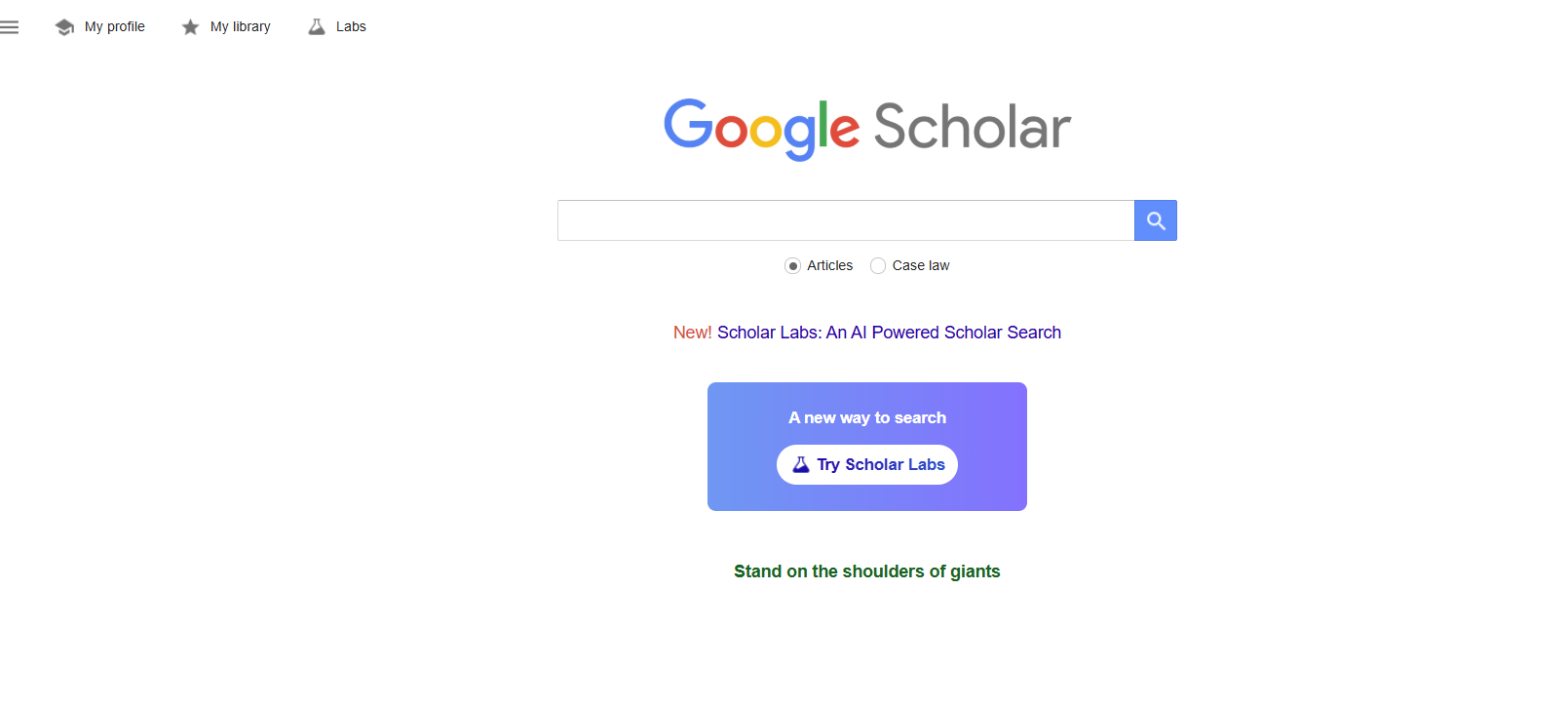
1- Google Scholar: Your First Gateway for All Disciplines
While the standard Google browser offers access to all online information, Google Scholar is exclusively dedicated to scientific and academic content including peer-reviewed articles, academic books, theses, and research institution reports.
The Google Scholar Search Help page clarifies that search results are not automatically displayed from newest to oldest, but by relevance to the search. Students can access recent studies by activating the "Sort by date" option or by specifying the publication year.
Practical steps when using Google Scholar
- Read the publication details; do not rely on the title alone.
- Check the: Author, Journal, Year of Publication, Number of Citations.
- Note words like Journal or Review in the source name.
In this way, you begin to train your eyes to distinguish scholarly sources amidst the crowd of results.
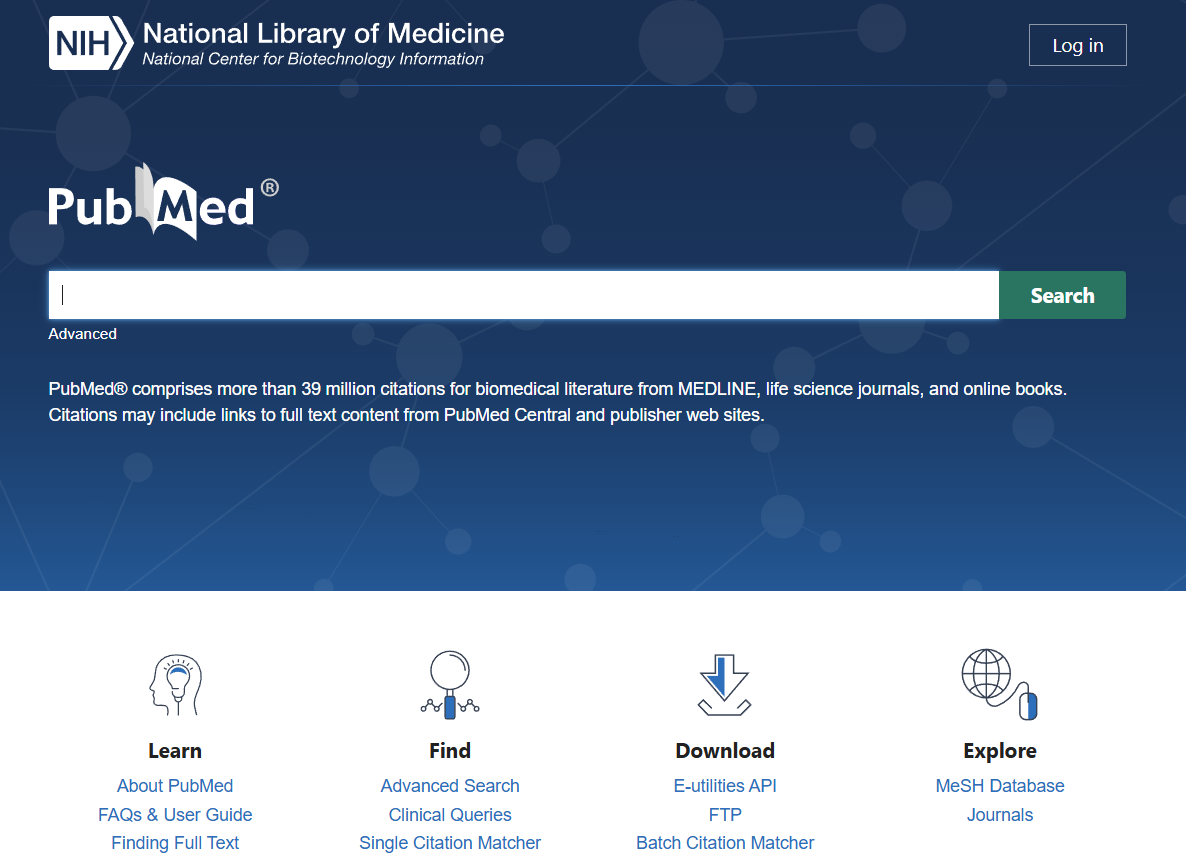
2- PubMed: For Medical Resources
If you are studying medicine, pharmacy, nursing, or any health specialization, then PubMed is one of the most important sources. It indexes millions of articles from peer-reviewed medical journals. Every study has fixed data: title, authors, journal, year of publication, and a unique identifier known as PMID. Even within PubMed, your role remains important in ensuring the study is up to date and relevant to the research topic before relying on it.
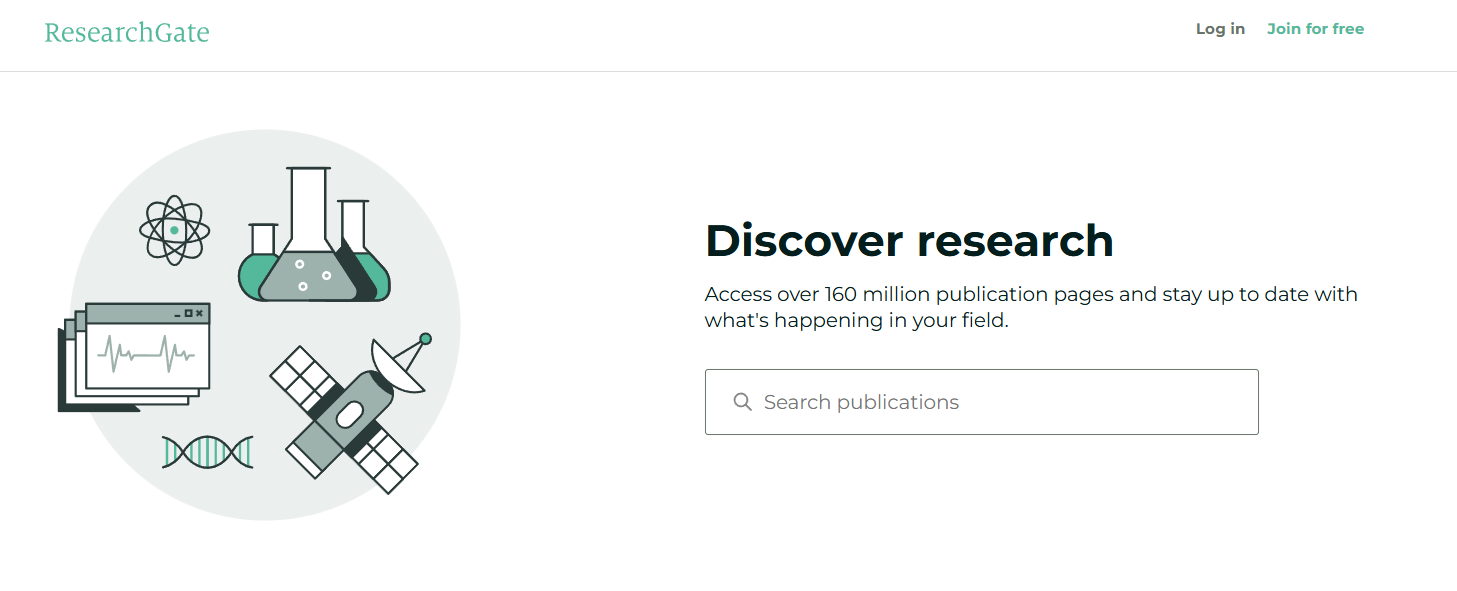
3- ResearchGate: A Research Networking Site
You may come across many studies through ResearchGate, which is useful for connecting with researchers and obtaining copies of their work, but it is not a peer-reviewed database in and of itself. The content is a mix of published articles, preprints, presentations, and incomplete works.
Always take a step back: Verify the publishing journal, the publisher, and the year of publication before using any study as an academic source.
Third: How do I evaluate any source before using it?
Even within trusted platforms like Google Scholar or PubMed, not all studies are of the same quality. Therefore, systematic tools have emerged to help researchers distinguish between sources, most notably the CRAAP Test.
The CRAAP Test has Five Main Criteria:
- Currency: Is the source recent and relevant to the developments in the topic? Some disciplines accept older references, while others require relatively recent sources.
- Relevance: Does the source directly answer the research question or address it marginally?
- Authority: Who is the author? What is their academic background? And was the work published in a peer-reviewed journal?
- Accuracy: Are the claims supported by evidence, a clear methodology, and verifiable references?
- Purpose: Is the goal scientific or educational, or is it promotional or based on personal opinion?
Why CRAAP?
The test was developed by Sarah Blakeslee (Sarah Blakeslee) and a team of librarians at California State University, Chico in 2004, with the aim of training students to evaluate information, especially content available online. It has been documented and published in specialized professional references in information literacy.
The tool derives its credibility from being issued by an academic institution, and the test (or its modified versions) is adopted in source evaluation guidelines for university libraries such as Chicago, Princeton, Virginia, and others, as a standard tool for teaching students how to judge sources. It is also adopted by research and educational platforms such as EBSCO as a systematic framework for judging the reliability of academic information.
University Guides and Practical Questions
University guidelines from institutions such as Brock, SDSU, and Vassar provide lists of practical questions that can be converted into a "checklist" to be used during research, such as: Who is the source's audience? Does the article include recent citations?
Harvard University Guide: Source evaluation depends on the author's authority, purpose, and the scope of the text before relying on it.
”
Evaluation is Part of Academic Integrity
“
Academic integrity is not limited to avoiding plagiarism but also includes not misleading the reader by relying on weak or unreliable sources. Arabic studies on the ethics of scientific research point to the importance of attributing ideas to their owners, ensuring that the cited sources are actually scientific, and avoiding cutting references out of context just to "fill" the reference list.
With repeated practice of the CRAAP Test and its accompanying guiding questions, the researcher becomes more capable of building a reference list that expresses serious and systematic research, not a random collection of sources.
Fourth: Practical Example "Analyzing a Real Academic Article"
Choose an Arabic study published in a peer-reviewed journal in education or media, such as the study available through the Egyptian Knowledge Bank (EKB) platform on academic integrity.
When you look at the study, note:
- The name of the journal, volume, issue, and year of publication, usually on the first page or in the header/footer.
- Author's data: academic degree and institutional affiliation.
- The presence of an abstract, introduction, methodology, results, discussion, and reference list.
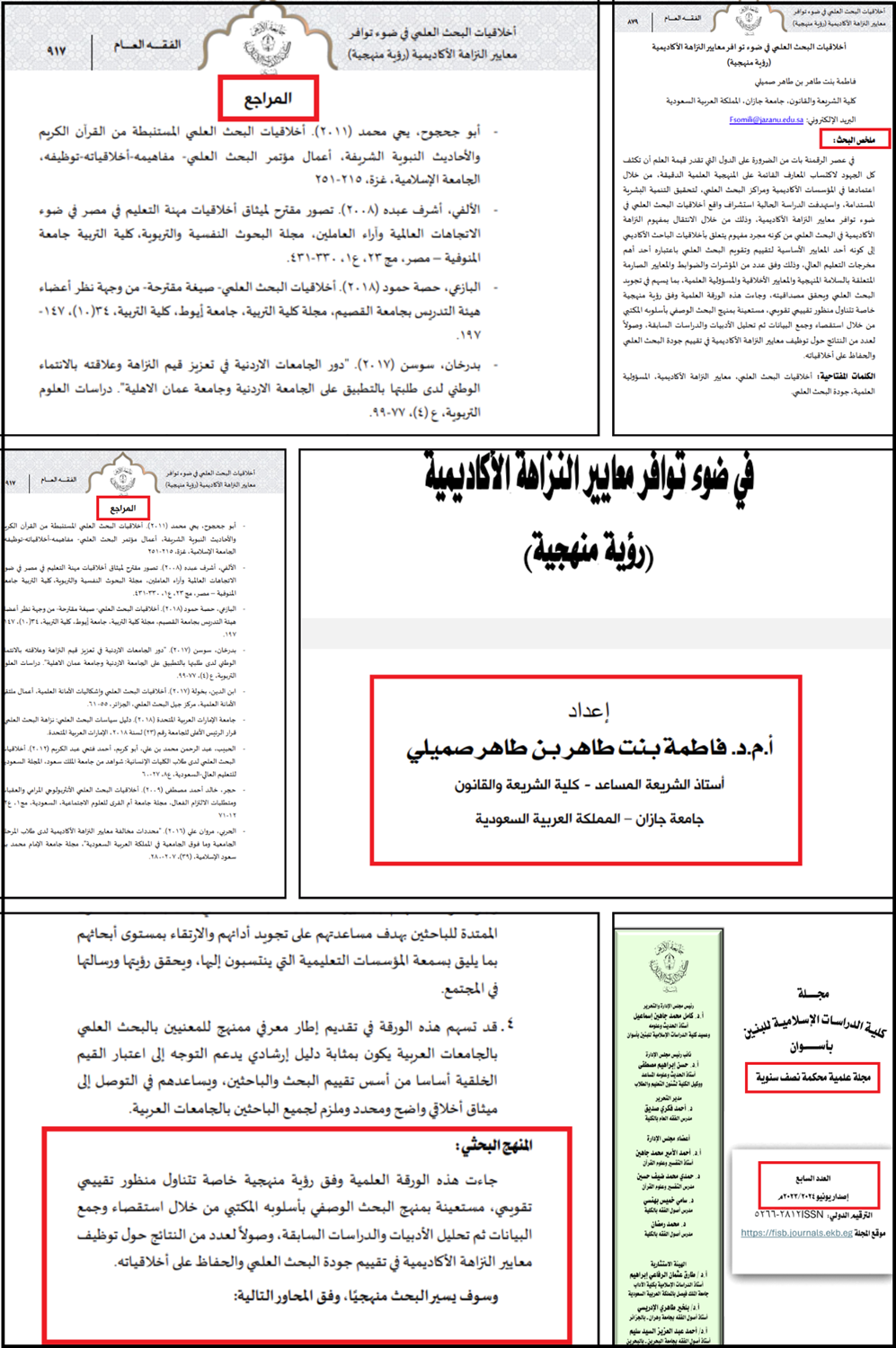
Apply the CRAAP questions: Is the study recent? Is the journal specialized? Are the references diverse and up-to-date?
You can repeat the exercise on an English article via Google Scholar, and use guides like Paperpile and Rasmussen to learn to distinguish between a peer-reviewed article, a thesis, or a book chapter, in addition to the Scribbr article on evaluating sources.
Fifth: How do I properly cite my sources?
Even with the best sources, research remains weak if the citation is random. According to the Get It Done Guide to Undergraduate Research: Good research depends on three interconnected steps:
- Selecting sources.
- Evaluating them.
- Citing them in the text and the final reference list.
Purdue OWL explains the most commonly used citation styles: APA, MLA, Chicago, with ready-made examples for an article, book, book chapter, or website. Save two or three templates to always use instead of inventing a new format for each reference.
The Importance of Citation:
Citation is not ornamental; it is part of academic integrity: acknowledging the contribution of those who came before you, and enabling others to return to the original source to verify it. When conveying an idea or a figure, include the author and year in the text, then the full reference in the list, step by step.
Before you hit "Submit"
Use these three questions as a final review:
- Are most of my sources peer-reviewed articles and academic books, and not just general websites?
- Did I evaluate each source using at least three questions from CRAAP?
- Did I use one consistent citation style (such as APA) and rely on Purdue OWL templates or university guides?
If your answer is "Yes" to all these questions, you are not only improving your research grade but also building a research habit that will accompany you throughout your academic and professional career.
Good research begins with a strong question, but it is only complete with reliable sources, read with a critical eye, and honestly cited.
Recent Educational Articles

Other Educational Articles