Prepared by: Ibrahim Helal - Sherif Morad
Arabi Facts Hub
is a nonprofit organization dedicated to research mis/disinformation in the Arabic content on the Internet and provide innovative solutions to detect and identify it.
This project was prepared in cooperation between the Arab Fact-Checking Community and "Anmat", and is published on "Muwatin".
In times of crises and wars, facts alone do not shape the course of events; the way news is told, the repetitive headlines, and the angles chosen by various platforms to interpret what is happening also shape it. Hence, this series of data-driven analytical reports is the result of a collaboration between Arabi Facts Hub and the independent research initiative Anmat aiming to read the Arab media coverage of the war related to Iran and monitor how competing narratives are formed through media and digital platforms.
The series includes six journalistic stories built on a database prepared and analyzed by the Anmat team, based on the content of five widely influential Arabic-speaking digital platforms: BBC Arabic, Russia Today (RT), Al Jazeera, Sky News Arabia, and Al Arabiya. The work involved collecting materials published during the three days preceding the US-Israeli strike and the first seven days of the war, from February 28 to March 6, using open-source Python libraries.
The analysis relied on the Association Rule Mining (ARM) methodology to study headlines and body texts at multiple levels, including monitoring the most frequently used words, analyzing repetitive linguistic structures, measuring their prevalence, and extracting prevailing patterns using statistical indicators that demonstrate the strength and presence of each pattern, while accounting for differences in publishing volume between platforms. The results were read globally, at the level of each platform, and according to temporal shifts in coverage.
Based on this data, the editorial team at Arabi Facts Hub worked on reviewing and interpreting the results from a journalistic perspective, then building reports that go beyond presenting numbers to understand what lies behind them: How did news outlets differ in covering the event? What were the most prevalent narratives? And how were political stances reflected in language and headlines?
These reports do not claim to provide definitive judgments, but they seek to offer a deeper reading of the media landscape during the first week of the war, by combining data analysis with editorial vision, to understand how news is made and how its meaning is reshaped in moments of conflict.
In this piece
This report does not track the path of the war on Iran on the ground, but rather its path within news texts. Between the hours preceding the US-Israeli strike on February 28, 2026, and the first days that followed, vocabulary and questions emerged within Arab media coverage that transcend the military event itself, connecting to the future of the Iranian regime, possibilities of power transfer, the role of the opposition, and potential scenarios for the post-Supreme Leader era.
The report is based on an analysis of 1,575 journalistic pieces published by five major Arab news outlets during the period from February 25 to March 6, 2026. The analysis focuses on tracking the presence of a set of vocabulary and linguistic patterns related to scenarios of political change in Iran, both in headlines and body texts, with the aim of understanding how these topics appeared in the coverage and the extent of their varying presence across different platforms.
The results show that vocabulary related to the future of the Iranian regime remained limited in headlines compared to its appearance within body texts. Furthermore, platforms did not handle this vocabulary in the same way. While some coverage focused on the direct event—the killing or assassination of Khamenei—other coverage gave more space to questions related to the aftermath, such as regime change, power transfer, and Iran's political future.
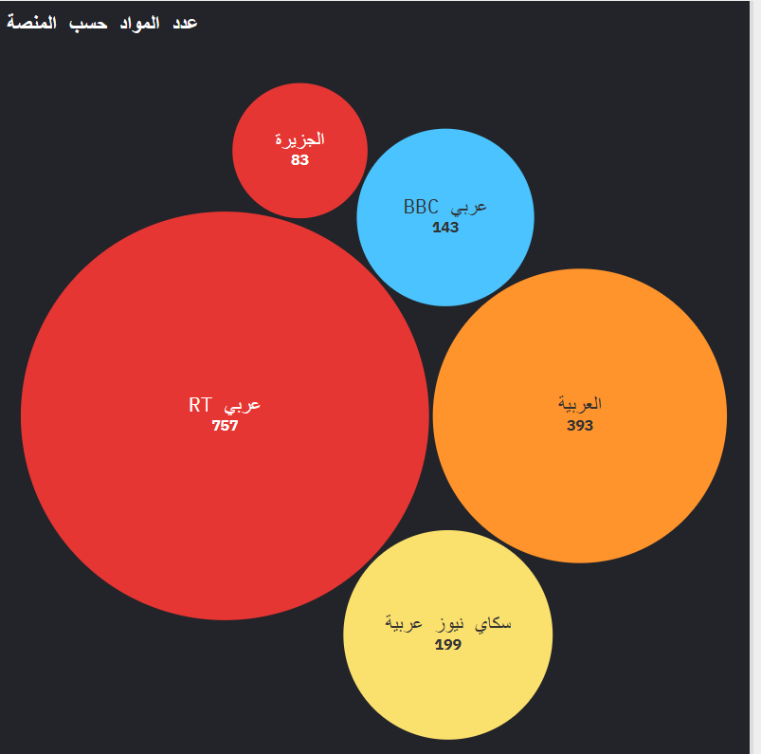
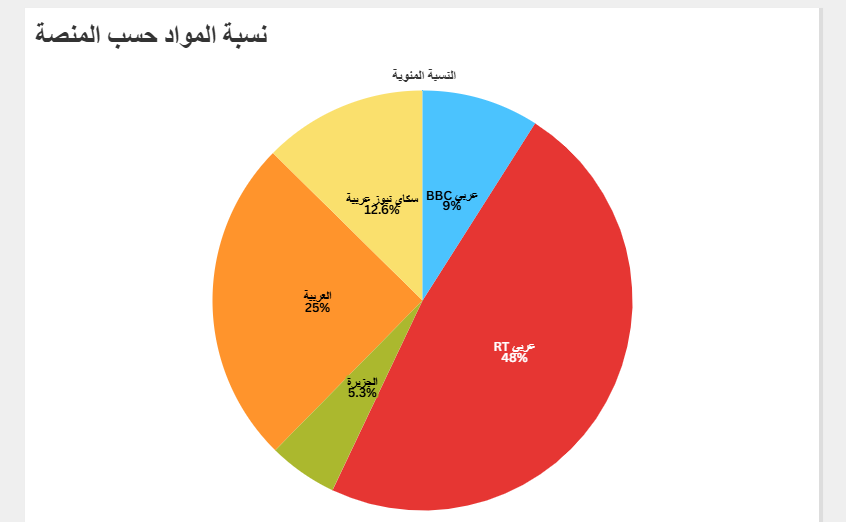
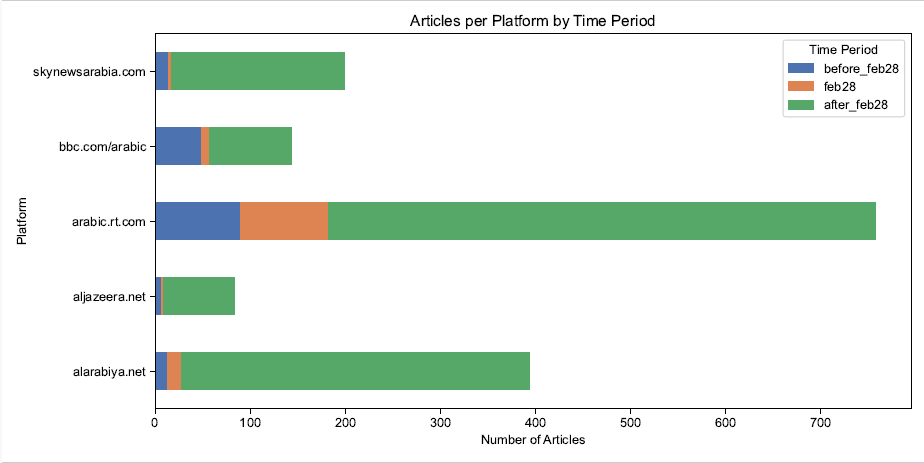
Quantitative data extracted from media coverage shows that the volume of news production was not distributed equally among the five outlets. RT Arabic led the scene with a 48% share of total coverage (equivalent to 757 articles), followed by Al Arabiya with 25% (393 articles), then Sky News Arabia with 12.6% (199 articles). Conversely, BBC Arabic published 9% (143 articles), while Al Jazeera came last with only 83 articles (5.3%).
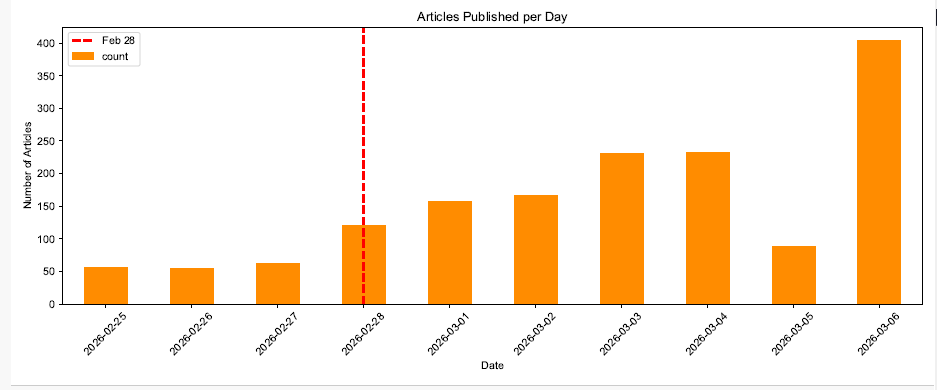
Chronologically, the coverage went through three main stages. In the period preceding the attack (February 25-27), relative calm prevailed with an average of 57 articles per day. On the day =of the event, February 28, the number doubled to 121 articles, marking the beginning of the escalation phase. However, the actual peak of coverage did not come on the day of the attack itself, but on March 6, when the number of published materials reached 404 articles in one day.
Although the intensity of coverage peaked in the following days, some vocabulary related to the future of the Iranian regime had appeared in the coverage since the initial stages of the crisis. But the presence of this language was not equal between headlines and body texts, which prompts the question of how Arab outlets handled topics such as regime change, power transfer, and Iran's political future during the study period.
Employing data analysis and statistical association techniques, this report investigates how five major Arab news outlets framed the war on Iran. The central aim is to assess whether these platforms adopted a "regime collapse" narrative following the initial strike. The analysis reveals a consistent editorial pattern: headlines remained largely neutral, whereas the body texts frequently delved into scenarios regarding the potential collapse of the regime and the country’s political future after Khamenei.
The Emergence of Political Change Terminology in Arab Media Headlines
Before the US-Israeli attack on Iran on February 28, vocabulary related to regime change appeared in the headlines of Arab platforms in only three pieces, representing about 2% of the total headlines published during that period within the studied sample.
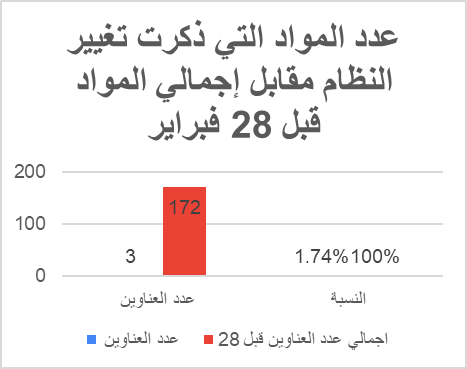
These three headlines appeared in analytical or cautionary contexts; the term "regime change" appeared in two headlines published by RT Arabic within a cautionary framework, while it appeared in one headline published by BBC Arabic within an analytical piece that conveyed content published in the Washington Post.
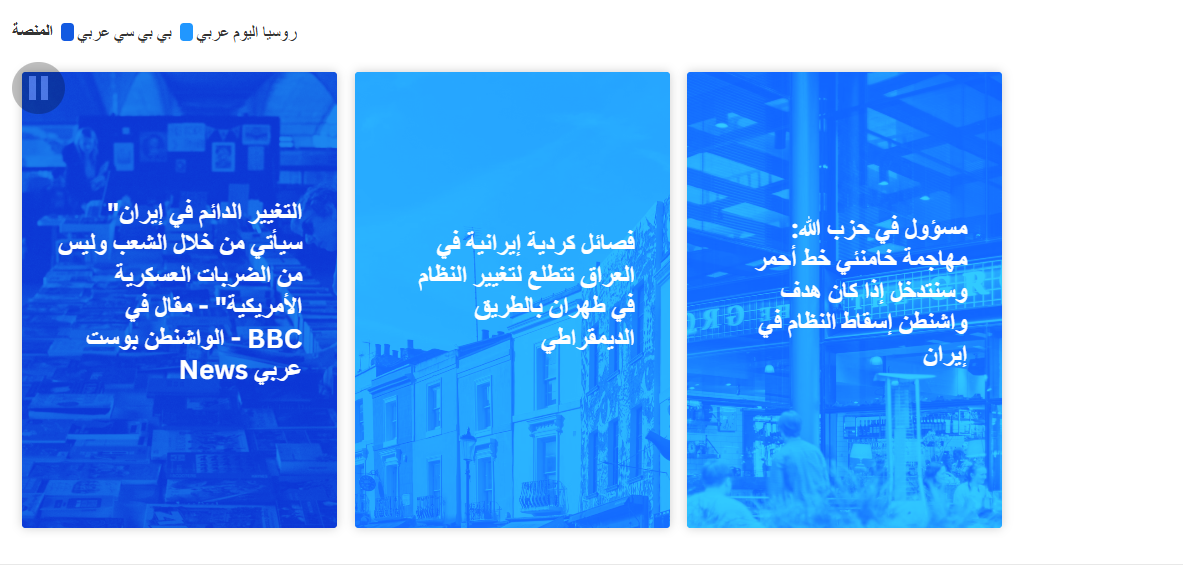
Headline usage of these terms saw no significant shift on February 28, the day of the strike, appearing in only 2.5% of the total materials published that day (three instances).
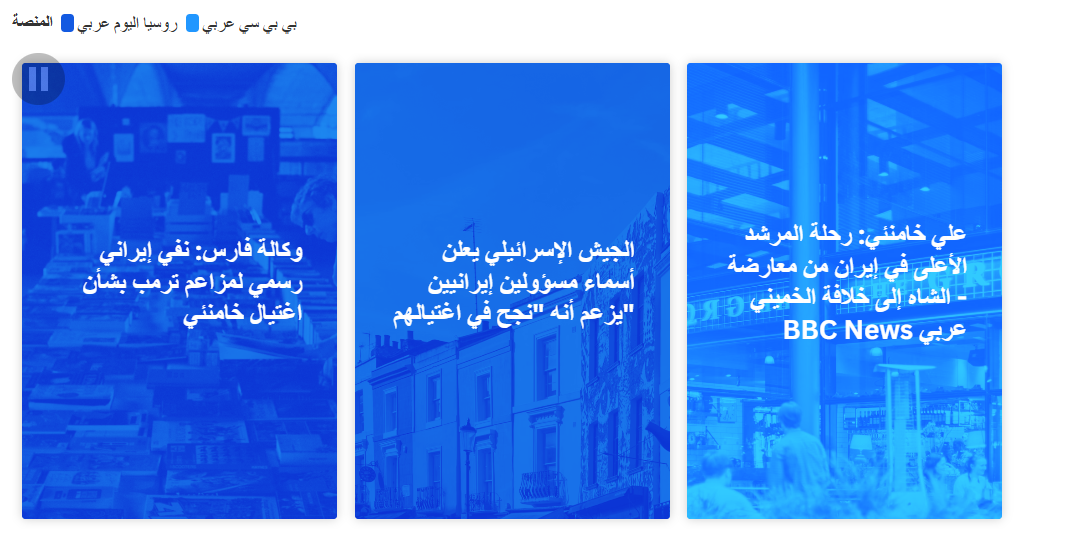
The distribution of these materials was similar to what was recorded before the attack. BBC Arabic published a piece with a biographical headline about the Iranian Supreme Leader Ali Khamenei, while RT Arabic published two pieces; one addressed the names of figures Israel claimed to have targeted, while the other conveyed the Iranian denial of the assassination of Khamenei.
Following this, the percentage of materials with headlines containing vocabulary related to political change or the future of the Iranian regime rose to 5.6% of the total materials published after February 28. However, the presence of these terms in headlines remained limited compared to their appearance within body texts.
Reviewing materials published before February 28 and on the day of the attack itself indicates that certain topics related to the future of the Iranian regime, power transfer, or the post-Khamenei era appeared more frequently within body texts than in headlines. This discrepancy between headlines and body texts stands out as a noteworthy feature of the coverage, which prompts an examination of the vocabulary associated with these topics and how it was used across different outlets.
Rising Presence of Political Change Vocabulary in Headlines
To track vocabulary related to political change scenarios and the future of the Iranian regime, the Arabic words most relevant to these topics were extracted from the sample of 1,575 news items across the five Arab outlets, and were classified into seven main groups:
Group 1: Assassination / Killing of Khamenei:
Includes: Khamenei · killing · kill · assassination · assassinated
Group 2: Regime Change:
Includes: Regime change · overthrowing the regime · arming the opposition · overthrowing the republic · surrender
Group 3: Power Transfer:
Includes: Khamenei's successor/Leader · succession of the Leader/Khamenei · power transfer · power vacuum
Group 4: Fall/Collapse of the Regime:
Includes: Fall of the regime · collapse of the regime · disintegration · at a crossroads
Group 5: Post-Khamenei:
Includes: Post- · new phase · post-phase · after Khamenei · the next Leader · the third Leader
Group 6: Future of Iran:
Includes: Fate of Iran · future of Iran · fate of the regime · future of the regime
Group 7: Iranian Opposition:
Includes: Iranian opposition · Reza Pahlavi · Kurdish factions · Mujahedeen-e-Khalq · Iranian Kurdish factions
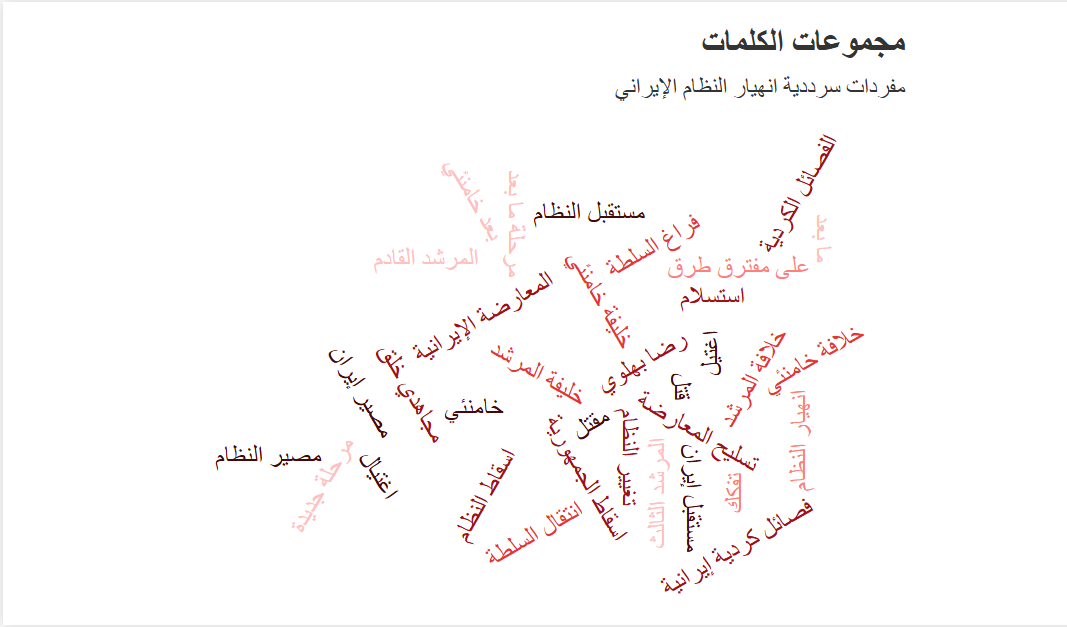
The number of vocabulary words and terms included in the analytical dictionary reached 35, distributed across seven groups. The analysis showed that the vocabulary that appeared in headlines before February 28 primarily belonged to the "Regime Change" group, while the headlines that appeared on February 28 were distributed between the "Killing/Assassination of Khamenei" and "Power Transfer" groups. As for the body texts, a wider range of vocabulary related to the future of the Iranian regime appeared compared to the headlines.
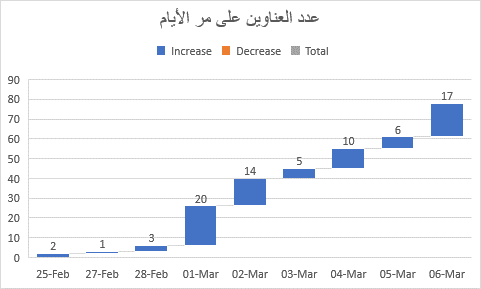
A review of the headlines revealed 78 instances incorporating relevant terminology, accounting for approximately 5% of the total sample studied. During the period spanning February 25 to March 6, the inclusion of these terms displayed a fluctuating increase.
The number rose from just three headlines on February 28 to 20 headlines on March 1, coinciding with increased coverage related to the killing of the Iranian Supreme Leader Ali Khamenei and the subsequent discussions about the repercussions of the event. The number then declined to 14 headlines on March 2 and five headlines on March 3, before rising again to 17 headlines on March 6.
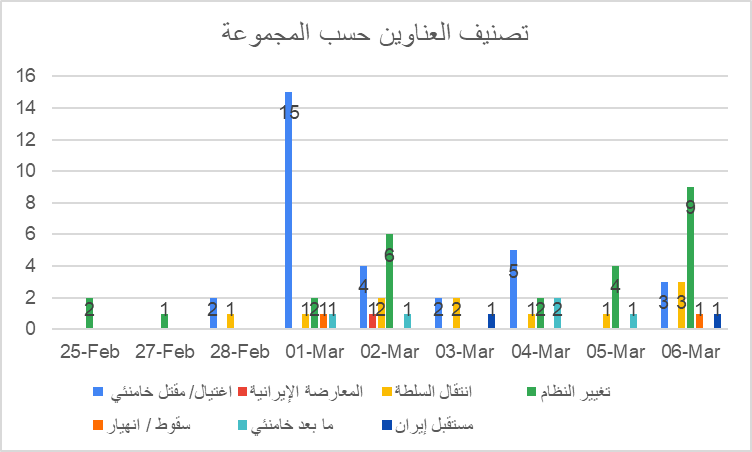
Despite the dominance of vocabulary from the "Khamenei's Killing" group in headlines since March 1, vocabulary from the "Regime Change" group recorded an increasing presence over the following days. On March 2, it appeared in six headlines compared to only four for the "Khamenei's Killing" group, and it continued to rise during March 5 and 6, becoming the most prominent group in headlines on the final day of the study period with nine headlines.
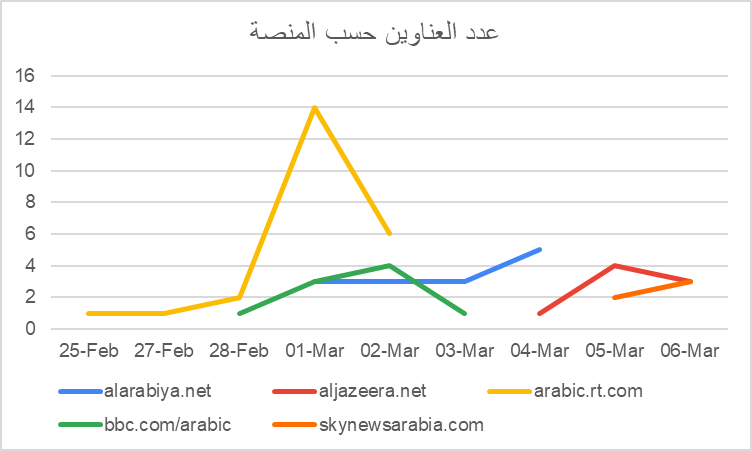
In terms of individual outlets, RT Arabic made the most use of vocabulary related to these groups in its headlines, followed by BBC Arabic. As for the three Gulf outlets—Al Arabiya, Al Jazeera, and Sky News Arabia—this type of vocabulary appeared more clearly in their headlines after March 1.
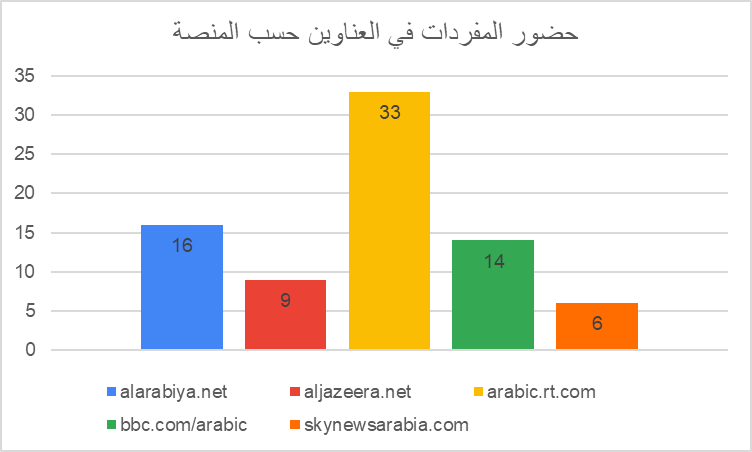
The number of headlines that included vocabulary from these groups reached 33 in RT Arabic, 16 in Al Arabiya, 14 in BBC Arabic, compared to nine headlines in Al Jazeera, and six in Sky News Arabia. However, the picture appeared different when moving from headline analysis to body text analysis.
The Gap Between Headlines and Body Texts in Coverage
The headline analysis results showed that vocabulary related to political change and the future of the Iranian regime groups remained relatively limited; it did not exceed three headlines before February 28, and three on the day of the attack, before the number rose to 72 headlines during the subsequent period.
However, the picture appeared different when moving to body texts. While the appearance of this vocabulary remained limited in headlines, its presence expanded within news texts, whether in materials published before February 28, on the day of the attack, or during the days following it. The presence was not limited to one group of vocabulary, but included multiple groups related to political change and the future of the Iranian regime.
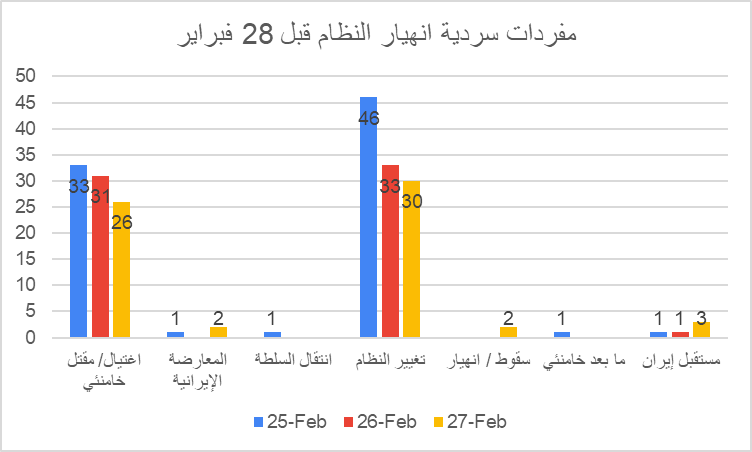
During the three days preceding the US-Israeli attack on Iran, vocabulary from the Regime Change group appeared in 109 news items, equivalent to about 63% of the materials published during that period.
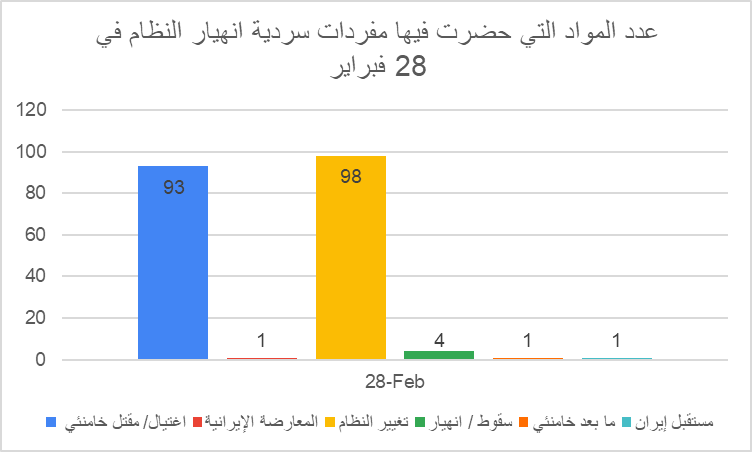
On February 28, this group continued to maintain a broad presence within the body texts, with its vocabulary appearing in 98 items, equivalent to 81% of the materials published that day. At the same time, the vocabulary of the Khamenei's Killing group appeared in 93 items, representing approximately 77% of the total published materials.
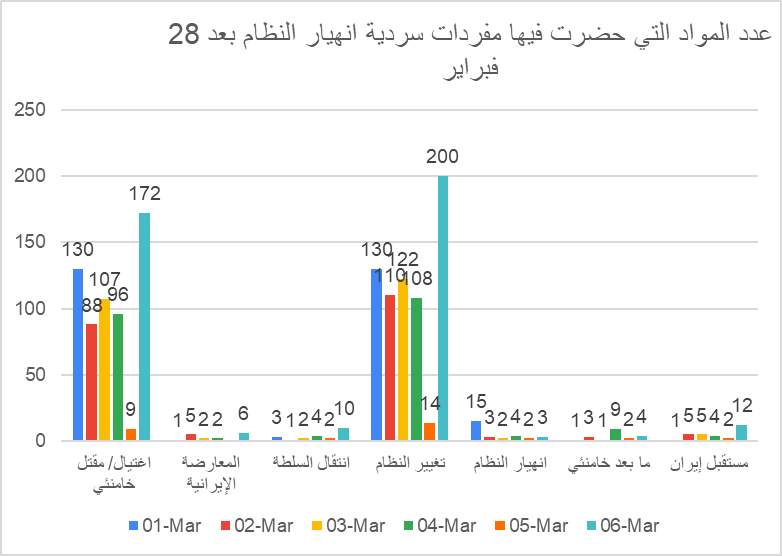
As for the period following the attack, the presence of the Regime Change and Khamenei's Killing groups continued to rise, in parallel with the emergence of other groups related to Power Transfer, the Future of Iran, and the Iranian Opposition.
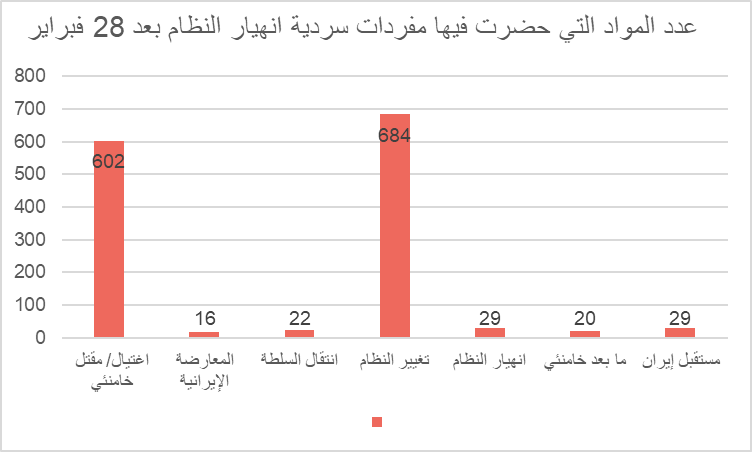
The data showed that vocabulary from the Regime Change group appeared in 53.35% of materials published after February 28, compared to about 47% for the Khamenei's Killing group. The Regime Collapse and Future of Iran groups appeared with an equal percentage of 2.26% each, while the Power Transfer and Post-Khamenei groups recorded a similar presence of 1.55%.
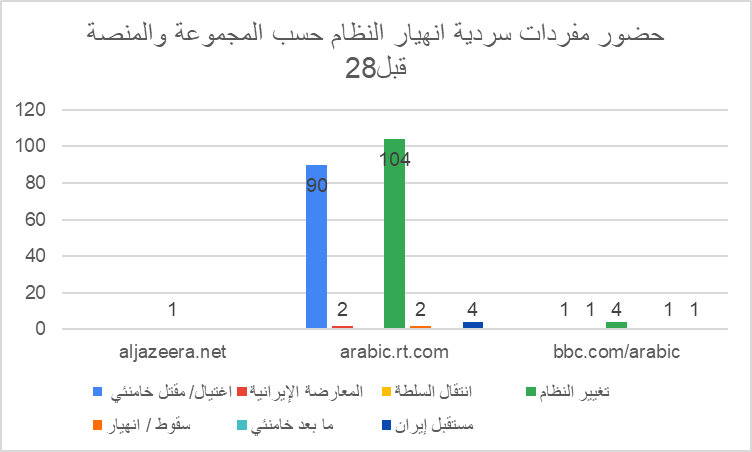
On the outlet level, the Regime Change group emerged before February 28 primarily in RT Arabic, where its vocabulary appeared in 104 articles. It also appeared in four articles in BBC Arabic and in one article in Al Jazeera.
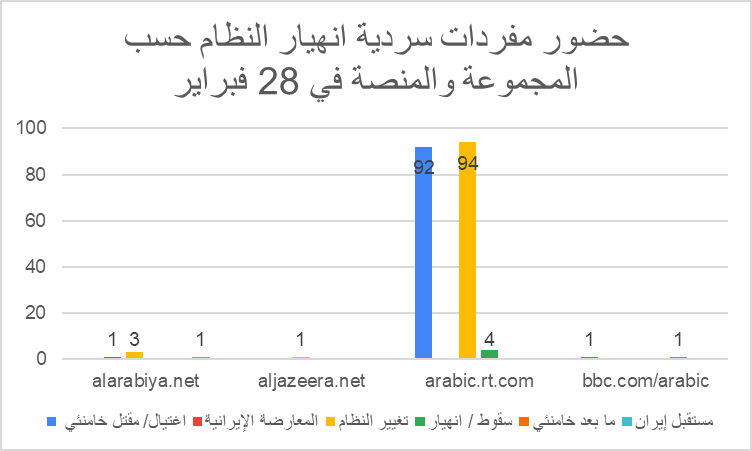
On the day of the attack, RT Arabic maintained the highest rates; 94 of its materials included vocabulary from the Regime Change group, equivalent to 77.6% of the materials published that day. Vocabulary from this group also appeared in three articles on Al Arabiya and one article on Al Jazeera.
As for the Khamenei’s Killing group, it recorded a wide presence in the body texts of RT Arabic, appearing in 92 materials, and it also appeared in one material on BBC Arabic. The words Khamenei’s assassination were absent from the rest of the outlets, having been replaced by words from other groups. Regime Change words appeared in the body text of one article on Al Jazeera and three on Al Arabiya, while words from the Iranian Opposition group appeared in the body text of one article on Al Arabiya.
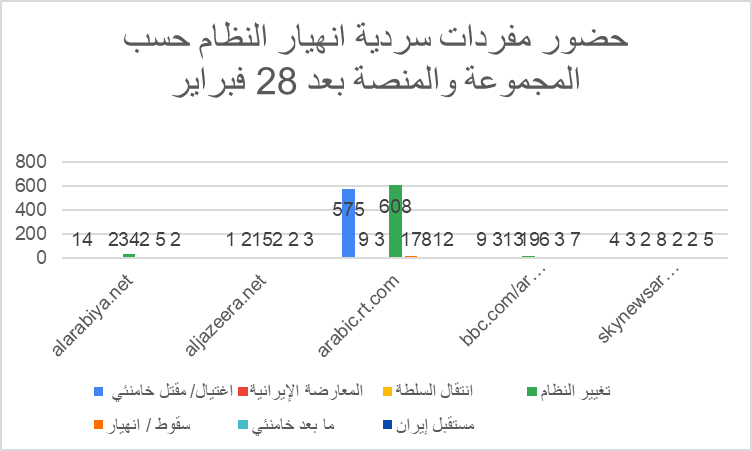
Following February 28, the presence of various topic groups expanded across the five outlets, though the Regime Change group remained the most prevalent in body texts compared to the rest.
Data indicates that RT Arabic continued to record the highest frequency of these terms. However, other outlets, particularly Al Arabiya and Al Jazeera, also dedicated significant space to vocabulary related to political change. For instance, Regime Change terminology appeared in the body texts of 24 articles on Al Arabiya, 15 on Al Jazeera, and eight on Sky News Arabia.
These results highlight a discrepancy between headlines and body texts regarding the prominence of terms related to political change and the future of the Iranian regime. While these topics remained relatively limited in headlines, they appeared more frequently within news articles. This necessitates a shift from measuring raw frequency to assessing the relative weight of these terms within the coverage itself.
Where Did Post-Khamenei Terminology Intensify
Measuring the mere presence of vocabulary related to political change or the future of the Iranian regime is insufficient to understand its weight in the coverage. A term like regime change appearing once in a long article does not carry the same significance as its repetition in a shorter piece or its use across multiple interpretive contexts. Therefore, the analysis shifted from asking if the terms appeared to the question of linguistic density: how prominent were these terms relative to the size of the text? The frequency of each group's terms was calculated relative to the total word count of the headline or body text, with results converted into a rate of appearance per 1,000 words.
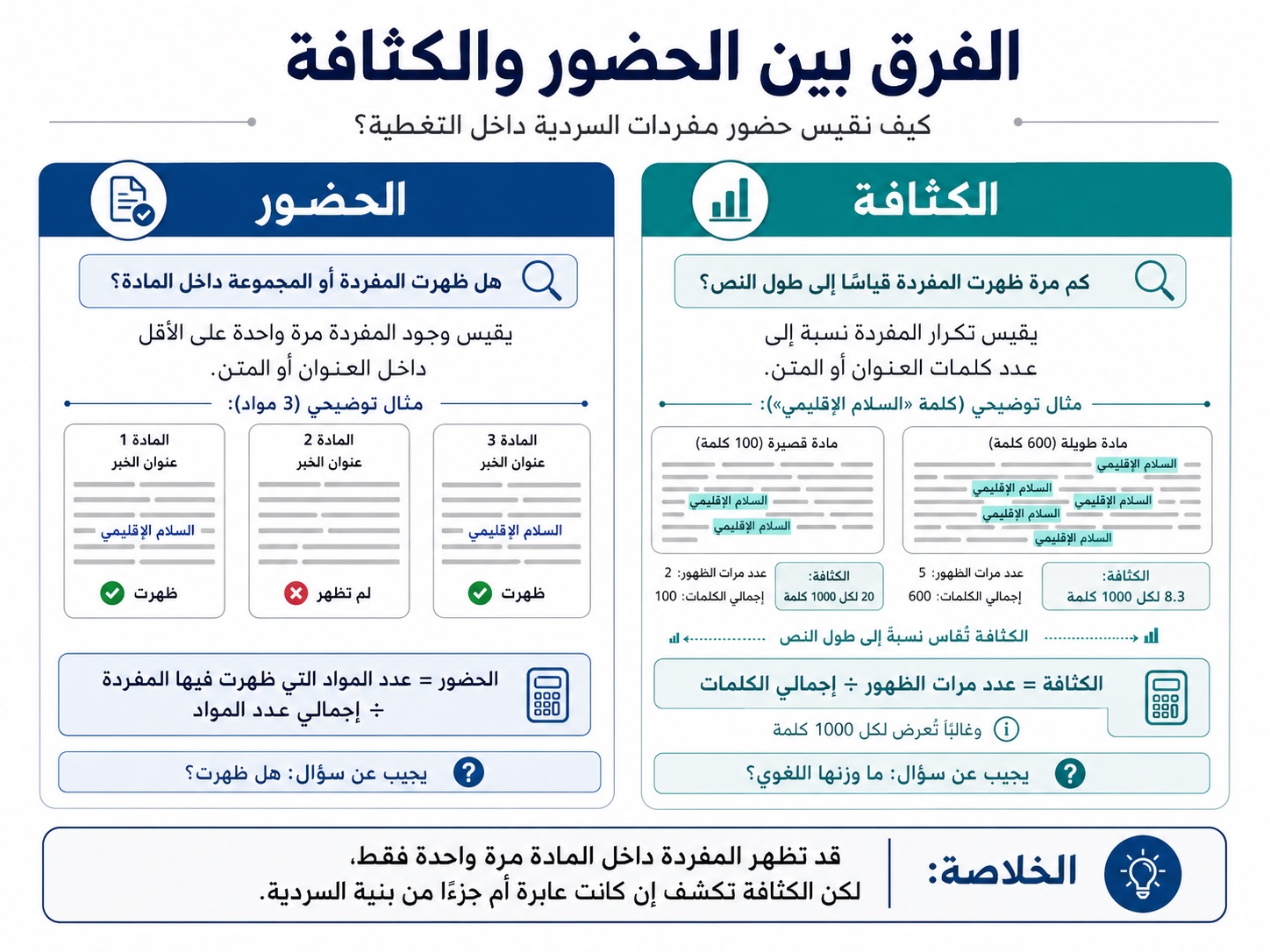
Interpreting the results required distinguishing between terms directly related to the event itself and others related to the political scenarios resulting from it. Terms such as Khamenei’s Killing or Khamenei’s Assassination might reflect coverage of the central event, but they do not necessarily imply a focus on the future of the regime or the potential for its change.
Therefore, two separate indicators were developed. The first includes all vocabulary from the Khamenei Killing or Assassination group, while the second indicator excludes this group and focuses only on vocabulary related to political change, such as Regime Change, Power Transfer, Regime Collapse, Post-Khamenei, Future of Iran, and Opposition/Alternative.
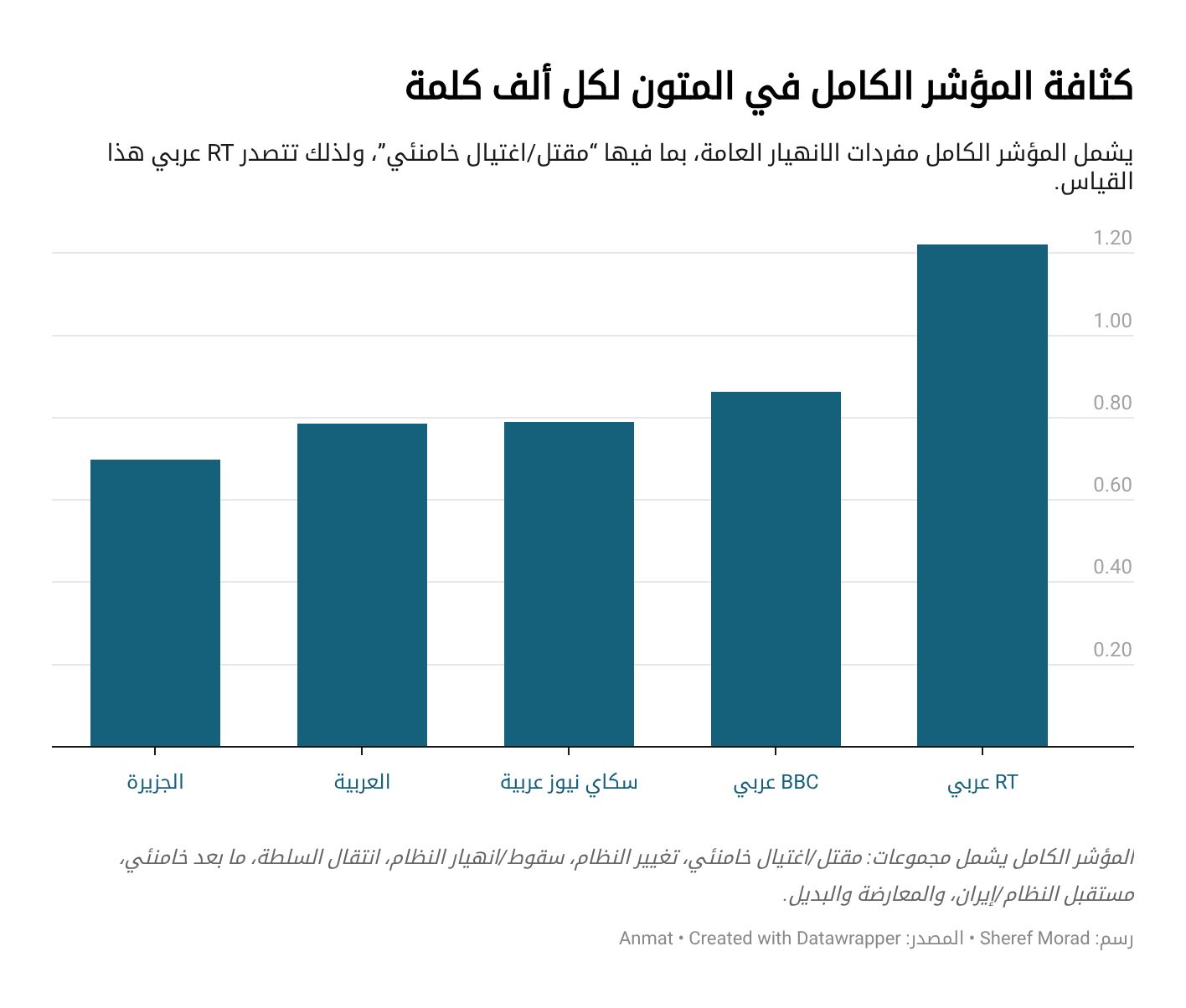
The full indicator, which includes Khamenei Killing/Assassination terms, showed RT Arabic clearly ahead in the density of vocabulary within body texts, with 1.221 occurrences per 1,000 words, followed by BBC Arabic with a density of 0.863, then Sky News Arabia with 0.789, Al Arabiya with 0.785, and Al Jazeera with 0.697. At first glance, this result suggests that RT Arabic was highest in collapse vocabulary, but this is an insufficient reading. The largest part of this progress is linked to the centrality of the Khamenei killing event itself within the coverage, not necessarily to building a broader political narrative about the future of the Iranian regime.
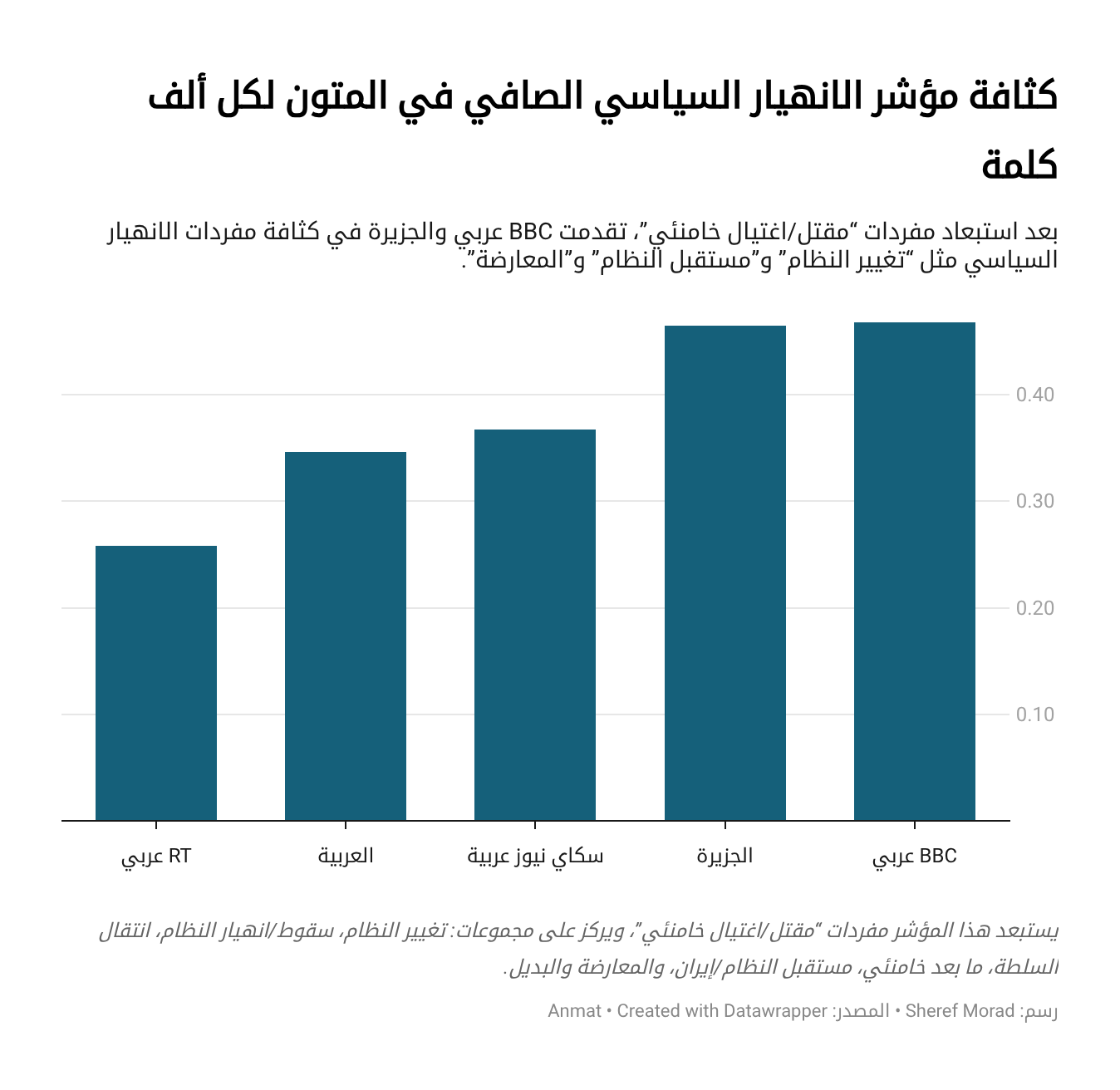
The landscape shifted when isolating "Khamenei’s Killing/Assassination" terms to focus solely on the net political indicator. By this measure, BBC Arabic and Al Jazeera led the field, nearly tied with 0.468 and 0.465 occurrences per 1,000 words, respectively. They were followed by Sky News Arabia (0.367) and Al Arabiya (0.346), while RT Arabic dropped to just 0.258.
This means the outlet that reported most on the assassination was not necessarily the one most focused on constructing a political narrative about the aftermath. A comparison of the two indicators reveals that RT Arabic was more concentrated on "shock" vocabulary surrounding Khamenei’s death, whereas BBC Arabic and Al Jazeera dedicated more linguistic weight to political scenario terminology: regime change, power transfer, opposition, and regime collapse.
The picture becomes clearer when breaking down the political indicator into its sub-groups. In BBC Arabic, the greatest weight was concentrated in the "Regime Change" group with a density of 0.250 per 1,000 words, with an additional presence for the "Regime Fall/Collapse" and "Opposition and Alternative" groups with a density of 0.073 each. This indicates that BBC Arabic did not treat the killing of Khamenei as a separate event, but opened space within the body texts for a broader question about the future of the regime, the possibilities of its change, and potential political alternatives.
As for Al Jazeera, it seemed closer to a balance between the event and the question of what comes after it. It recorded a similar density between the "Khamenei Killing/Assassination" group (0.232 per 1,000 words) and the "Regime Change" group. Vocabulary related to "Future of Iran" and "Opposition and Alternative" also appeared with a density of 0.071 each. Thus, Al Jazeera does not appear centered around the assassination alone, but rather around the transformation that the assassination might open within the structure of Iranian governance.
In Al Arabiya, the density was concentrated mainly in two groups: "Khamenei’s Killing/Assassination" with a density of 0.439, then "Regime Change" at 0.220. The rest of the layers, such as the future of the regime or the opposition and alternative, remained less prominent. The narrative here seems narrower: an assassination event connected to the question of regime change, not a multi-layered map for the post-Khamenei era.
In Sky News Arabia, vocabulary for "Khamenei’s Killing/Assassination" appeared with a density of 0.422, followed by "Regime Change" at 0.147, then "Opposition and Alternative" at 0.092. This places Sky News Arabia in a middle position: it did not content itself with the assassination event alone, but it did not give political collapse vocabulary the same weight that appeared in BBC Arabic and Al Jazeera.
As for RT Arabic, it remained more centered on the assassination vocabulary itself, which reached a density of 0.963 per 1,000 words, while the density of "Regime Change" reached only 0.151, and the rest of the political collapse groups dropped to lower levels. Despite leading the full indicator, RT Arabic appears in the net political indicator closer to covering the shock of Khamenei's Killing than to building a broad discourse about the future of the regime.
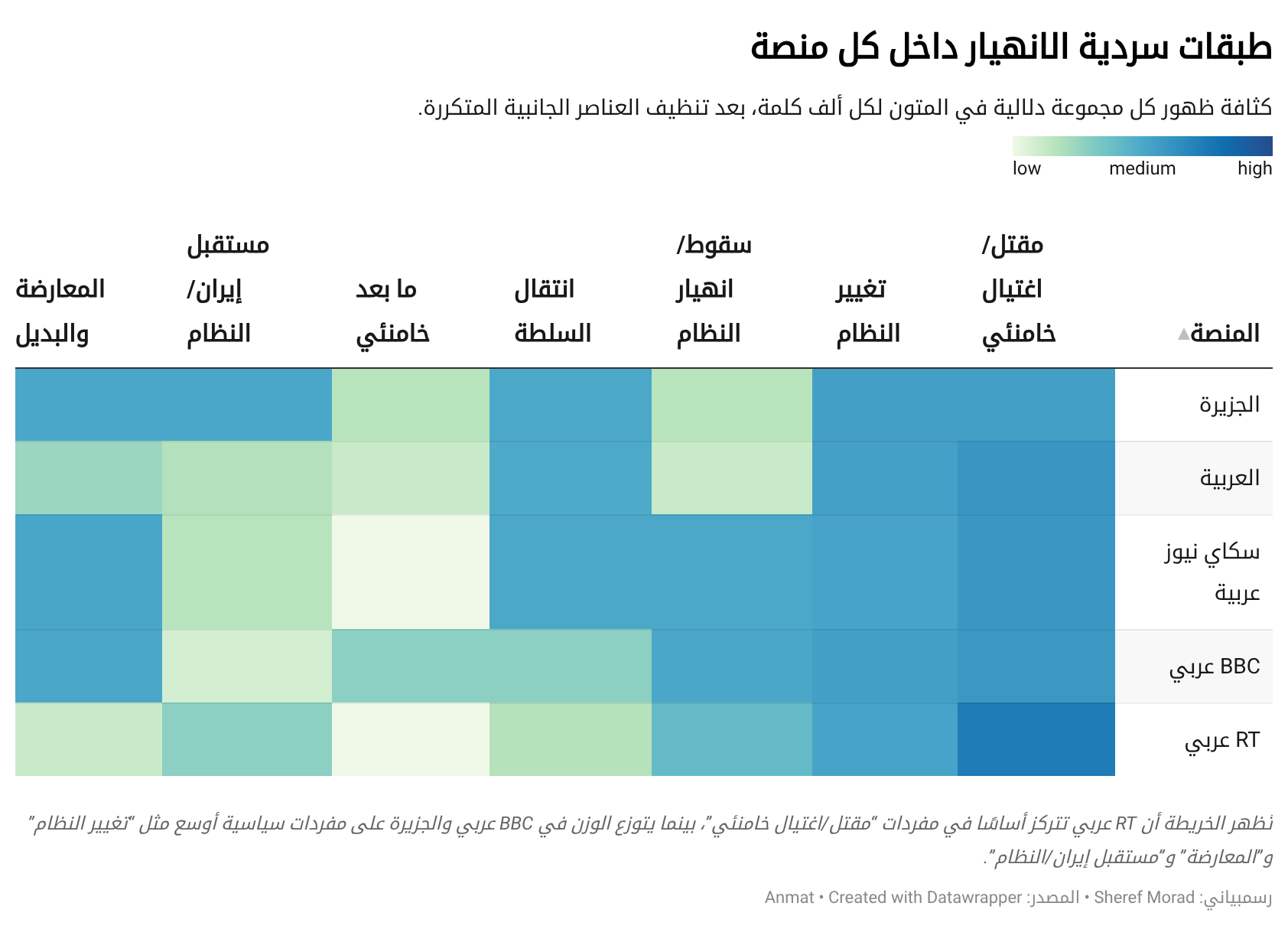
These differences reveal that the collapse narrative was not a single block. In some outlets, it was linked to the shocking event itself: the killing of Khamenei. In other outlets, it extended to political scenarios related to regime change, vacancy or transition, the future of Iran, and opposition alternatives. Instead of simply tallying which outlets used collapse-related terminology most frequently, the more critical question is which ones successfully shifted the reader's focus from merely reporting the event to exploring broader political scenarios.
Comparing headlines and body texts also showed that political collapse vocabulary remained more restricted in headlines, while it expanded within body texts. This is editorially logical; the headline tends toward condensation and perhaps caution, while the body text allows for the introduction of statements, sources, and multiple scenarios about “Regime Change," "Future of Iran," or "the Opposition." In this sense, the "Post-Khamenei" narrative does not always appear in the headlines, but it accumulates within texts.
Before adopting the final results, the body texts were cleaned of repetitive sidebar elements, links, and suggested materials within pages, especially in RT Arabic, because the raw reading was inflating the presence of vocabulary relating to Khamenei’s killing within non-news elements. After an additional sensitivity test excluding general non-editorial headlines, the general trend remained constant: BBC Arabic and Al Jazeera remained at the forefront of the net political collapse indicator, while RT Arabic retreated compared to its position in the full indicator.
In conclusion, linguistic density shows that the five outlets did not give subjects related to the future of the Iranian regime the same weight. Some coverage focused more directly on the event itself, represented by the killing of Khamenei, while other news outlets gave relatively greater weight to vocabulary related to political change, such as regime change, power transfer, the future of Iran, and opposition alternatives.
Measuring linguistic density does more than track word usage; it uncovers the underlying editorial angles through which each platform interpreted the crisis and its long-term political ramifications.
Prepared by: Ibrahim Helal - Sherif Morad