Arabi Facts Hub
is a nonprofit organization dedicated to research mis/disinformation in the Arabic content on the Internet and provide innovative solutions to detect and identify it.
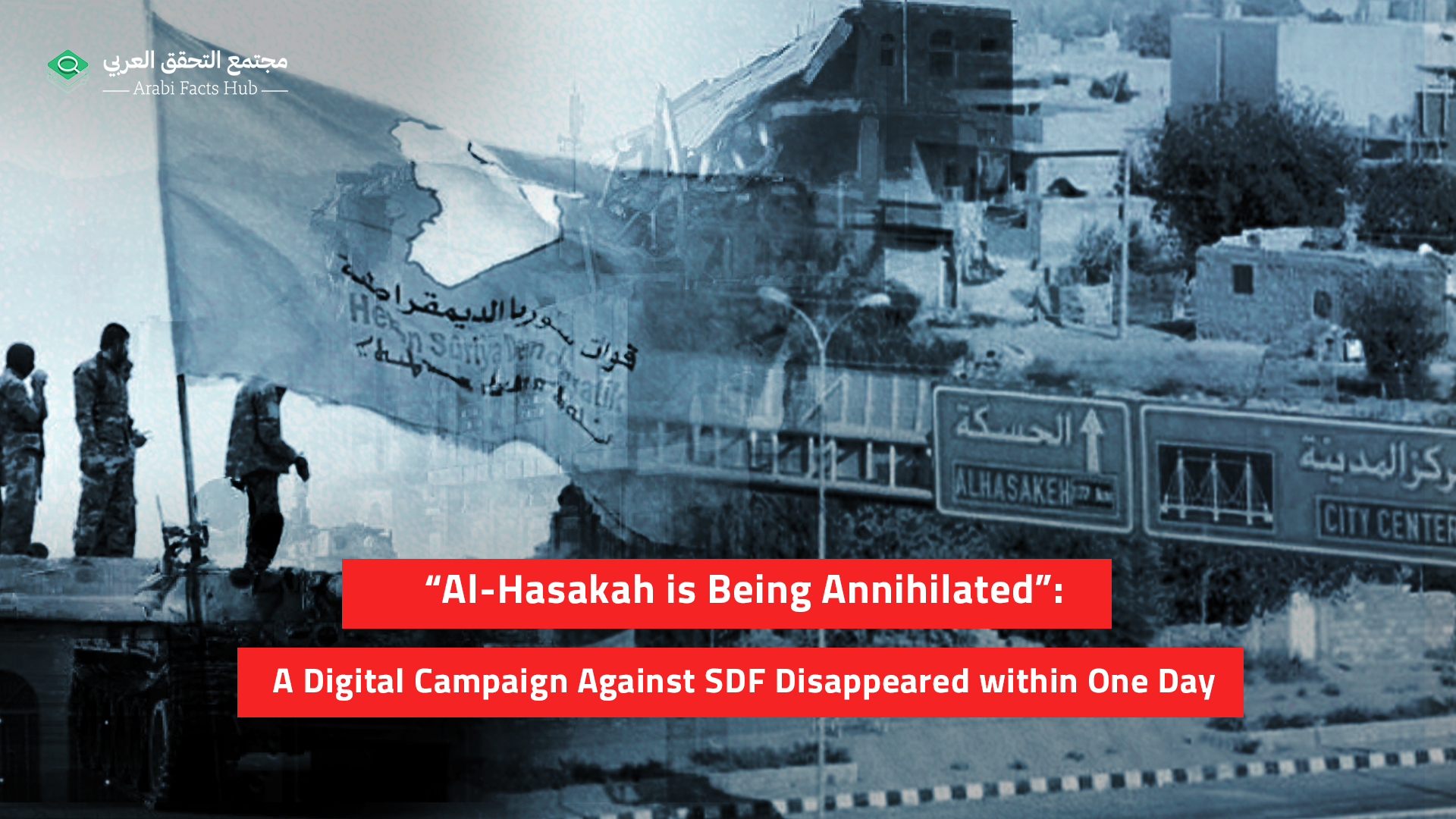
“Al-Hasakah is Being Annihilated”: A digital Campaign against SDF Disappeared within One Day
Feb. 19, 2026 | AFH
Sharif Murad
The "Syrian Democratic Forces" (SDF) has been the most distinct and potent political rival to the Damascus government since "Hay'at Tahrir al-Sham" seized power and integrated into the government structure. Two massacres orchestrated by the Damascus government on the Syrian coast and in Suwayda fueled a popular sentiment of genocide. This environment has negatively impacted the Kurds in general, and the SDF and their controlled areas in particular.
With the delay in implementing the terms of the agreement between Mazloum Abdi and Ahmed al-Sharaa, the matter turned into a direct confrontation between the two military forces, which ended with the SDF handing over their areas of control to the Damascus government, and the entry of convoys from the Ministry of Defense into a number of cities in northeastern Syria, including Al Hasakah.
The escalating clashes between the Ministry of Defense forces and the SDF fueled an atmosphere of genocide and incitement on social media, marked by increased threats and insults against the Kurds. This situation evoked the memory of past confrontations with ISIS and the crimes against humanity committed against the Yazidis. Simultaneously, digital campaigns emerged, advocating for the liberation of Al Hasakah from the SDF, often coupled with calls to support and join the Ministry of Defense forces.
What happened?
Simultaneously, the hashtags #الحسكة تباد (Al-Hasakah is being annihilated) and #انقذوا الحسكة (Save Al-Hasakah) witnessed a high-intensity wave of circulation on January 18, 2026, followed by a rapid decline the following day. The hashtag was amplified concurrently with the military operations. While Kurdish fears of a repeat of the "Operation Olive Branch" scenarios or a confrontation with ISIS surfaced, a campaign spread against SDF, accusing it of annihilating Arabs in the region.
In this report, we relied on an analysis of 590 posts, collected through Brand mention, which focuses on the digital and rhetorical behavior in which these two hashtags were mentioned. Brand Mention is not focused on verifying facts, but rather monitoring digital behavior.
The data revealed a single, sharp peak in interaction, with platforms clearly divided by function. X served as the initial launch platform and set the rhetorical framework. In contrast, TikTok was the primary driver of emotional mobilization, generating approximately 84% of total interaction. The hashtag #الحسكة تباد (Al-Hasakah is being annihilated) led in the volume of posts, yet #انقذوا الحسكة (Save Al-Hasakah) achieved greater interaction. This shift in engagement suggests a change in focus from detailing the accusation to issuing an appeal for aid. The campaign started quietly with low early interaction, then rapidly gained momentum by leveraging pivotal accounts with high reach, which were crucial for amplification.
The campaign's accompanying rhetoric was intensely inflammatory, marked by the frequent and dominant use of terminology like "annihilation," "ethnic cleansing," and "slaughter." This stood in sharp contrast to the absence of less drastic descriptive language. Such vocabulary is not unexpected within the Syrian context, given the severe polarization and the recent history of the country—both under and after the fall of the Assad regime—which has indeed been a stage for these very actions.
Sentiment analysis showed a clear predominance of negative content, with anger topping as the most prominent emotion, which reinforced the speed of spread, as the analysis reveals that the digital wave operated on the logic of "quick shock" more than the logic of cumulative documentation, taking advantage of a sensitive political moment and a charged media context in northeastern Syria.
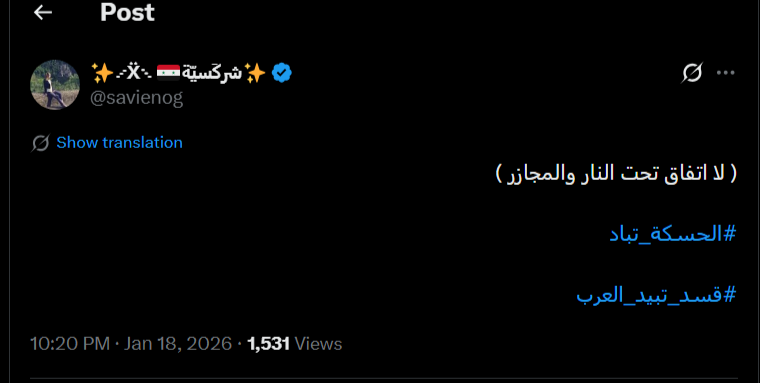
Within a few hours on January 18, 2026, social media platforms turned into an arena for the intense circulation of a narrative speaking of "annihilation" and "ethnic cleansing" in Al-Hasakah Governorate - northeastern Syria on the border with Turkey and Iraq - driven by two main hashtags: #الحسكة تباد (Al-Hasakah is being annihilated) and #انقذوا الحسكة (Save Al-Hasakah).
This circulation did not appear in the form of a gradual public discussion but surged all at once, accompanied by escalating rhetoric and high-impact visual content, before significantly receding the next day.
This time pattern is one of the key indicators relied upon to distinguish between organic interaction and campaigns designed to achieve an immediate, high-intensity impact.
The spread of the hashtags came at an already charged moment in northeastern Syria, where an open political-military confrontation is ongoing between the Syrian Transitional Government led by Ahmed al-Sharaa and the Syrian Democratic Forces, concerning the integration of civilian and military institutions into the state structure, following rapid field advances by the government in areas in the north and east, then the announcement of an agreement/understanding on January 18, 2026, followed by a fragile ceasefire and subsequent extensions.
Within the context of these digital campaign posts, the phrase "Al-Hasakah is being annihilated" functions as a definitive indictment. It doesn't primarily describe a battle or clash, but rather portrays the events as an existential assault. This accusation is frequently linked to claims that SDF/Qandil/PKK are perpetrating "identity-based killing" against Arabs. Consequently, the posts include urgent appeals for tribal mobilization from groups such as Al-Aqidat, Al-Baqqara, and Shammar, alongside calls for immediate intervention from external parties who may not support the ongoing ceasefire.
This does not create a new reality on the ground, but it frames the conflict's intended meaning in the narrative: shifting the struggle over control/integration into a story of "massacre/annihilation." This narrative aims to spur mobilization, similar to previous instances in Syria where tribal groups participated in massacres in the Coast and Suwayda. Correspondingly, there was an announced mobilization against SDF elements, causing Arab fighters in SDF-controlled areas to turn against their leaders in certain cities. Concurrently, Kurdish mobilization efforts were launched in preparation for the upcoming battle in Syria.
The digital narrative's rapid surge was fueled by the fact that Al-Hasakah was a key point of negotiation and pressure in the days following a recent agreement. Amid widespread discussions about potential arrangements for the entry or deployment of state forces into major cities in the country's northeast, military movements and mutual warnings heightened public sensitivity to any partial security updates.
This report analyzes 590 posts, collected using Brand Mentions, to understand the "annihilation" digital narrative. Its objectives are to monitor the narrative's spread, analyze the accompanying discourse, and identify the accounts crucial to bringing it to prominence.
The study does not aim to verify the on-the-ground facts. Instead, it focuses on analyzing the digital and rhetorical behavior of the campaign, employing Arabi Facts Hub methodology for monitoring amplification campaigns and coordinated behavior.
The data reveals a distinctive pattern: a single, sharp peak followed by a swift decline. There was also a notable difference in the roles of initiation and influence between platforms. This pattern categorizes the wave as a short-lived amplification campaign, designed for quick impact during sensitive periods, rather than a continuous documentary narrative or a description of an ongoing reality.
From Framing to Mobilization
The platforms used for the campaign showed significant differences, both in the number of posts and compared to the time-based variations. X (formerly Twitter) was the main launching point, dominating with 349 posts. In contrast, TikTok and Facebook had much smaller shares, recording 76 and 61 posts, respectively.
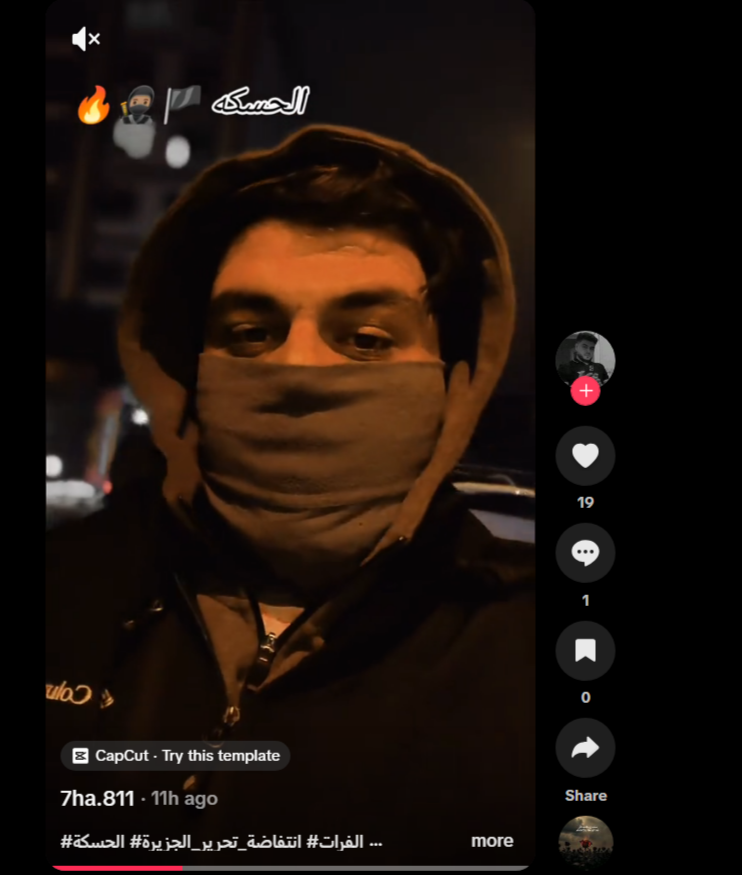
The influence metrics, however, show a significant divergence when considering engagement volume. TikTok, despite having a limited number of posts, generated a disproportionately high level of engagement, accounting for approximately 84% of the total recorded interactions, which exceeded 90,000. Conversely, X, though the most active platform for posting, only contributed about 4% to the overall engagement.
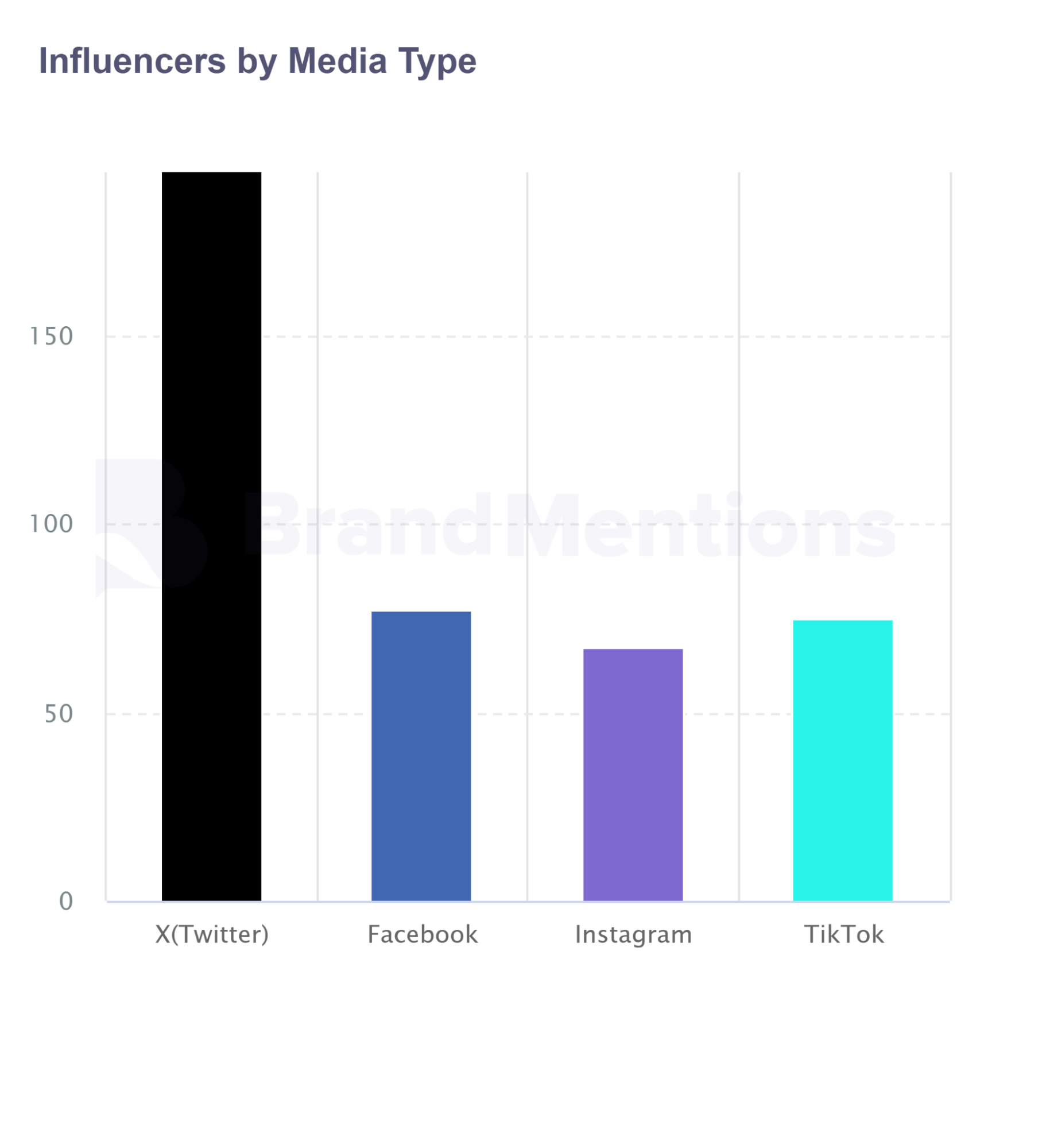
This contrast reveals a distribution of roles within the campaign. X was used as a space for rapid framing, formulating accusations, and launching hashtags and the initial discourse, while video platforms, primarily TikTok, played the role of emotional mobilization through intensive visual content, which contributed to expanding the reach and shifting the discourse from the level of publishing to the level of mass emotion.
The contrasting roles of the two hashtags are evident upon comparison. While "Al-Hasakah is Being Annihilated" generated more posts, the hashtag "Save Al-Hasakah"—which included a plea and a call-to-action—resulted in greater engagement, outperforming the hashtag containing a direct accusation.
This difference indicates that the campaign did not rely solely on describing the event, but rather on invoking feelings of fear and moral duty, elements that find fertile ground in fast-spreading visual content.
From Launch to Amplification: Pivotal Accounts
The data layer of X reveals that the wave of the two hashtags did not start from accounts with widespread influence, but rather from an early, low-engagement launch, before quickly moving to higher-reach accounts, which recycled and reformulated the narrative in a more easily shareable format. This difference between who launched the discourse and who multiplied its spread shows that the true drive of the wave does not necessarily depend on the beginnings, but on who succeeded in turning the narrative into quickly tradable content.
The Kickstart: Launch in the Form of an Appeal, followed by Quick Repetition
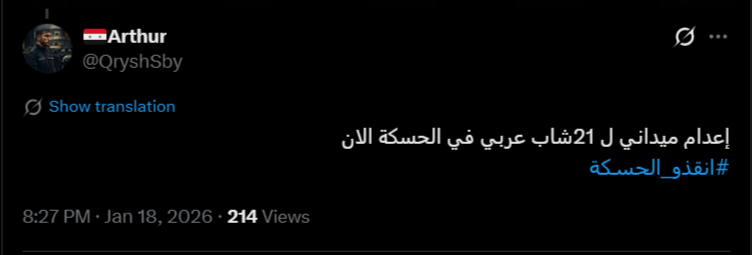
The earliest observed launch signals came via the QryshSby account at 13:27 (according to the data timing) through a repeated formula speaking of a "field execution of 21 Arab youths," linking it directly to the hashtag “Save Al-Hasakah”.
It is noted here that posting was repeated within a short period, with a change in the mentioned accounts, a pattern often used to try and expand reach by invoking specific accounts.
The hashtag played a role in accusing the SDF of committing violations in Al-Hasakah and calling for the rescue of Arabs there. Later, the "Syrian Democratic Forces" confirmed the previous incident, stating that the "fighter was immediately dismissed from the ranks of the forces and referred to the military court to take the necessary".
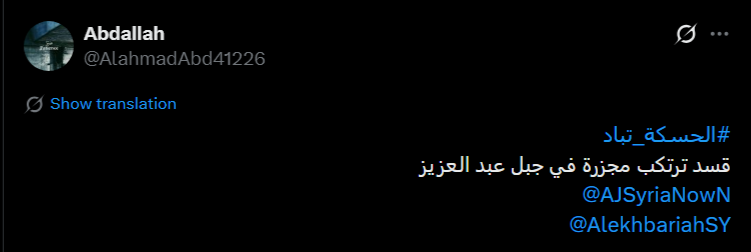
A few minutes later, a parallel launch of the more severely accusatory hashtag #الحسكة_تباد (#Al-Hasakah_is_Being_Annihilated) appeared through the account Ahmed Abd 41226 at 13:32, with intensely descriptive language. This contributed to establishing the framework of a "catastrophic event" early on among users. In this sense, the launchers of the two hashtags were not the most influential, but represented the link that opened the door for the narrative to reach accounts with higher visibility.
Timing Context and Flammability
The hashtags, #الحسكة_تباد (#Al-Hasakah_is_Being_Annihilated) and #انقذوا_الحسكة (#Save_Al-Hasakah), emerged in January 2026 within a highly volatile political environment in northeastern Syria. Their timing coincided with rapid shifts in control, evolving local alliances, and intense public debate over the future governance and security of areas held by the SDF.
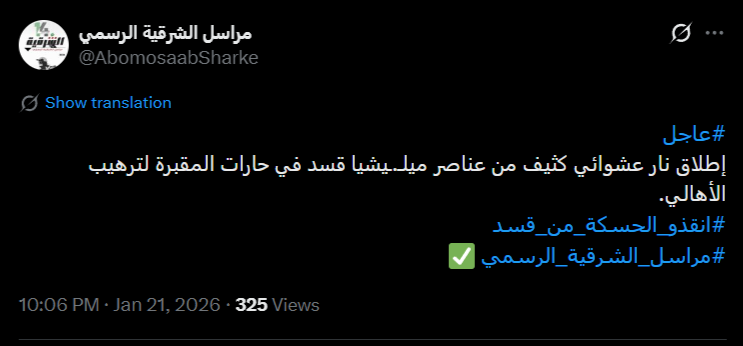
This political context does not explain what happened on the ground, but it does explain the public sphere's susceptibility to inflammation. In moments of uncertainty, extreme narratives become more appealing and widespread, especially those presented as an existential warning such as "annihilation" or "ethnic cleansing," or those that mobilize a social "call to arms" through the language of distress and alarm.
The rhetorical function of the two hashtags is clear: one provides an extremely sharp description #الحسكة_تباد (Al-Hasakah is Being Annihilated) and the other calls for urgent intervention #انقذوا_الحسكة (Save Al-Hasakah), and both present the event as a pivotal moment that cannot wait.
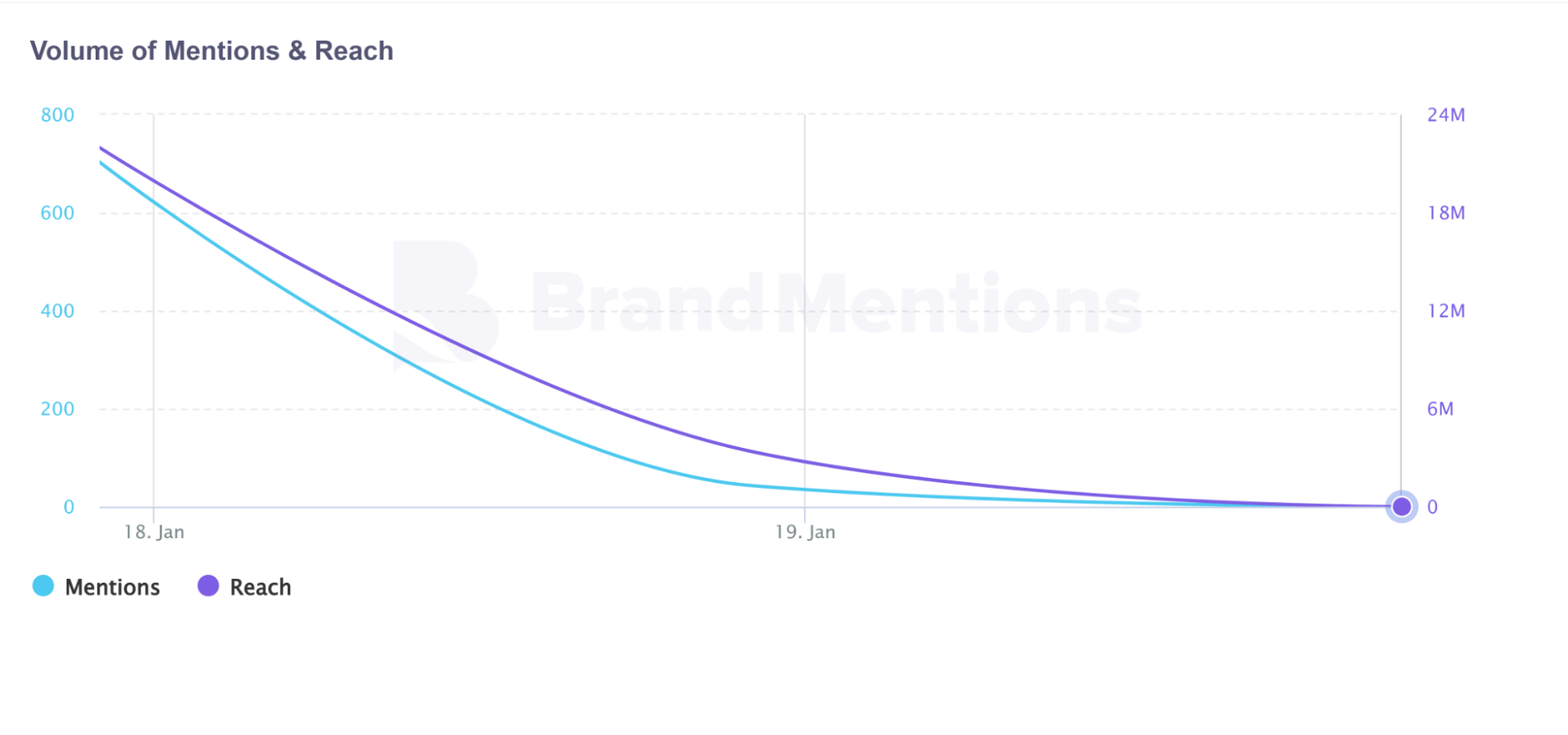
The digital campaign was launched with near-perfect precision: monitoring data shows the initial posts appeared on the afternoon of 18 January 2026. The campaign then rapidly intensified, reaching a single, sharp peak within a few hours before rapidly fading the very next day.
This pattern of rapid surge then decline resembles the way amplification campaigns often work: a short window is exploited to raise attention, then the momentum recedes when the agenda changes, counter-narratives emerge, or the audience begins to question the content sources.
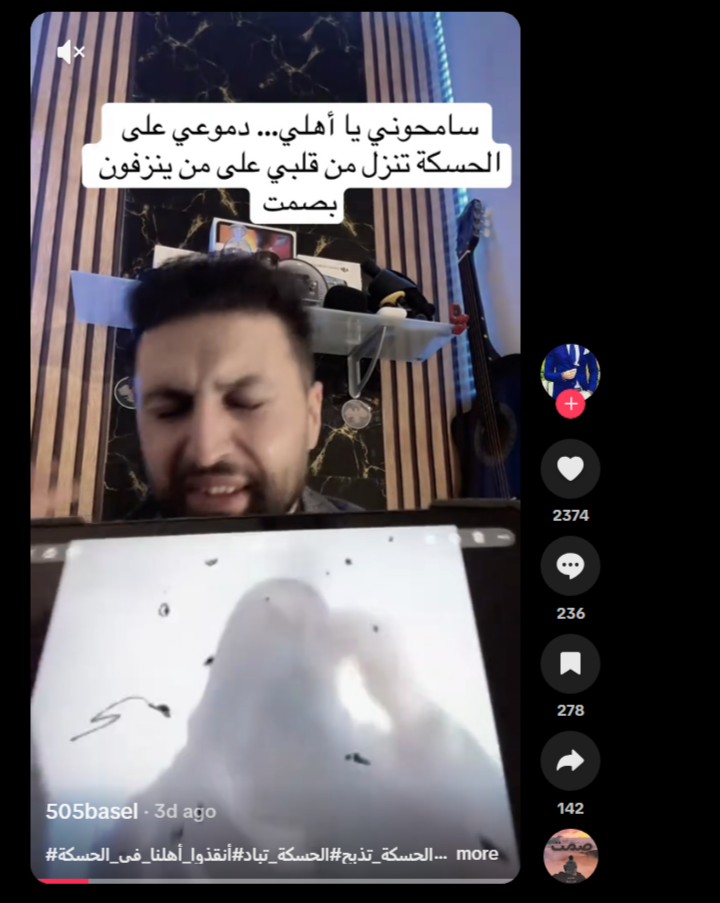
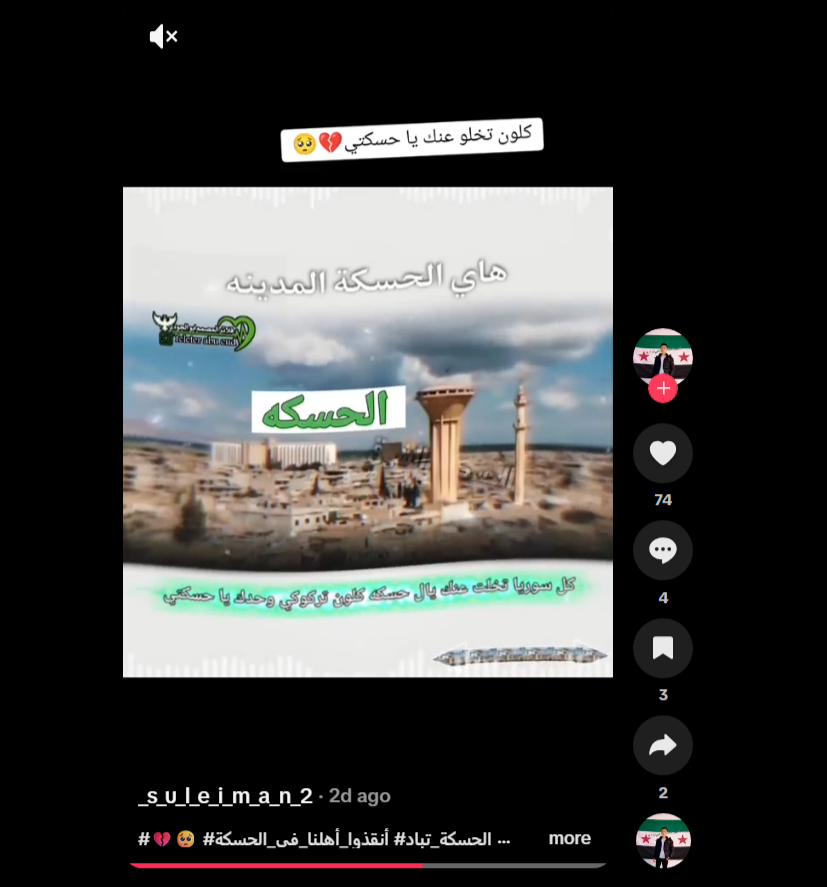
While X was initially used to launch and frame the campaign, the narrative's move to video platforms, particularly TikTok, marked the most significant shift in its impact. The success of visual content is not dependent on a coherent news structure; instead, it primarily leverages emotional impact. This is achieved through an image, a brief clip, or a shocking, repeated phrase presented as a "cry for help."
In an environment where credulity is heightened due to political tension, video clips—even when taken out of context or old—become ideal fuel for recycling, because the audience shares them out of fear, anger, or a desire to help, not out of a concern for verification.
This wave of activity must also be viewed within the context of a simultaneous media environment. In this climate, political news, military assessments, and rapid analyses concerning the future of northeastern Syria converged. Even professional coverage of this type generates an environment extremely susceptible to any minor piece of information. Consequently, public reaction is more akin to "quick capture" than to waiting for verification. At such a volatile juncture, exaggeration is easily achieved. All it takes is the presentation of an extreme narrative as a definitive fact, framed as a moral urgency, to set the cycle in motion.
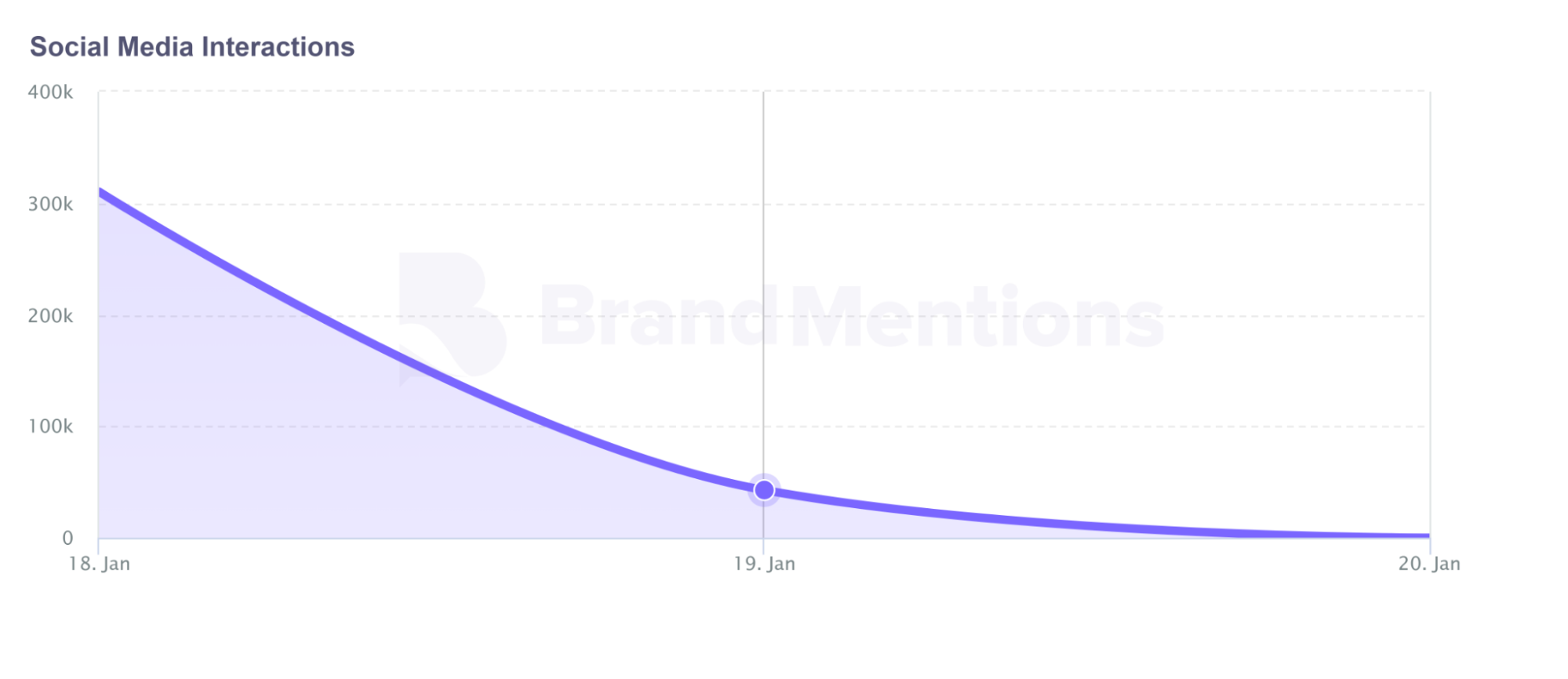
But the most important point in the context of timing is what happened after the peak. The next day saw a sharp decline in the volume of posts, which indicates that the narrative did not turn into an extended wave, but remained confined to a narrow timeframe.
Historically, narratives based on sudden inflation tend to contract quickly when signs of doubt or correction appear, or when the circulating content becomes stale and unable to produce a new shocking effect. This decline does not negate the possibility of victims or violations, but it proves that the digital campaign itself was operating more with the logic of "quick shock" than with the logic of "cumulative documentation."
In this sense, the publishing context provides a dual explanation for the appearance of the two hashtags in this way: a turbulent political moment that makes the public more willing to believe and react, and a rapid digital mechanism that allows the accusation to be turned into mobilization via video within hours.
At the intersection of the two, the narrative of "annihilation" is built as a discursive product capable of spreading quickly, even before sufficient reliable data is available to establish the facts on the ground.
How Was the "Annihilation" Narrative Constructed?
The sudden appearance of the two hashtags immediately framed the situation in Al-Hasakah not as a manageable security incident open to gradual analysis, but as an existential crisis demanding immediate collective action. This shift from "news" to "warning" is the core of the discourse created by the campaign, which is clearly shown by the most frequently circulating words, the tone of distress, the categorical moral language, and the way the perpetrators and victims are described.
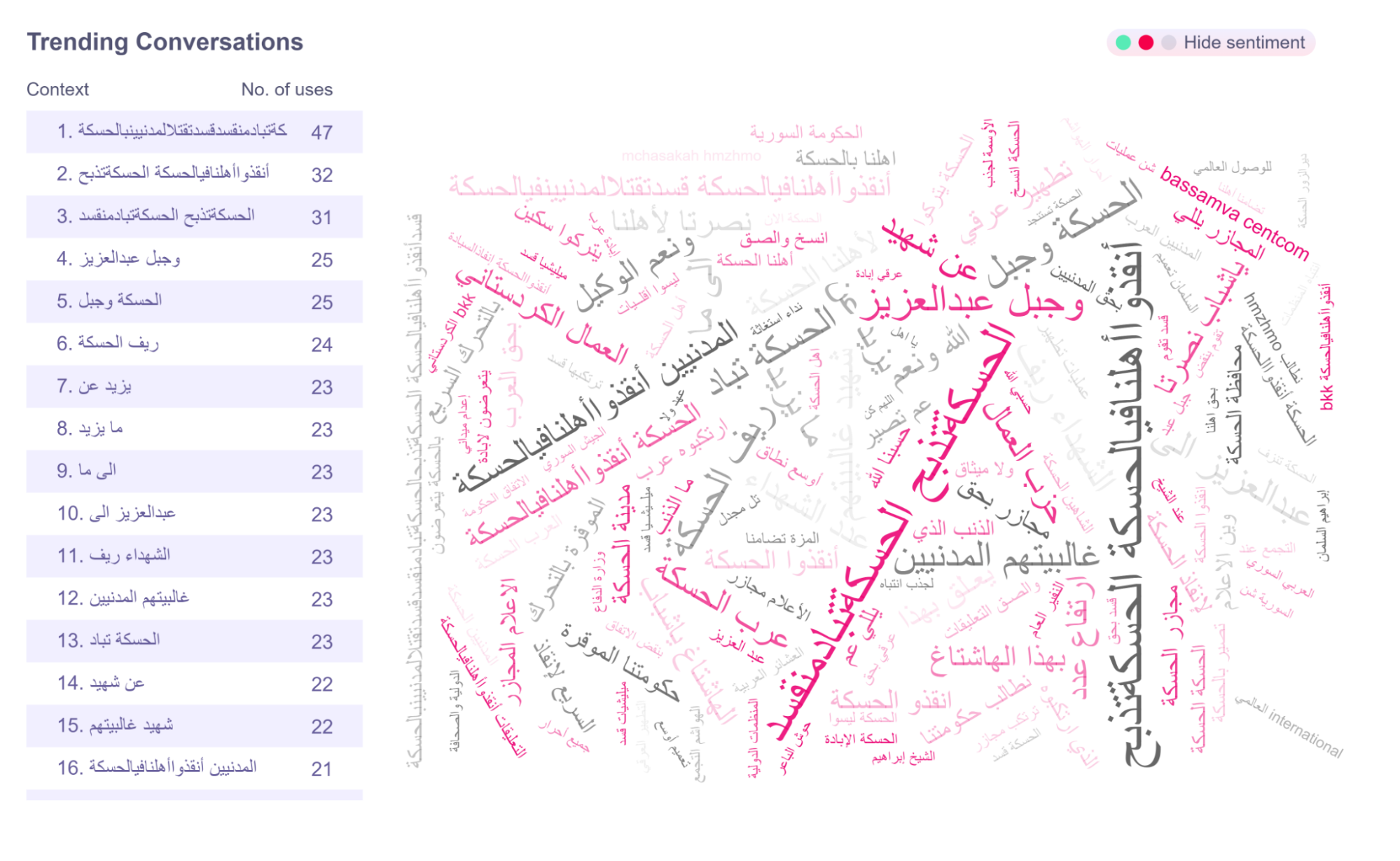
In the data sample, the word "تباد" (is being annihilated) and its derivatives appeared in (387 posts), alongside the presence of the name "قسد" (SDF) (in 191 posts) and distress calls such as "انقذوا" (save) and its derivatives in (174 posts). This repetition reflects a discursive structure based on a specifically named adversary, an event framed as collective annihilation, and an audience summoned to rescue.
This structure relies on raising the level of description to its maximum, as the discourse moves directly to vocabulary such as "إبادة" (genocide/extermination), "تطهير عرقي" (ethnic cleansing), and "ذبح" (slaughter), instead of more gradual terms.
According to the data, the vocabulary of slaughter appears as part of the central dictionary of the campaign, as the word "ذبح" (slaughter) and its derivatives occurred in 94 posts, and the term "تطهير" (cleansing) occurred in 28 posts, and "إبادة" (genocide/extermination) in 18 posts.
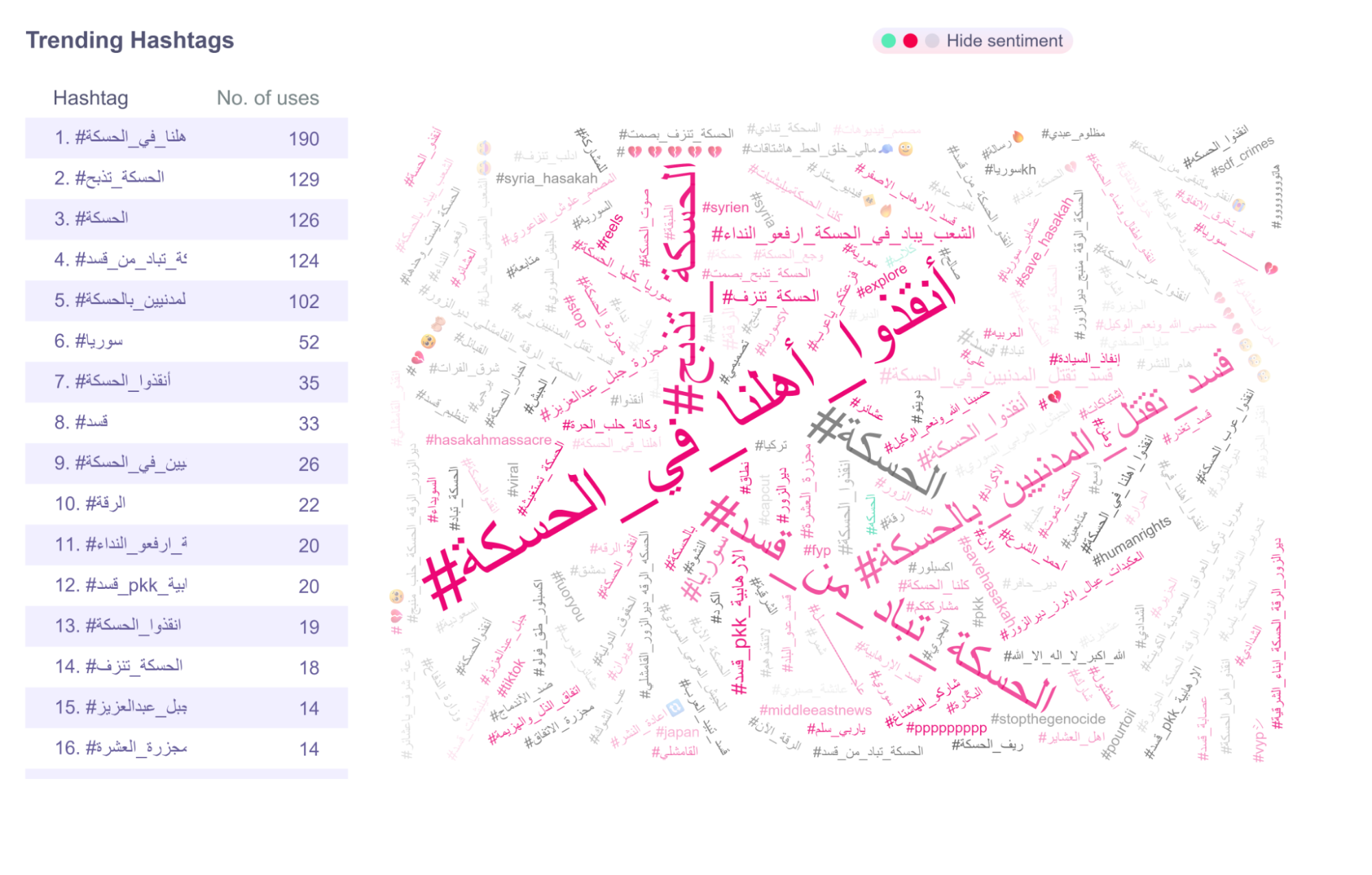
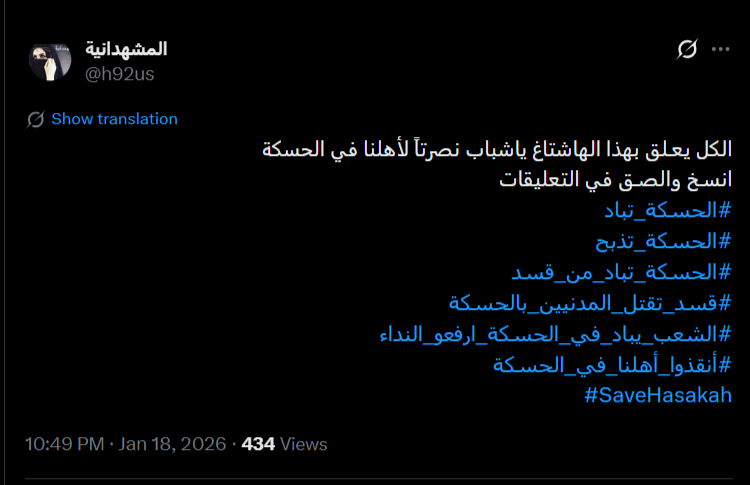
This language is accompanied by an expansion in accompanying hashtags that amplify the meaning and push it towards certainty: In addition to #الحسكة_تباد (Al-Hasakah is Being Annihilated) and #انقذو_الحسكة (Save Al-Hasakah), the data shows an expansion in sub-hashtags that carry the same meaning and intensify it, such as: #الحسكة_تذبح (Al-Hasakah is Being Slaughtered), #الحسكة_تباد_من_قسد (Al-Hasakah is Being Annihilated by SDF), and longer hashtags that target collective appeal like #أنقذوا_أهلنا_في_الحسكة (Save Our People in Al-Hasakah).
In this way, no gray area is left for the reader or recipient: the discourse does not say "there may be violations," but rather builds a picture of a "complete catastrophe" that requires urgent action.
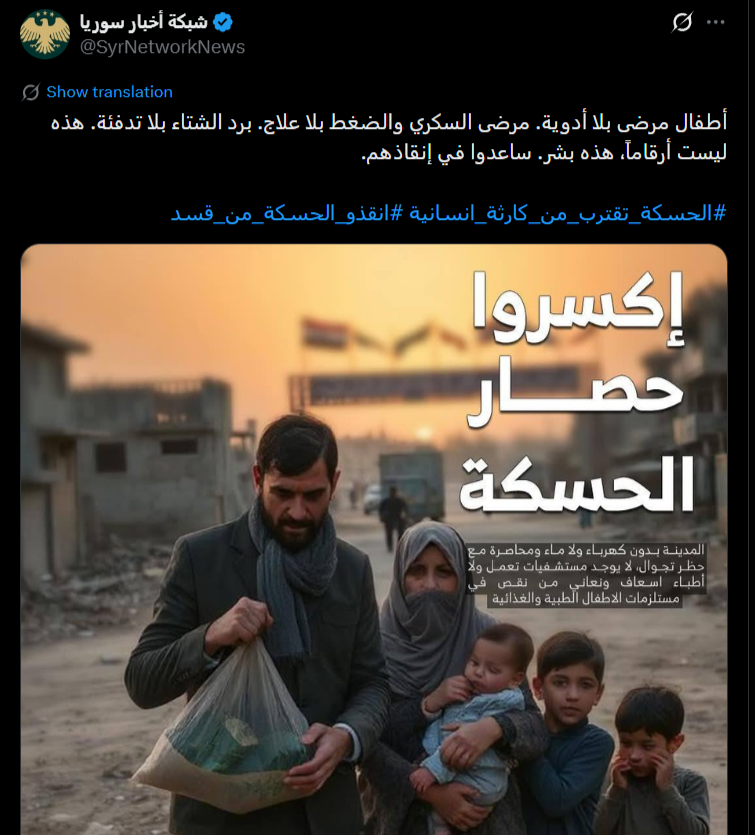
The second layer in this discourse is the invocation of "call to action" through the hashtag “Save Al-Hasakah”, which functions as a psychological mobilization call more than a description of the event. This is evident in the circulating messages that use direct phrases such as "distress call," "come to our aid," "save our people," and "where are you, Arabs?".
This data highlights a critical distinction: "Save Al-Hasakah," despite being used less frequently than "Al-Hasakah is Being Annihilated," achieved higher engagement. This is because the former serves as a direct call to action, demanding an immediate response from the audience, who are no longer passive receivers but active participants, whereas the latter is merely a descriptive statement.
This rhetorical framing exerts subtle moral pressure: those who delay participation appear to abandon the victims, while those who express skepticism are implicitly depicted as condoning the violence. Consequently, attempting to correct or verify the video clips risks being misconstrued as hindering a desperate plea for help. This mechanism, rather than the information itself, is precisely how the risk of hyperbole arises through psychological manipulation.
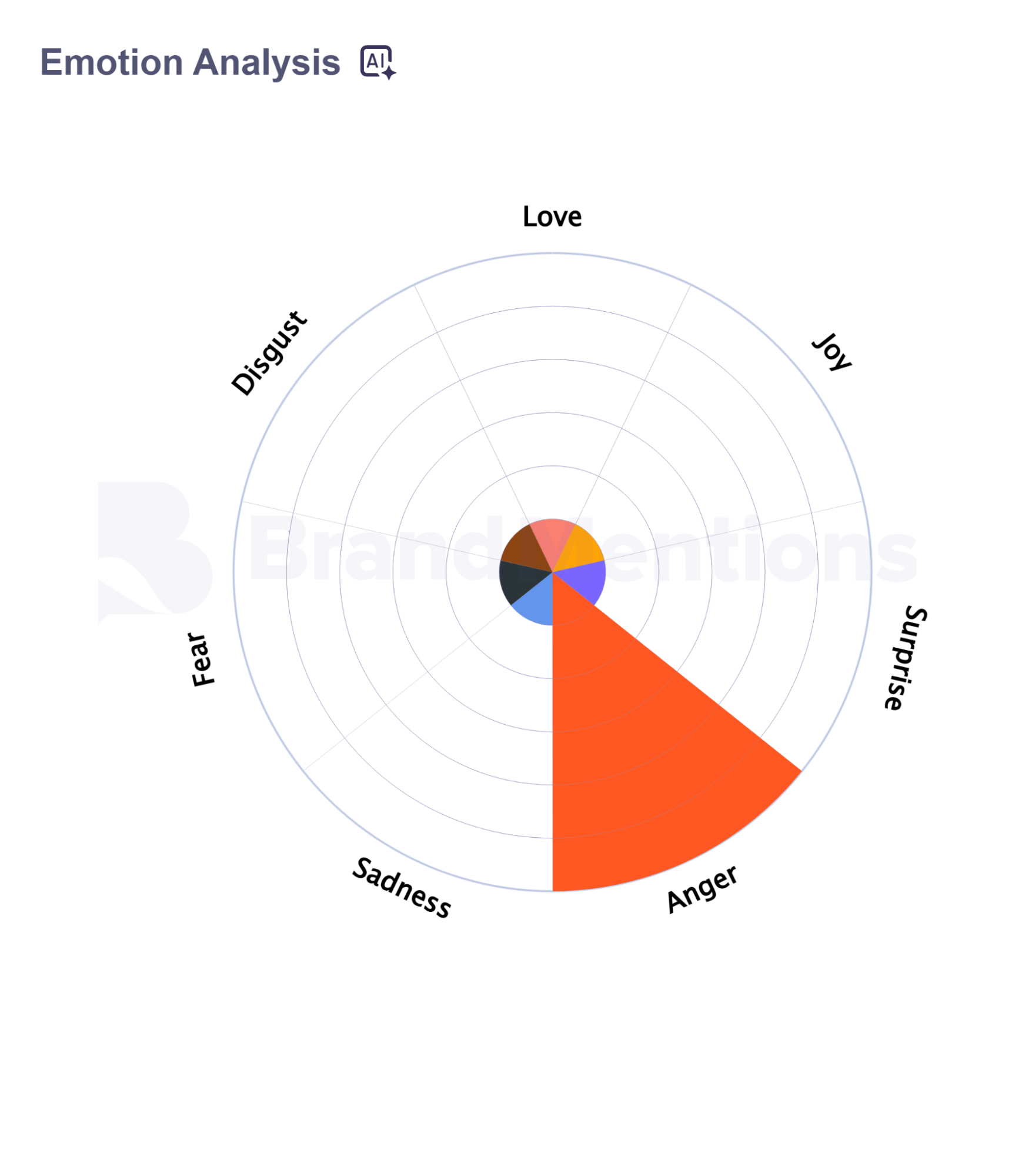
The campaign's success was fueled by intense emotion, as shown by the overwhelming negative sentiment in the data sample (368 negative posts compared to 112 neutral and only 14 positive). Anger was the dominant emotion, accounting for 280 classified posts in the sample (with an additional unclassified portion due to tool limitations).
This finding is a critical insight: the discourse was designed not to inform, but to provoke. The dominance of anger accelerates the spread of content, enhances the perceived credibility of video clips, and significantly hinders the speed and effectiveness of any attempts at correction.
This reading reveals that the wave of #الحسكة_تباد (Al-Hasakah is Being Annihilated) and #انقذوا_الحسكة (Save Al-Hasakah) formed at the intersection of a turbulent political moment and a digital mechanism capable of turning an accusation into mobilization within hours. In this context, the narrative of "annihilation" is built as a high-intensity digital discourse, capable of rapid spread before sufficient reliable data is available to establish the facts on the ground, making the analysis of this pattern a necessity for understanding the dynamics of amplification during times of conflict.

Other Articles