Arabi Facts Hub
is a nonprofit organization dedicated to research mis/disinformation in the Arabic content on the Internet and provide innovative solutions to detect and identify it.
Manufactured Narrative: The Saudi-Emirati Hashtag War in Yemen
Jan. 20, 2026 | AFH
Sherif Murad
"X" (formerly Twitter) became the site of an intense digital confrontation on January 9, 2026. This online battle involved two opposing narratives concerning Yemen and the Southern Transitional Council (STC). The online interaction surrounding the crisis on this single day was not characterized by a natural, gradual public discussion. Instead, it was dominated by a sudden, precisely timed, and high-intensity surge, indicating a manufactured rather than organic pattern of focus.
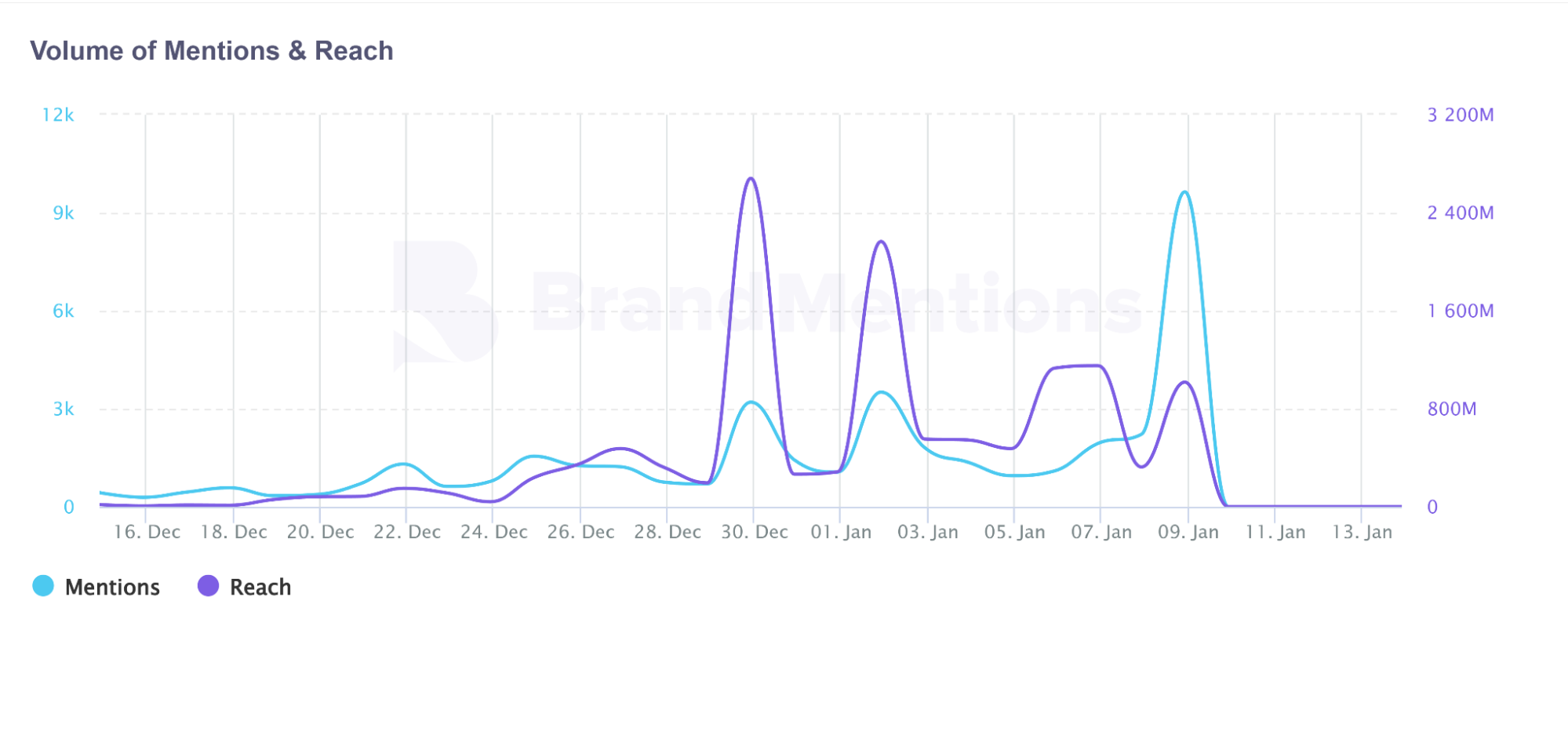
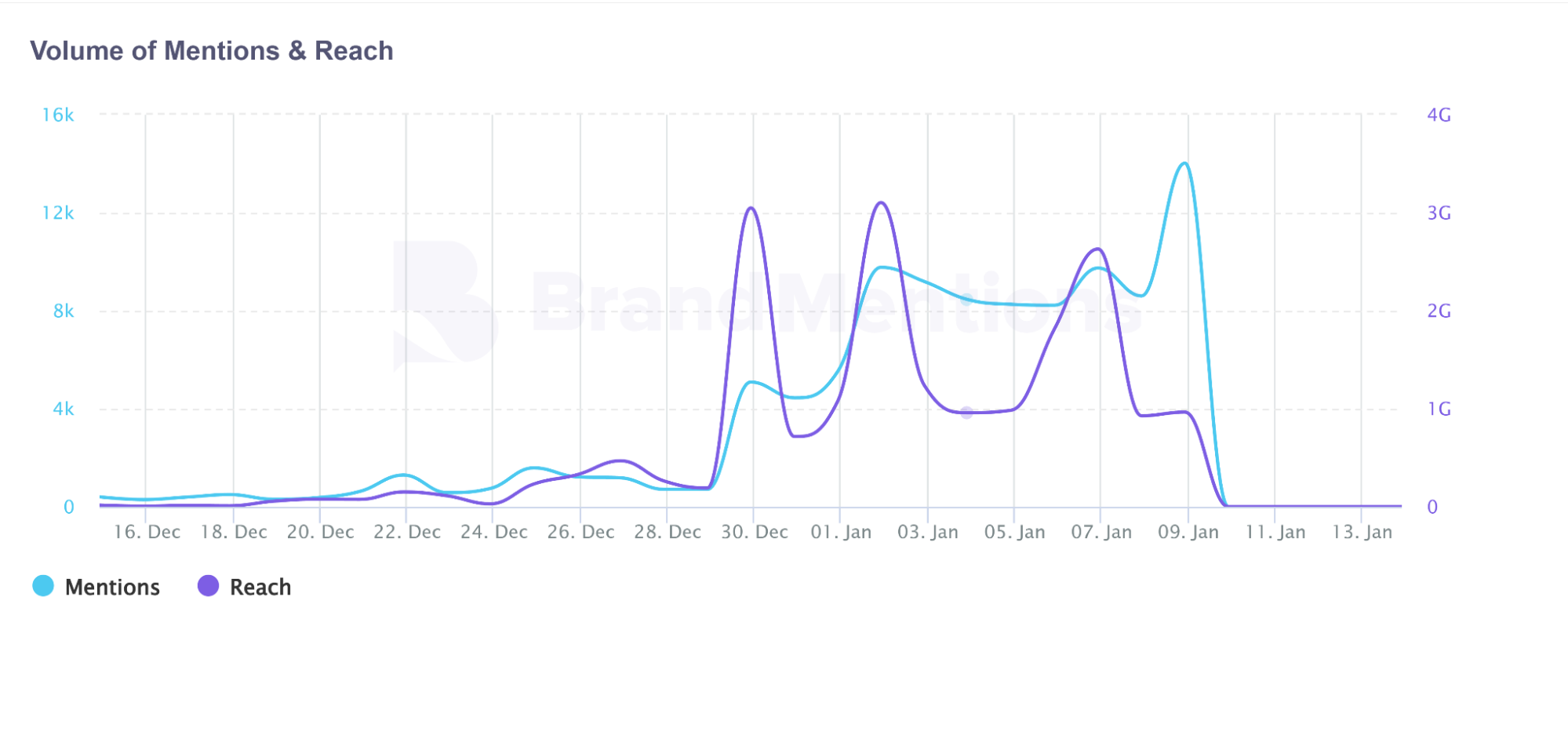
The data clearly shows the scale of this explosion. In the sample related to the Saudi campaign, about 94 per cent of the tweets were published during a single day, compared to nearly 79 per cent in the Emirati sample. Activity was also not evenly distributed throughout the hours of the day; one hour in each camp accounted for more than 12 per cent of the total tweets, a level of temporal concentration that indicates rapid mobilization, not extended spontaneous interaction.
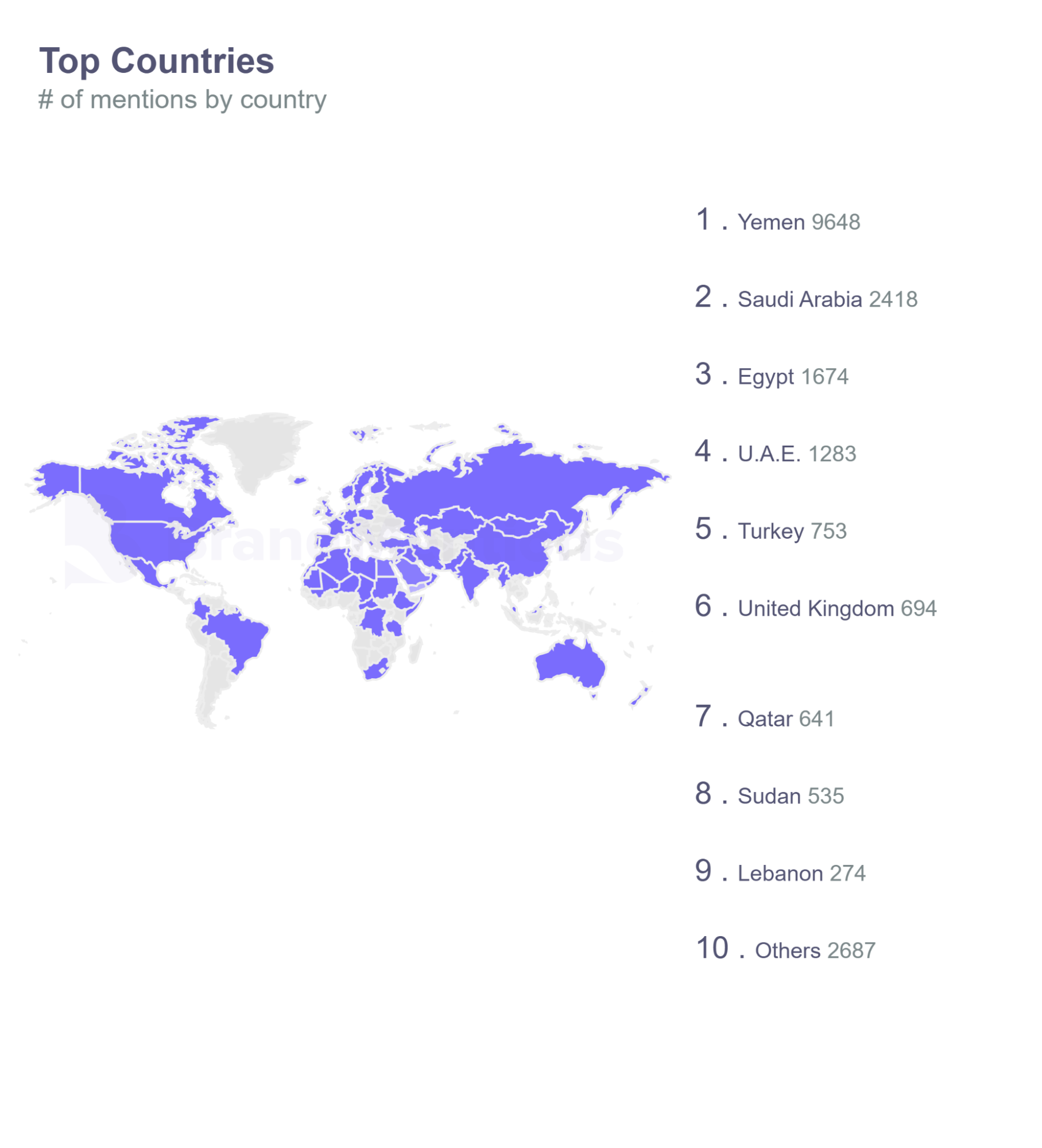
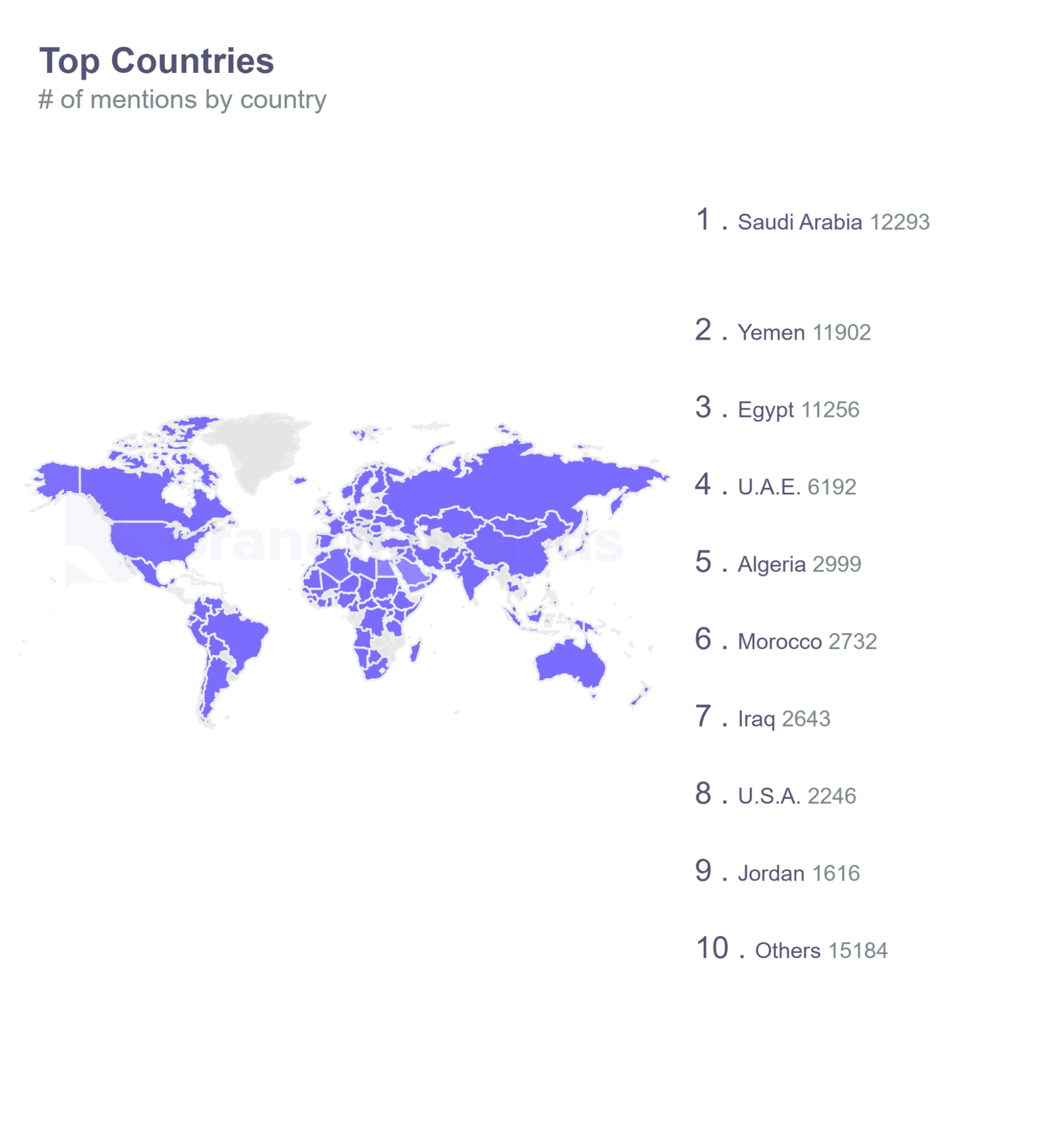
The discussion, which was not confined to a single locality or audience, quickly expanded beyond Yemen's borders, which nevertheless contributed the most to the conversation. Saudi Arabia and Egypt followed, with a significant presence from both the UAE and the broader Arab world. This geographical spread highlights that the issue was framed and perceived as a regional concern, rather than an internal dispute limited to a specific Yemeni group.
Discourse Analysis: Mobilization and Conflictual Stances
From the outset, the discourse followed two distinct, simultaneous paths. One trajectory was focused on mobilization and slogans, utilizing brief, repeated hashtags to praise the Emirati role and directly connect it to Southern Yemen. The second path was marked by conflict and confrontation, positioning the STC as the central issue while explicitly referencing Saudi Arabia, either as a backer of Yemen or a direct participant in the conflict.
The two opposing narratives were not developed separately. In fact, the same hashtags were frequently deployed for both offensive and defensive purposes at the same time. The rapid and widespread distribution of identical or highly similar texts suggests a concerted effort to amplify a specific message and quickly establish a dominant viewpoint. Consequently, within a matter of hours, the central issue shifted from discerning the actual events in Yemen to determining which fabricated narrative would gain traction first.
The interaction peak on January 9th is significant because it highlights more than just heightened activity. It serves as a focused example of how the complex disagreement between Saudi Arabia and the UAE escalated into a brief, intense online conflict. This confrontation was heavily influenced by the strategic use of numbers and hashtags, arguably as much as by events on the ground. The resulting hashtag conflict was not a spontaneous event; rather, it was a highly managed digital operation, unfolding with deliberate speed and packed with meaning.
This report analyzes data from "Brand Mentions" to track content on "X". Mentions were classified as tweets within two distinct monitoring projects (Saudi and Emirati) during the specified timeframe.
A clear initial disparity emerged in the scale and structure of the two campaigns. Across all platforms, the Saudi project generated approximately 74,000 mentions, compared to 34,000 for the Emirati project. However, "X" was the main battleground, and the numbers here were much closer: 10,375 tweets for the Saudi project versus 9,485 for the Emirati project. On this platform, the key difference lies less in the sheer volume of tweets and more in the nature of the discourse and the underlying account patterns.
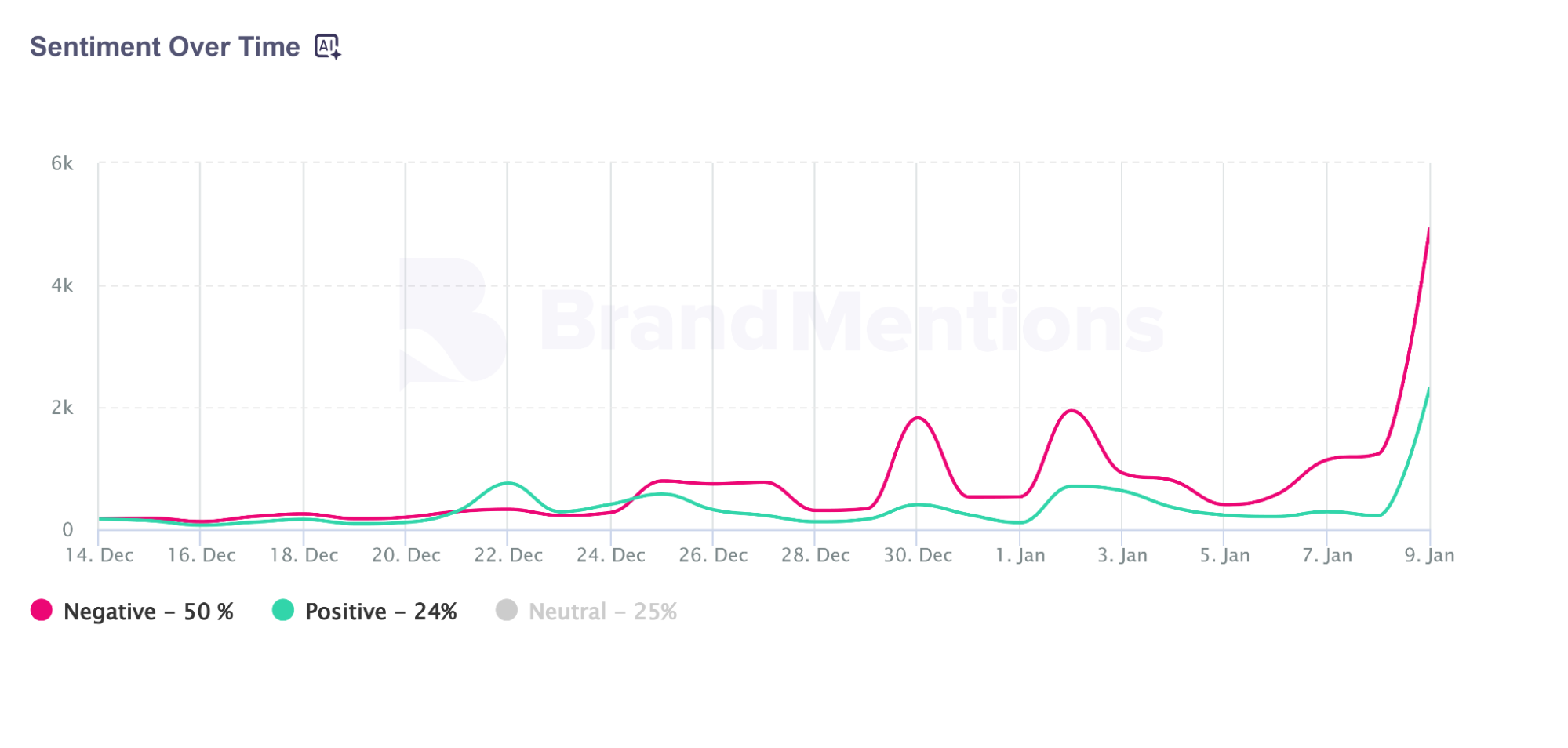
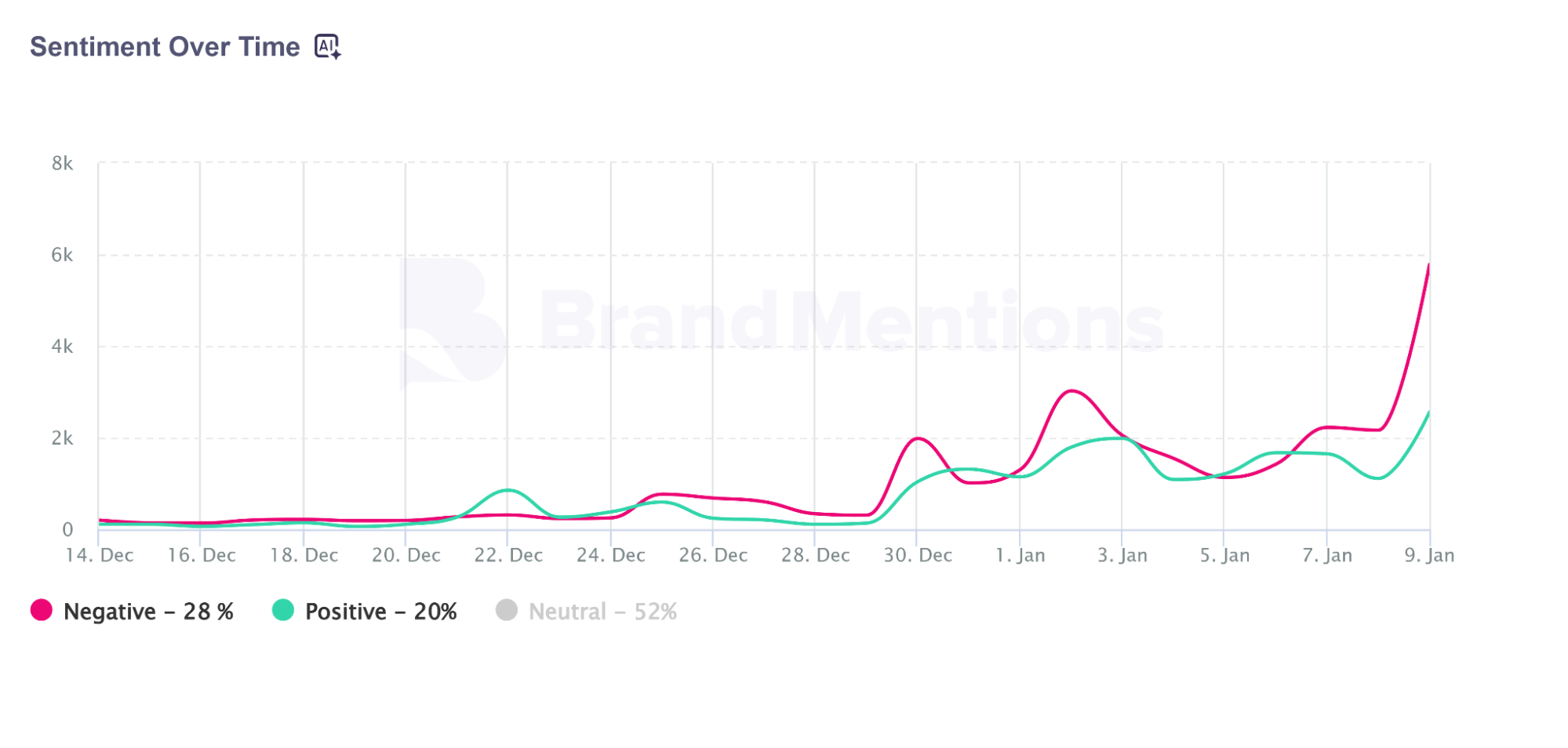
Sentiment analysis from "Brand Mentions" reports reveals a stark contrast between the two campaigns. The content associated with the Saudi campaign displays significant negativity and controversy, with a high proportion of critical or offensive tweets, suggesting an open arena of opposition between supporters and opponents. Conversely, the Emirati campaign presents an almost unified front, with the vast majority of its content classified as positive. This positive sentiment is rooted in direct praise for the UAE's role, its President Mohammed bin Zayed, and its connection to Southern Yemen and the Southern Transitional Council (STC). In summary, the Emirati discourse functions as a collective chant, while the Saudi sphere resembles a divided, contested space.
Layers of Influence: Who Shapes the Narrative?
Major media accounts form the apex of the influence structure. Channels like "Al Arabiya," "Al Hadath," "Al Jazeera," and "Al Sharq," alongside various Yemeni and Gulf news websites, dominate the "Voice Share." While their tweet volume is lower than that of countless smaller accounts, their primary impact lies in setting the initial public perception of an event. They achieve this by publishing breaking news and crafting headlines that define the event with specific narratives, controlling its initial title and description.
Beneath this media layer are influential individuals, including political analysts and opinion writers such as Adhwan Alahmari and Abdulkhaleq Abdulla. Though their tweet count is limited, their influence is substantial, as seen in high engagement and view counts. They excel at formulating concise statements that become narrative anchors, widely recirculated throughout online campaigns. This group's role is not to launch hashtags, but rather to provide political or moral justification, explanation, and legitimacy for them.
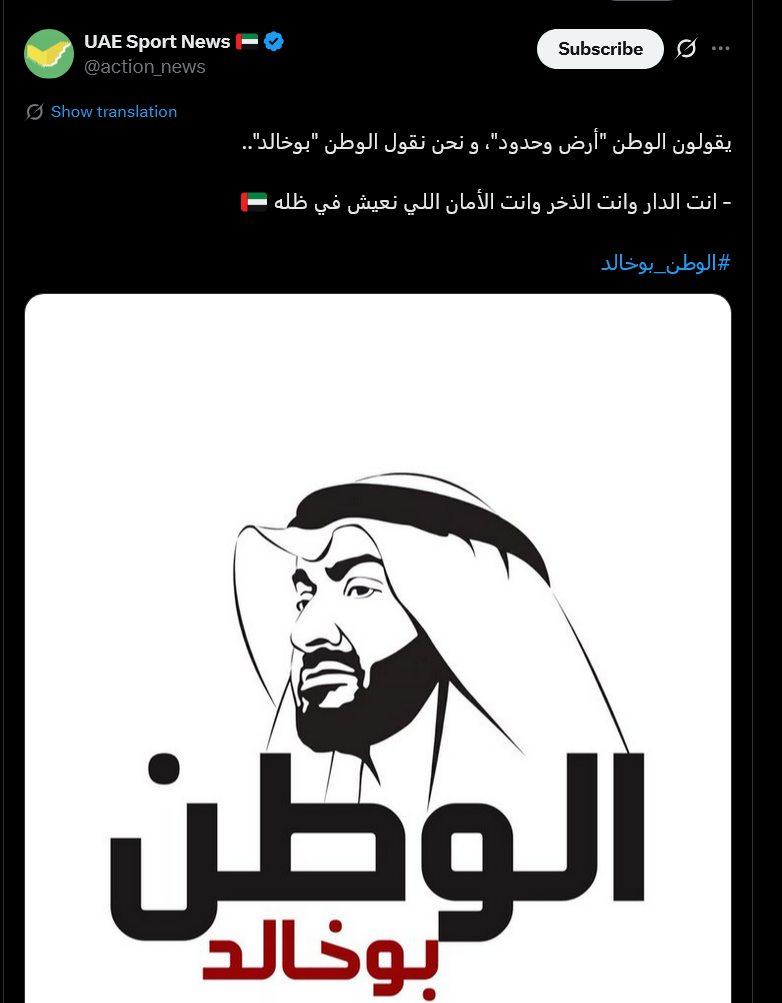
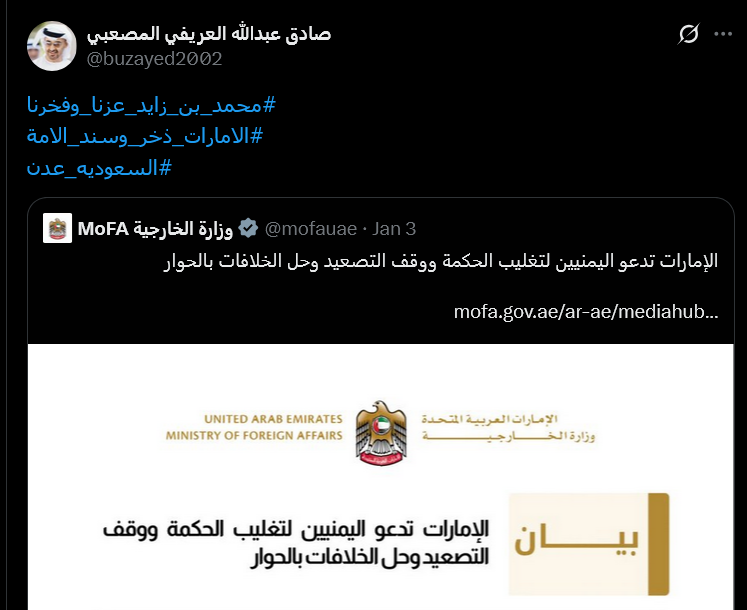
The actual "pumping," however, comes from the base of the pyramid. The distribution of accounts reveals that thousands of users participated with one to three tweets during the crisis, in contrast to a limited number of hyper-active accounts that produced hundreds of tweets. Some of these accounts have only tens or hundreds of followers, but they act as digital pumps: repeating fixed texts, intensive re-posting during peak hours, and simultaneous participation in more than one hashtag related to the issue.
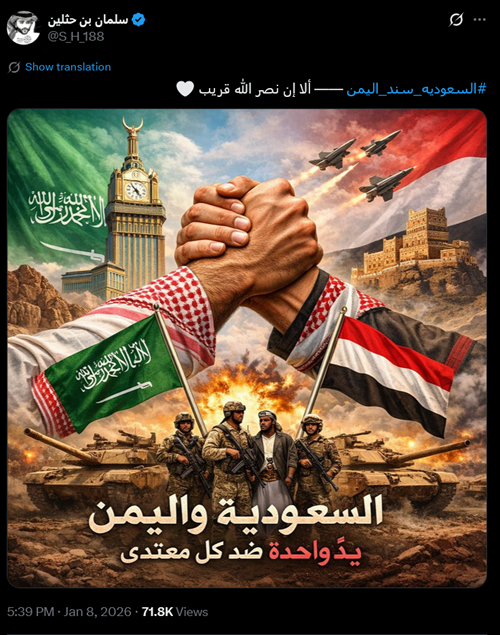
This pattern is clearer in the Emirati sample, where the use of singular hashtags such as #محمد_بن_زايد_عزنا_وفخرنا (Mohammed bin Zayed is our pride and glory) or #الوطن_بوخالد (The Nation is Abu Khalid) is repeated dozens of times in an identical format and at close timings, which indicates mobilization behavior aimed at raising the hashtag or covering the "timeline" with a single discourse. In contrast, repetition in the Saudi sample appears less like cheerleading, and is often in the form of hashtag bundles that reflect a more contentious nature.
In addition to that, the data reveals a third category: "bridging" accounts that appear in both samples. Their number exceeds two thousand accounts, including media accounts and Yemeni and Southern individuals, who move between defending one position and criticizing another, contributing to the transfer and expansion of the discourse between the two camps.
The digital hashtag war is structured around those three distinct layers: major media outlets, the framing elite, and the foundation of pumps and supporters. No single "electronic army" appears to be managing the scene, but rather an engineering of role distribution: who formulates the news, who explains it, and who raises it to a trend. And at the heart of this structure, numbers are jostling: tens of thousands of tweets, an explosion in a single day, and hundreds of accounts that specialize in almost one specific role: to make a particular narrative louder and harder to ignore.
Moving beyond the online structure, the core question is the nature of the conflict. Yemen and the Southern Transitional Council are central to this, serving not merely as a backdrop to the crisis, but as its direct subject.
Discourse Analysis: Yemen and the STC – The Center of the Conflict, Not Its Margin
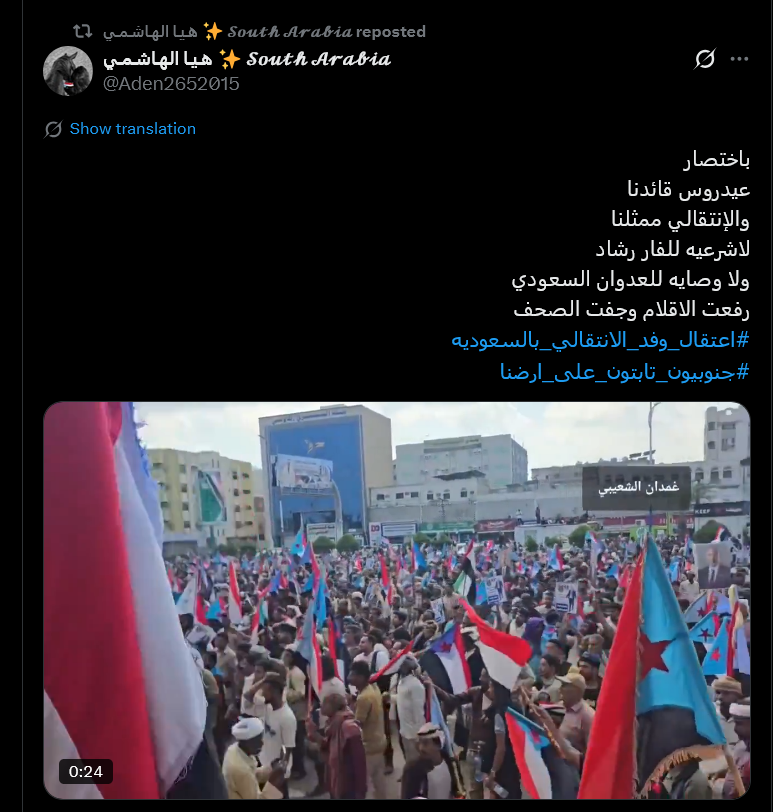
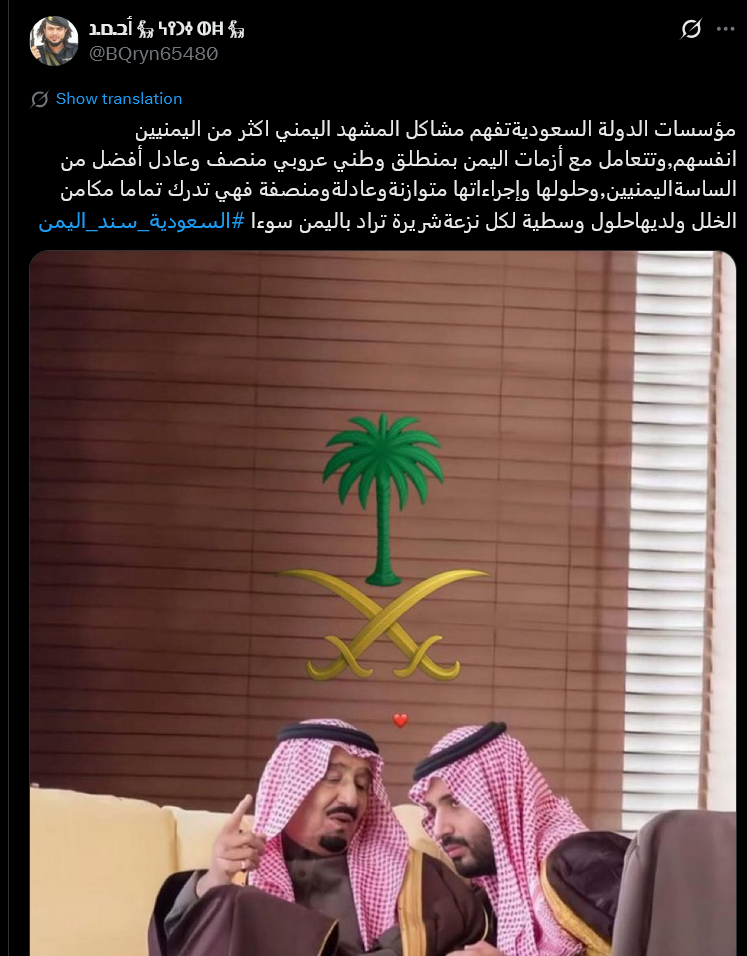
If the hashtag war revealed how the conflict flared up digitally, then content analysis clarifies what the conflict was actually about. The numbers here leave no room for ambiguity: Yemen, specifically the STC, was the main focal point in both the Saudi and Emirati discourse.
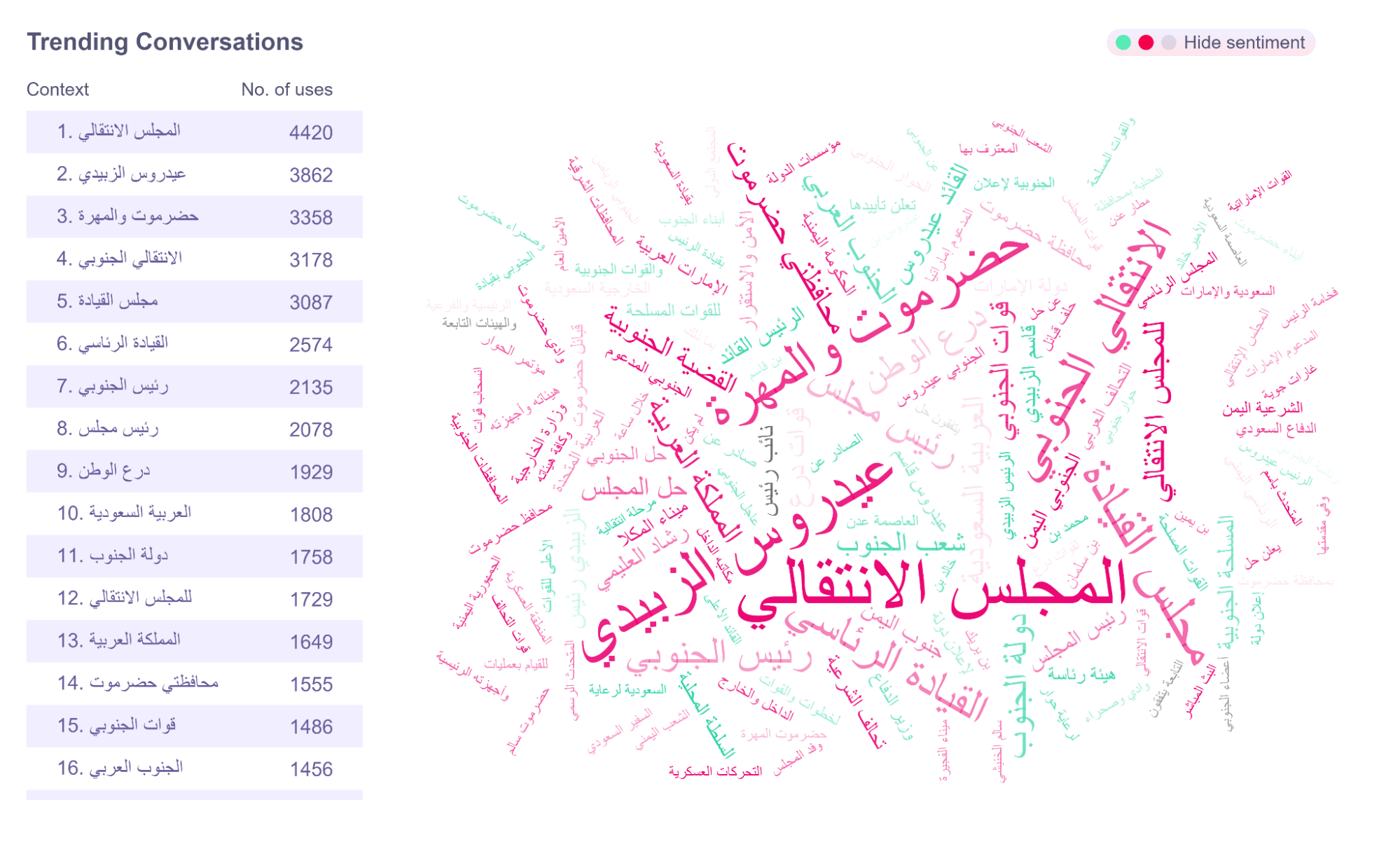
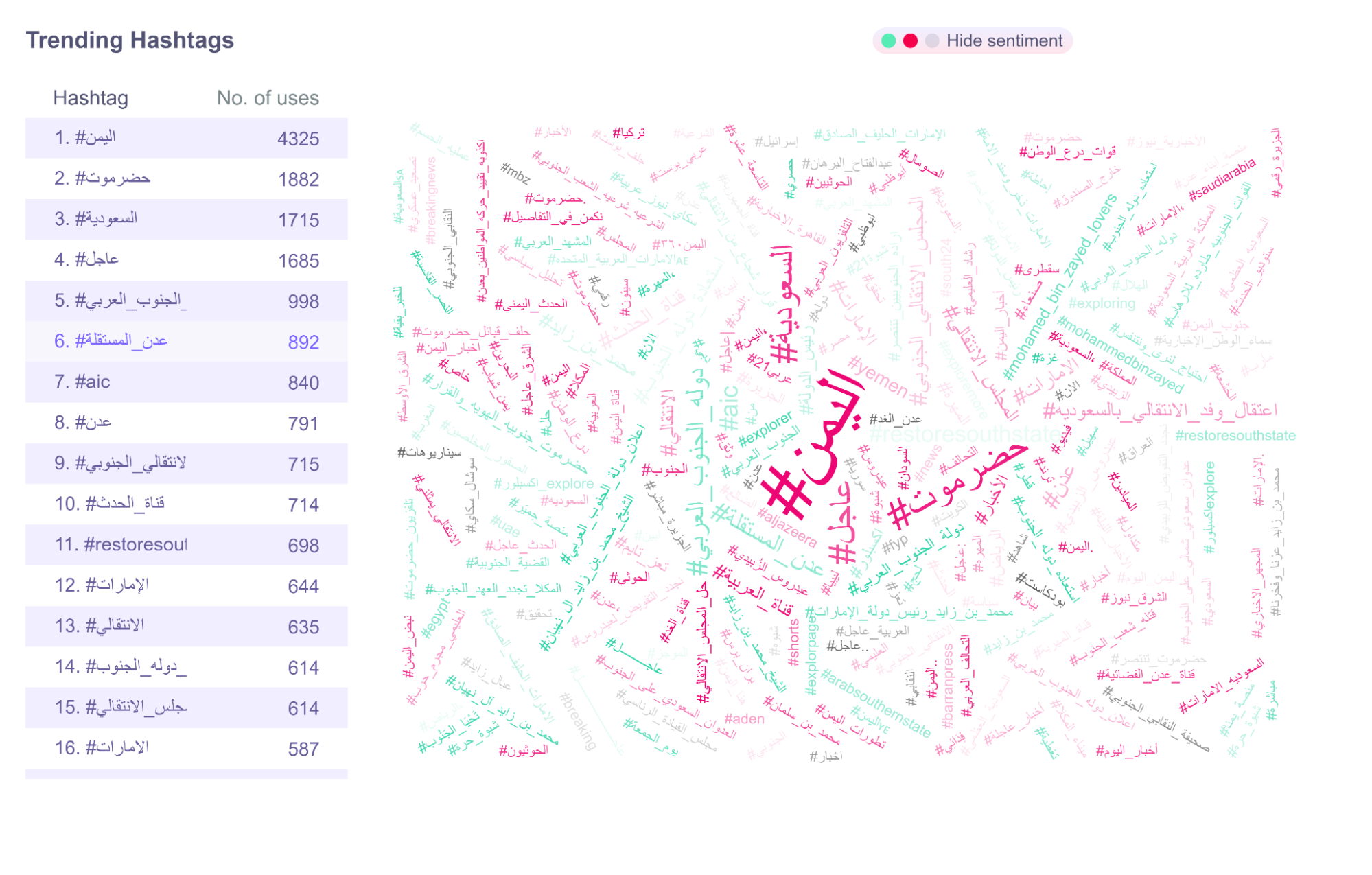
In the Emirati sample on Twitter, the Southern Transitional Council was mentioned in nearly three-quarters of the tweets. Not as a secondary topic or a supplementary detail to the discourse praising the UAE, but as the focus around which the messages are built: defending it, justifying its decisions, or linking it to the UAE's role in the south. In contrast, discussion of the "Yemeni legitimacy" or "state unity" is almost entirely absent from this discourse; its percentage in the Emirati texts is very small, which indicates a conscious choice to focus on a specific political actor instead of the broader national framework.
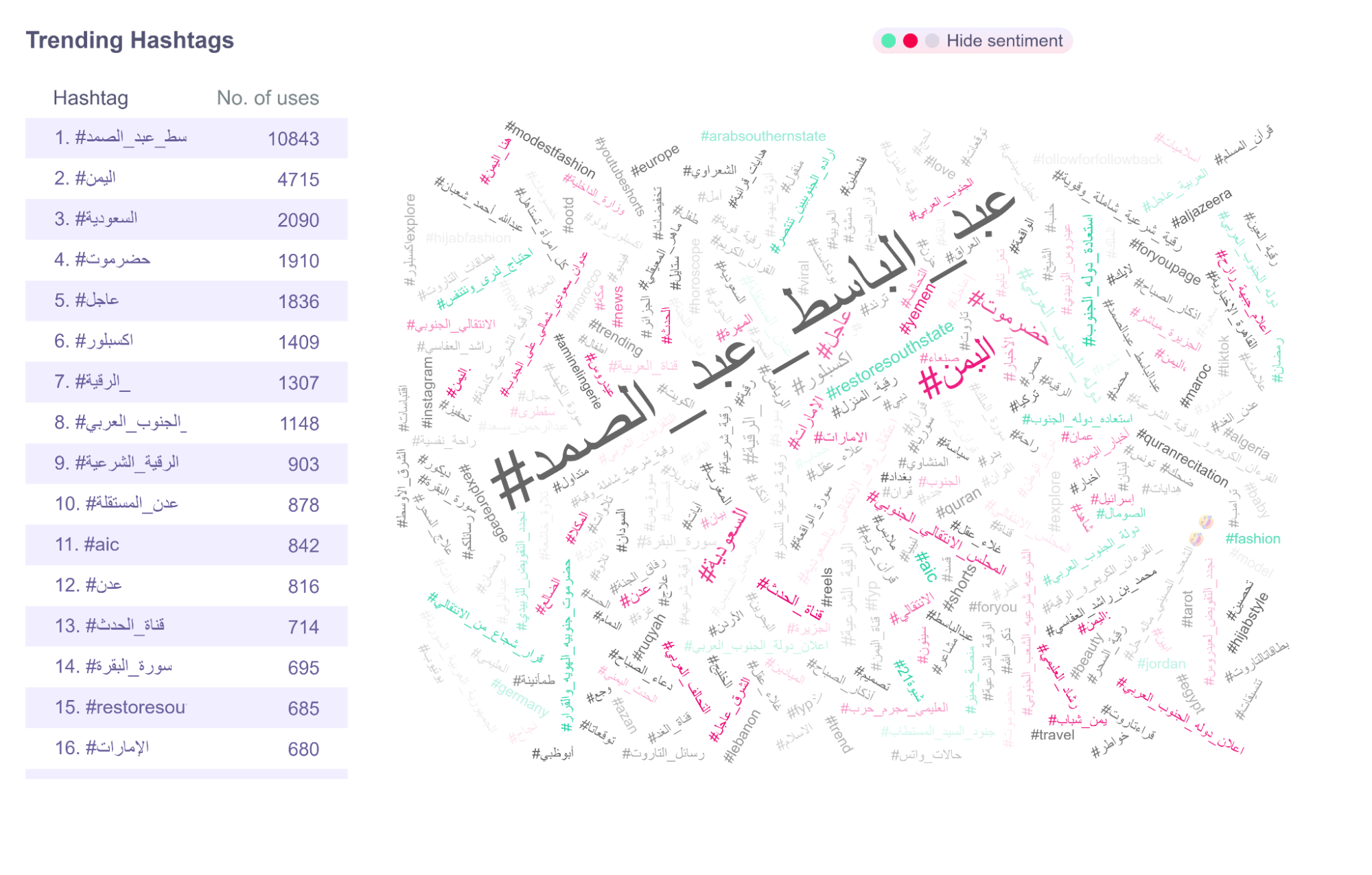
In the Saudi arena, the picture appears more complex. The STC is strongly present, but not as an ally, but rather as a point of contention. About 40 percent of the tweets included direct references to it, often in an offensive or controversial context, along with a noticeable presence of terms such as "legitimacy" and "the Yemeni state." This reflects an internal conflict zone between a discourse defending the Saudi role and a southern discourse that holds Riyadh responsible for obstructing the secession project.
The most widely circulated hashtags clearly reflect this division. In the Saudi context, hashtags such as #اعتقال_وفد_الانتقالي_بالسعوديه (Arrest of the STC delegation in Saudi Arabia), #الشرعية_شرعية_الشعب_الجنوبي (Legitimacy is the legitimacy of the Southern People), and #دولة_الجنوب_العربي (The State of South Arabia) topped the list.
These hashtags do not attack one party only, but reveal a struggle over the definition of legitimacy itself: Is it the legitimacy of the recognized Yemeni state, or the “legitimacy of the Southern People” as proposed by STC supporters?
In contrast, almost the same hashtags appear within the Emirati sample, but with a different function. The hashtag related to the “arrest of the STC delegation,” for example, is used here to defend the delegation or portray what happened as an episode in a wider conflict, redirecting anger towards Saudi Arabia, or at least towards the “mismanagement of the file.” Thus, a single hashtag turns into a dual tool: an attack in one arena, and a defense in another.
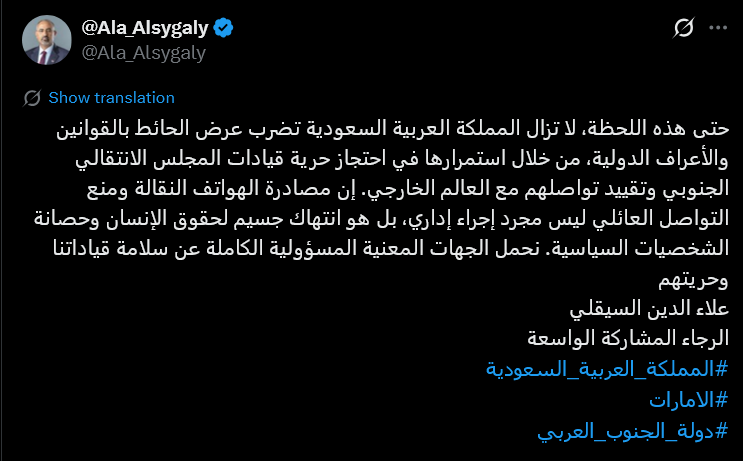
This conflict is not limited to language; it extends to the reframing of the Yemeni issue itself. In the Emirati discourse, Yemen is often invoked through the gateway of the South: Hadramout, Aden, the South Arabia. The Yemeni state as a unified entity almost disappears behind this geopolitical framework. In the Saudi discourse, Yemen is invoked as a state threatened by division, and the STC is used as evidence of the danger of this path, or as an adversary that must be "controlled," not empowered.
Geographic numbers reinforce this conclusion. Yemen is the primary source of tweets in both projects, meaning the discussion is not entirely imposed from the outside but is fueled by a Yemeni audience deeply involved in the conflict. But the notable geographical involvement of Saudi Arabia, Egypt, and the UAE underscores that Yemen has become a symbolic battleground. In this arena, competing regional narratives collide, each striving to define its own concepts of "legitimacy," "role," and "ally."
Thus the hashtag war between Saudi Arabia and the UAE should not be interpreted simply as a direct, bilateral conflict between the two nations. Instead, it is a conflict over Yemen that is being waged through the Southern Transitional Council.
Who has the right to represent the South?
Who determines the shape of the future Yemeni state?
And who presents themselves as the legitimate patron of one path or the other?
These questions were not raised on Twitter in the form of a calm discussion, but in the form of an intense confrontation, condensed into hashtags and short sentences.
Media Elites: Interpreting the Dispute and Controlling Its Boundaries?
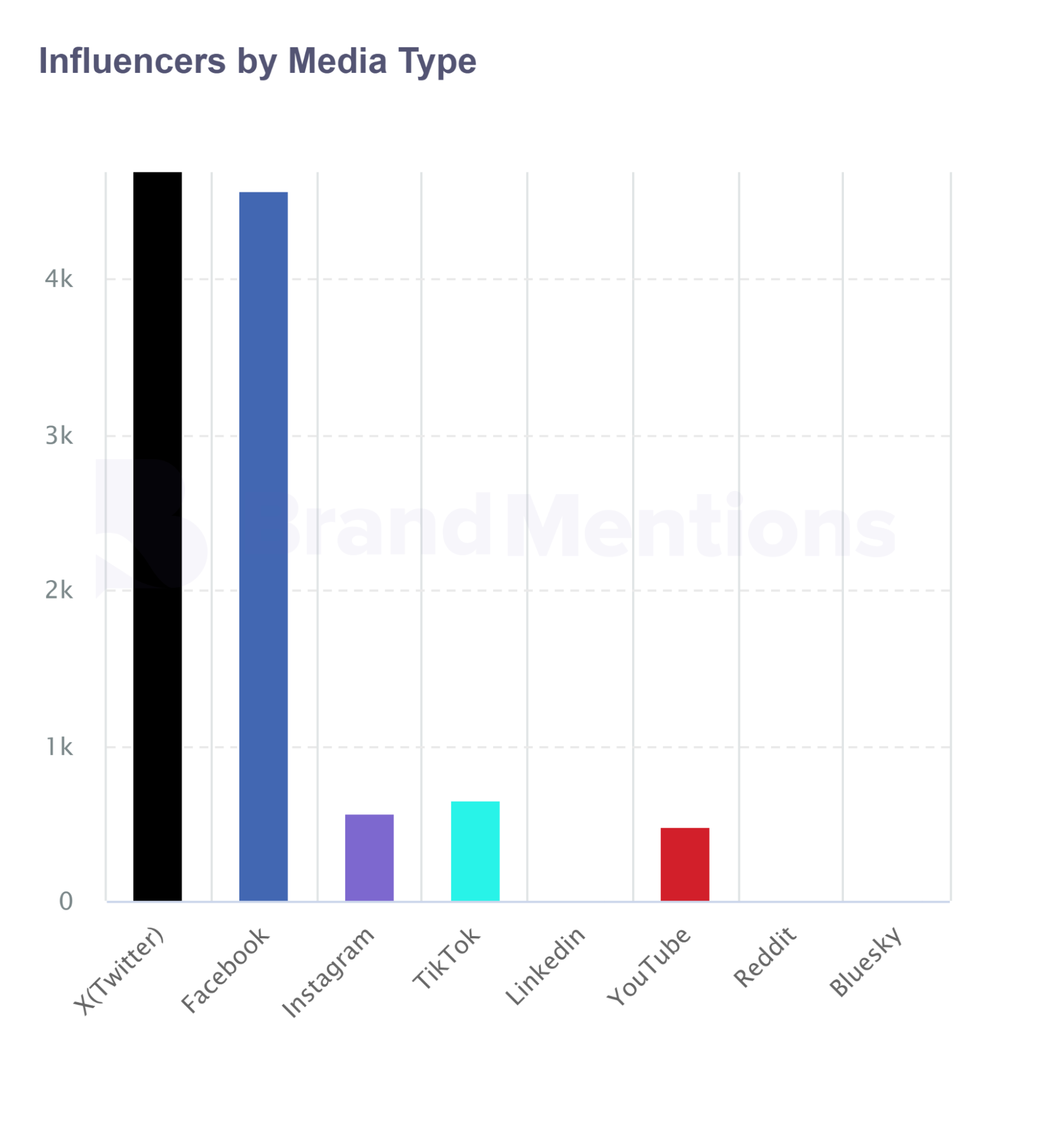
Behind the grassroots noise stands a smaller, yet more influential, layer of prominent journalists and writers whose tweets have become a reference point through which the public interprets the nature of the dispute between Riyadh and Abu Dhabi. A manually collected sample of tweets from a number of these elite figures—not exceeding ten tweets between January 7 and 9, 2026—alone achieved approximately 6.7 million views, more than 20 thousand likes, 7 thousand retweets, and nearly two thousand replies. Compared to the overall volume of noise, these numbers are small in quantity, but large in terms of their ability to frame the narrative.
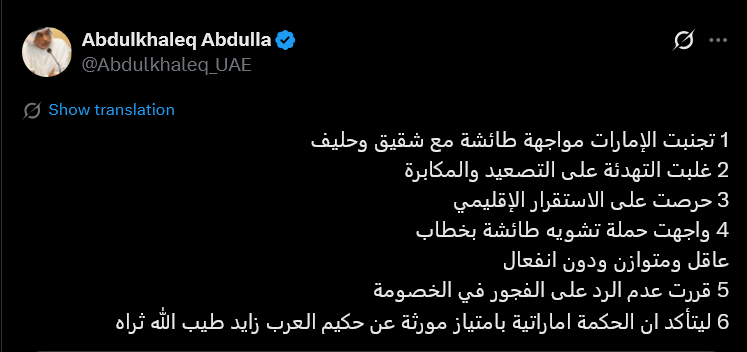
In the Emirati discourse, the academic and political analyst Abdulkhaleq Abdulla played the most prominent role. His tweets during the peak of the crisis provided something akin to an "unofficial official narrative": the disagreement with Saudi Arabia is "tactical, not strategic," the STC is an "ally" that cannot be sacrificed, and Mohammed bin Zayed "bore more than half the burden of the Yemen war," yet at the same time, he avoids a "reckless confrontation" with Riyadh. With these short phrases, the crisis is redefined from a conflict over influence in the south to a disagreement within a single, still-standing coalition, and the decisions of the STC and the UAE are granted political and moral cover before the public.
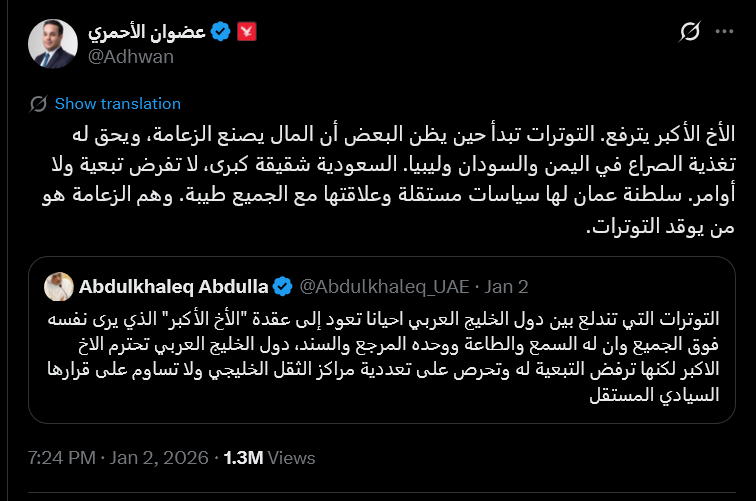
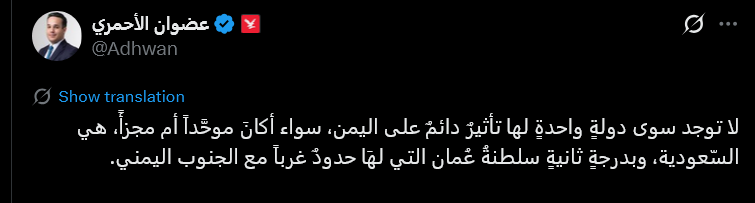
On the Saudi side, the name of Adhwan Alahmari, a former editor-in-chief and a well-known media figure, stands out as one of the most prominent voices. His tweets focused on delegitimizing the STC by portraying its leadership as "fleeing" from Aden, and emphasizing that the South belongs "to its people" and not to a specific political council, repeatedly stating that the firm response is not "immorality in enmity," but the application of a popular proverb: "He who knocks on the door hears the answer." Here, the STC transforms from a potential ally into a burden on the Saudi project in Yemen, and the dispute with the UAE is redefined as a disagreement over the tools for managing the file, not over the ultimate goal.
What the two sides share is that neither of them launched the hashtags, but both entered the fray at the peak of their intensity. Temporal data shows that the elites' tweets coincided with the highest curves of interaction on the hashtags, and that they often came after the initial news spread about the STC delegation and the subsequent leaks and speculations. In other words, the elites were not the ones who ignited the fire, but they took on the task of interpreting it for the public: What is the significance of this occurrence? Where does the blame lie? And to what extent can this conflict escalate before it leads to an irreparable split?
With this dual role – interpreting the crisis and refining its boundaries – the media elites function as safety valves and mobilization levers at the same time. They raise the level of rhetorical tension when pressure is needed, but at the same time, they draw clear red lines: the disagreement does not negate the alliance, and the competition in Yemen does not mean the collapse of the broader axis. Hence comes the importance of this class in reading the hashtag war: even in a space that seems spontaneous and open like Twitter, there are still specific voices that have the privilege of defining the incident and determining whether it is a fleeting crisis or the beginning of a long path of separation.

Other Articles