The Palestinian Observatory
Tahaqaq has released its 2025 annual report, documenting the team’s key activities and efforts to strengthen a culture of information verification amid an increasingly complex media environment. The report comes as misleading information continues to spread across the Palestinian digital space, particularly against the backdrop of ongoing regional conflicts, including the resumption, and later cessation, of the war on the Gaza Strip.
Throughout the year,
Tahaqaq produced 333 fact-checking pieces addressing a wide range of topics. These reports focus on various forms of inaccurate information that circulated during times of crisis, contributing reliable media content that supports the public’s right to access accurate information.
Tahaqaq’s monitoring findings show that most of the claims reviewed and corrected fell under classifications aligned with the observatory’s methodology and international standards—most notably misinformation, disinformation, and content linked to artificial intelligence technologies. The report notes a marked increase in the use of AI tools to produce or manipulate misleading content, posing an additional challenge to verification efforts and further complicating the digital media landscape.
The accompanying data illustrates the diversity of disinformation patterns within the Palestinian digital sphere, highlighting the dominance of inaccurate content at 45.90%. This type of content is often the result of flawed conclusions or unprofessional reporting rather than deliberate intent to mislead.
The observatory’s team addresses this category due to its rapid spread and the public trust it can gain despite its lack of accuracy. Its prevalence is linked to limited access to information and the fast pace of news circulation in an unstable environment marked by ongoing conflict.
Deliberately misleading content is accounted for 39.75% of the monitored material and it is considered more dangerous due to its intentional nature and its role in serving specific agendas. AI-generated content made up 14.34%. While lower in proportion, it signals a qualitative shift in disinformation tactics, requiring more advanced verification tools and new analytical responses.
This distribution underscores the range of challenges facing
Tahaqaq and its ability to adapt to rapid developments in Palestine’s disinformation landscape.
Throughout the year, the team faced significant challenges stemming from media and digital instability and difficulties in accessing accurate, reliable sources—particularly given complex on-the-ground conditions and repeated communication disruptions. Despite this, the observatory continued its work by relying on a network of trusted sources and collaborating with field journalists, experts, and specialized analysts, helping maintain high standards of professionalism and accuracy in its published reports.
Tahaqaq also continued to employ modern digital tools and open-source verification techniques to monitor and examine information circulating on digital platforms and across various media outlets.
In the broader political and media context, 2025 saw the continuation of the war on the Gaza Strip, which began on October 7, 2023, accompanied by extensive military escalation and profound humanitarian and media repercussions. Over the two-year period, the media landscape was flooded with conflicting information amid field restrictions and limited access to independent sources, fueling the widespread spread of rumors and disinformation.
On October 10, 2025, a ceasefire in Gaza was officially announced, ending two years of war and closing a period marked by a sharp surge in media disinformation.
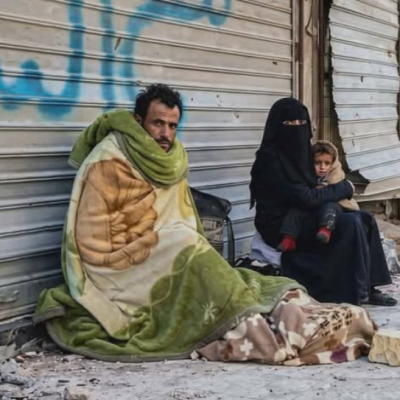
Tahaqaq has intensified its efforts against this backdrop to document and verify media claims, producing 96 fact-checking pieces related to the war on Gaza. These included nine in-depth reports that examined living conditions, damage caused by bombardment, and on-the-ground violations—highlighting the observatory’s role in enabling public access to accurate information during an exceptionally sensitive period.
Strengthening Professional Presence and Expanding Local and International Impact
Throughout 2025,
Tahaqaq, through its legal and institutional framework
Deraya for Media and Digital Literacy, continued to enhance its professional and awareness-raising presence through a series of local and international activities. These efforts form part of its ongoing mission to combat disinformation and promote media and digital literacy in Palestine.
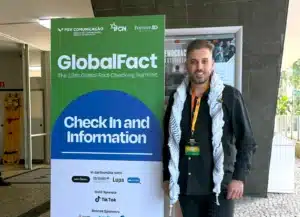
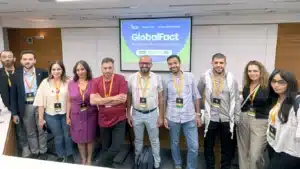
The year included the observatory’s participation in the 12th Global Fact-Checking Summit
(GlobalFact12) in Rio de Janeiro, supported by the French Media Development Agency (CFI). There,
Tahaqaq contributed to international discussions on sustainability challenges in fact-checking, and exchanged expertise with global verification networks.
On the training front,
Tahaqaq and
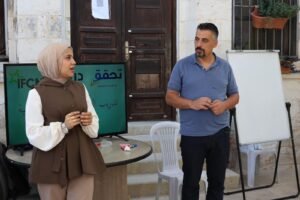
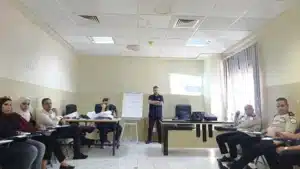
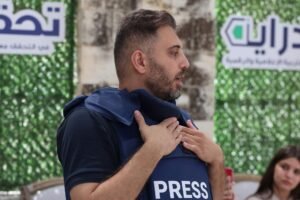
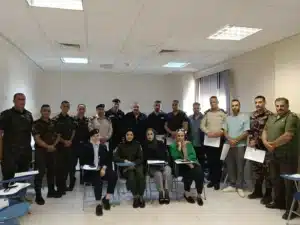
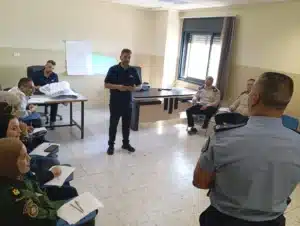
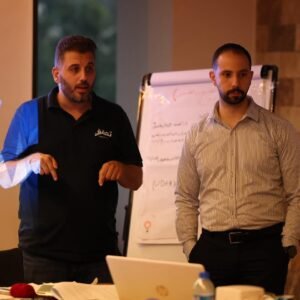
Deraya organized a range of specialized programs, including psychological and professional safety training for journalists, supported by the International Fact-Checking Network (IFCN). Additional workshops on fact-checking and digital security targeted journalists and public relations representatives within security institutions.
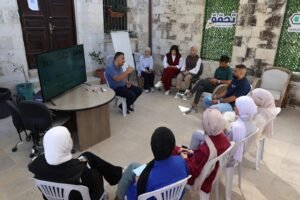
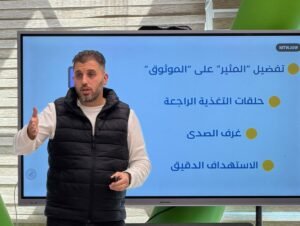
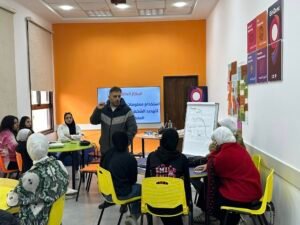
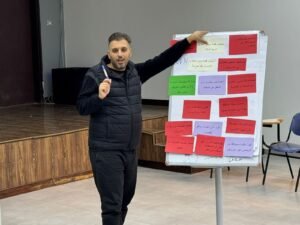
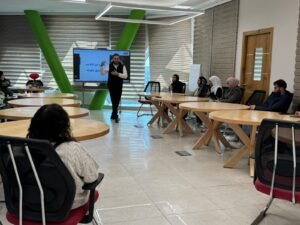
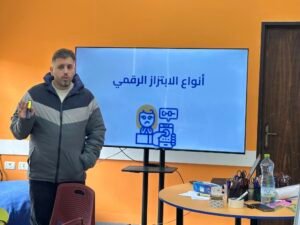
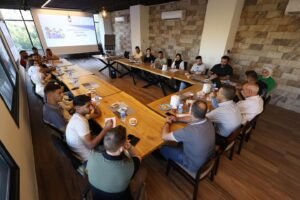
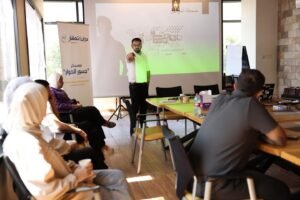
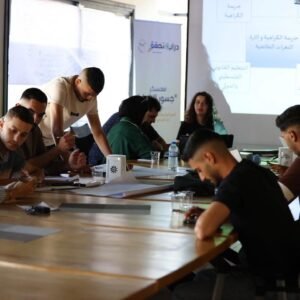
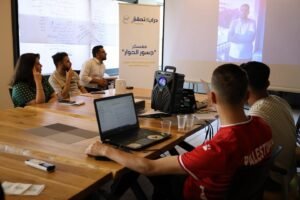
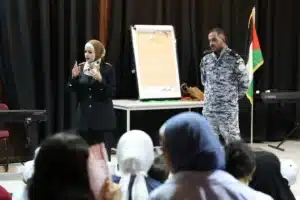
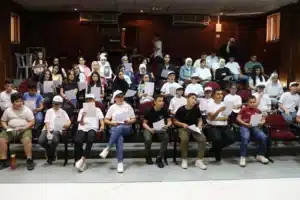
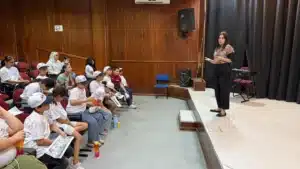
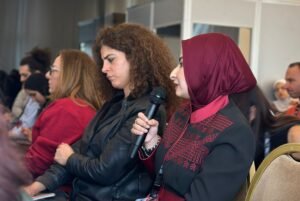
Training sessions were also delivered to young people and university students, focusing on verification skills and countering rumors and hate speech.
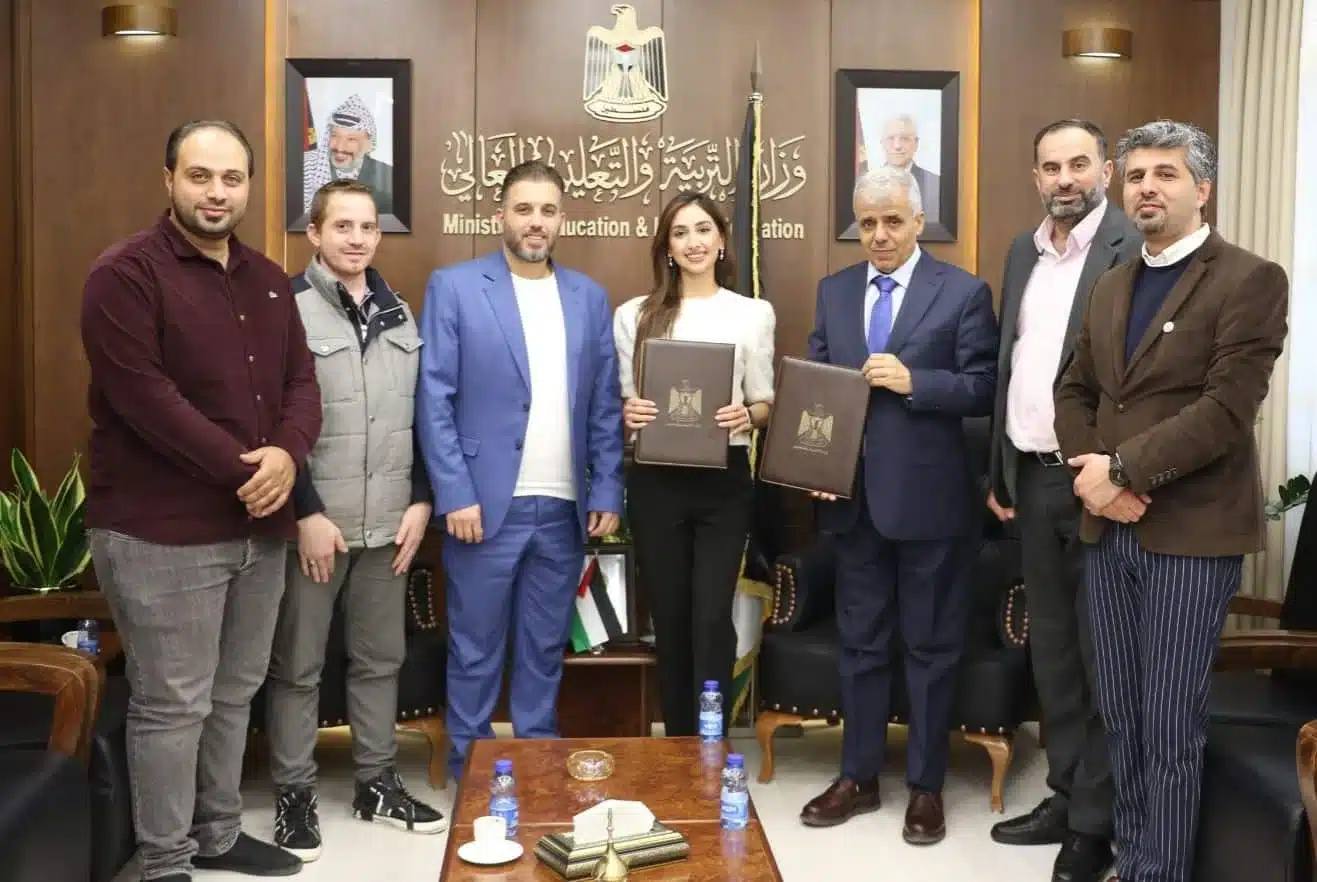
As part of efforts to expand institutional partnerships and amplify the impact of media and digital literacy, the Ministry of Education and Higher Education signed a cooperation agreement with
Deraya. The agreement aims to strengthen media and digital literacy foundations within the education sector through educational meetings and programs across several education directorates.
Key provisions of the agreement include raising awareness of media-related issues, promoting digital citizenship concepts, and combating disinformation. These efforts target school media hubs and involve training media staff in specialized skills such as critical media analysis, digital safety, and responsible engagement with digital content.
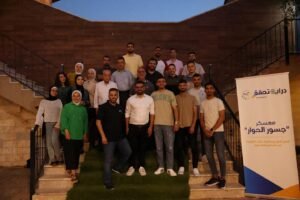
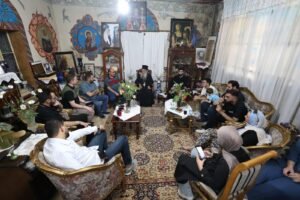
To foster community dialogue, the “Bridges of Dialogue” project was launched with support from the KAICIID International Dialogue Centre. The initiative seeks to promote understanding among youth from diverse religious backgrounds and to produce awareness content that counters hate speech rooted in media disinformation.
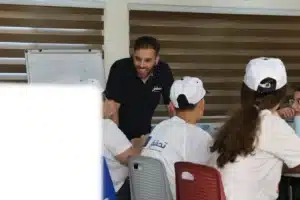
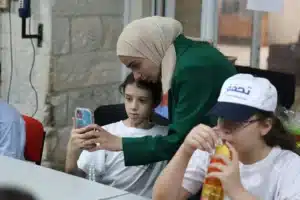
The observatory also worked to spread media literacy among younger audiences by launching the first specialized summer club for children and adolescents in northern West Bank, in partnership with the European Union. This was complemented by school-based awareness workshops during Global Media and Information Literacy Week and continued engagement in university activities.
In terms of institutional development,
Deraya received support from the European Endowment for Democracy (EED) through the “Yalla Tahaqaq” project. This support strengthened the observatory’s technical and production infrastructure, enabling the production of dozens of fact-checking reports throughout the year.
In a significant technological step, the observatory launched the pilot digital tool “
CheckTech” in collaboration with An-Najah National University. The AI-powered tool is designed to verify news content, reflecting
Tahaqaq’s commitment to innovation and to adopting tools that support evidence-based journalism.
The team also
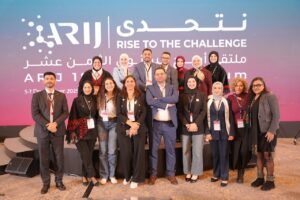
participated in the 18th ARIJ Investigative Journalism Network Conference in Amman, where members received specialized training and explored the latest tools in verification and digital disinformation detection. Additionally, the observatory took part in the AFCN regional meeting, which marked the launch of a fact-checking quality assurance handbook—further strengthening professional standards within
Tahaqaq’s work.
Collectively, these initiatives reflect
Tahaqaq’s commitment to capacity building, institutional sustainability, and its role as a leading Palestinian reference in fact-checking and media literacy. Despite funding constraints and challenging field conditions, the observatory closes 2025 with a series of achievements that reinforce its mission to counter disinformation and promote accurate information, while continuing to develop its tools and build effective partnerships at both local and international levels.